

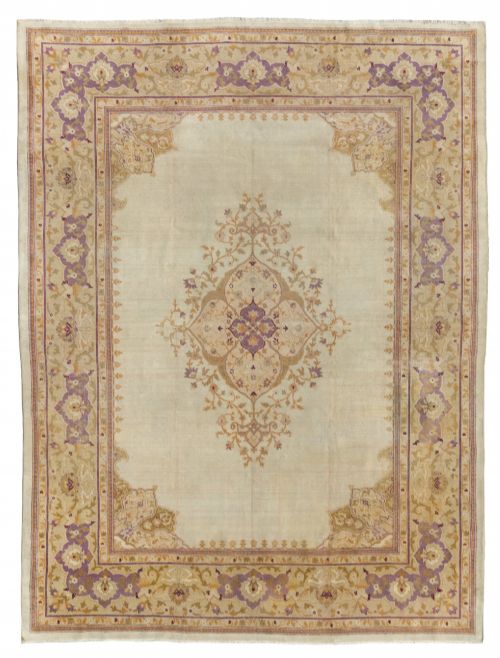


Beige Floor Rug
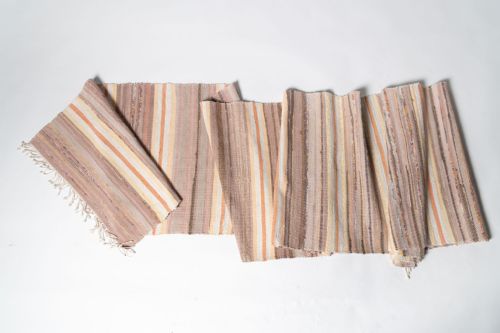
A beige floor rug brings subdued warmth and texture to a room, offering a neutral foundation drawn from traditional Persian, Turkish, and Chinese weaving traditions.
Beige Floor Rug
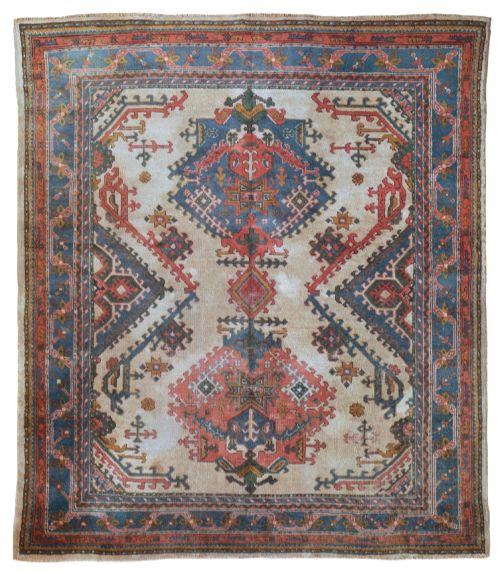
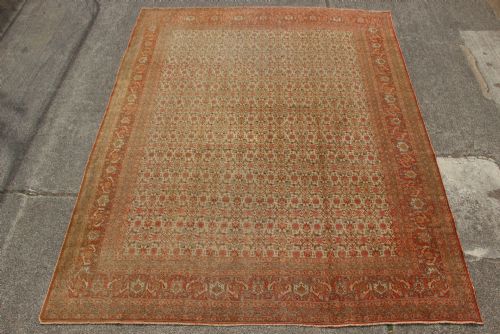
A beige floor rug encompasses large carpets and smaller floor coverings originating from workshops and villages across Persia, Turkey, China, and India. These pieces date from the mid-nineteenth century through the early decades of the twentieth century, spanning periods such as 1880, 1900, and 1930.
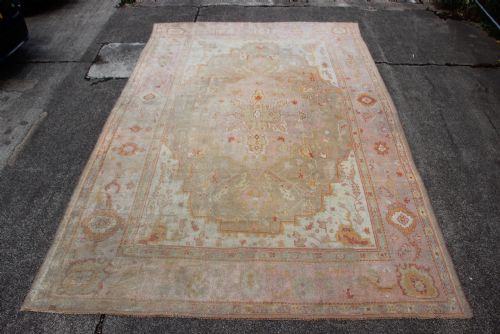
Buyers are most likely to encounter woollen room-size carpets and village rugs bearing soft neutral tones, often categorised under styles like Tabriz, Oushak, Ushak, Hamadan, and Chinese Art Deco.
The selection ranges from grand city carpets measuring over three metres to rustic tribal pieces, each designed for functional placement on floors within domestic interiors.
How they were made
The primary materials recorded in these rugs are wool and cotton, alongside occasional examples utilising silk, camel wool, and floss silk for pile and foundation structures.
Weavers knotted these fibres by hand onto cotton or wool warps and wefts, employing regional knotting techniques specific to origins such as Tabriz, Sivas, and Amritsar to build durable floor coverings.
Beige Floor Rug Retail Price Guide 2026
Typical asking prices for beige floor rug among the pieces listed under this phrase on Sellingantiques today, from the lower quarter to the upper quarter. They describe what is for sale here now, not the wider market.
Listings feature rugs produced across diverse origins including Persia, Turkey, China, and India, utilising materials such as wool, cotton, silk, and camel wool.
What varies in quality
Quality in these floor coverings is determined by the density of the knotting and the refinement of the wool or silk fibres used in the pile.
Finer city workshops achieved intricate detail and precise symmetry, whereas rural village and tribal pieces demonstrate a heavier, more rustic handle with simpler geometric or floral compositions.
Benlian
The Beige Floor Rug Glossary
- Pile
- The upright yarn loops or tufts that form the usable surface of a rug. It dictates the softness underfoot and absorbs the wear of daily foot traffic.
- Warp
- The vertical threads stretched lengthwise on the loom before knotting begins. These foundational threads support the entire structure of the carpet.
- Weft
- The horizontal threads passed back and forth through the warps after rows of knots. This locks the pile in place and determines the rigidity of the rug.
- Knot
- The individual loops of yarn tied to the warp threads by hand. Different regional traditions employ distinct knot types to secure the pile.
- Foundation
- The underlying grid of warp and weft threads that supports the decorative pile. Its material composition influences the drape and longevity of the piece.
Beige Floor Rug: Frequently Asked Questions
How do I clean an antique rug?
Professional specialist cleaning is essential for antique wool and silk rugs to protect delicate dyes and natural fibres from damage. Regular gentle suction without a rotating brush helps remove embedded dust.
Water and standard household detergents cause irreversible shrinkage and colour bleeding in older textiles. Specialist workshops use controlled washing methods tailored to traditional woven floor coverings.
Where should I place a wool rug?
Wool and camel wool floor rugs suit reception rooms, studies, and bedrooms where foot traffic remains moderate to low. Placing a suitable underlay underneath prevents slipping and reduces friction against hard flooring.
Direct, prolonged sunlight fades natural dyes over time, so rotating the carpet periodically ensures even exposure. Avoid damp environments such as unheated basements to protect the natural fibres from moisture.
How do I identify an Ushak carpet?
Ushak carpets typically display large-scale floral medallion designs rendered in soft, muted palettes that often feature pale beige, terracotta, and subtle golden tones. The wool used in these Turkish pieces tends to be lustrous and slightly looser in knot density.
These rugs originated in the town of Ushak and date predominantly from the late nineteenth century. Their expansive field designs set them apart from more densely patterned Persian city carpets.
What is the difference between city and village rugs?
City rugs, such as those from Tabriz or Kashan, exhibit highly refined floral motifs, precise symmetrical layouts, and fine knotting achieved by professional urban weavers. They reflect formal design traditions.
Village and tribal rugs, including pieces from Hamadan, Sarab, and Baluch workshops, display geometric patterns, abrash colour variations, and a more rustic construction. These pieces reflect local heritage and traditional domestic weaving practices.