
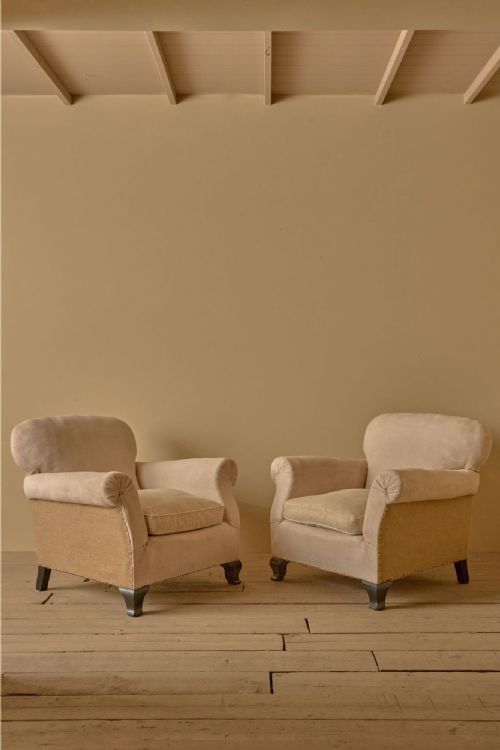
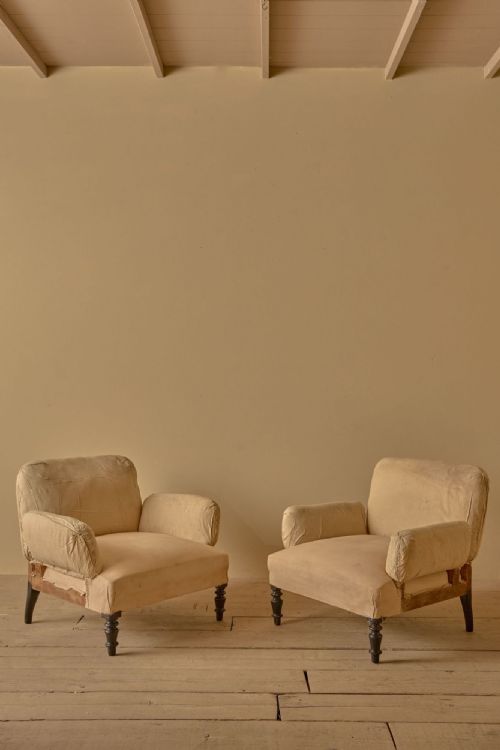
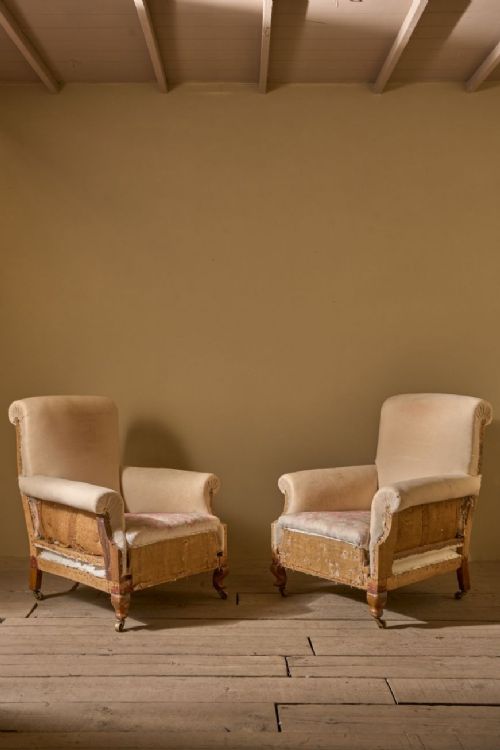
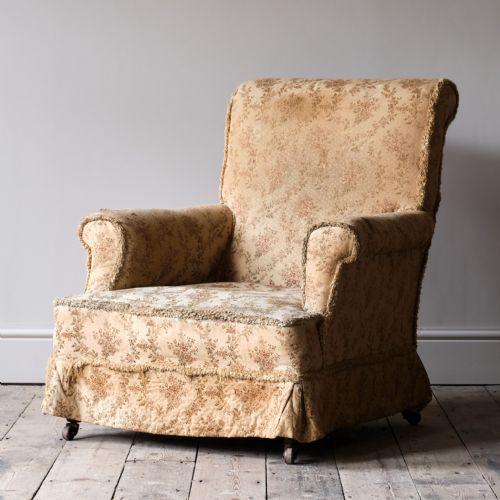


Beige Fabric Club Chair
A beige fabric club chair offers deep seating and reliable comfort, bringing understated warmth and traditional character into a sitting room.
Beige Fabric Club Chair
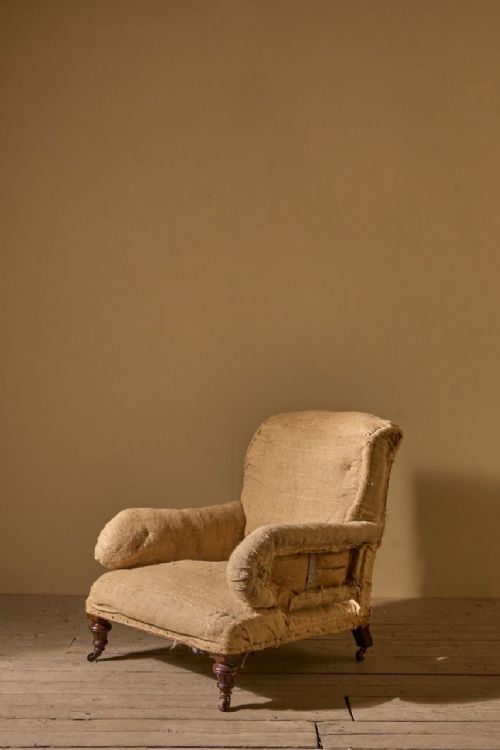
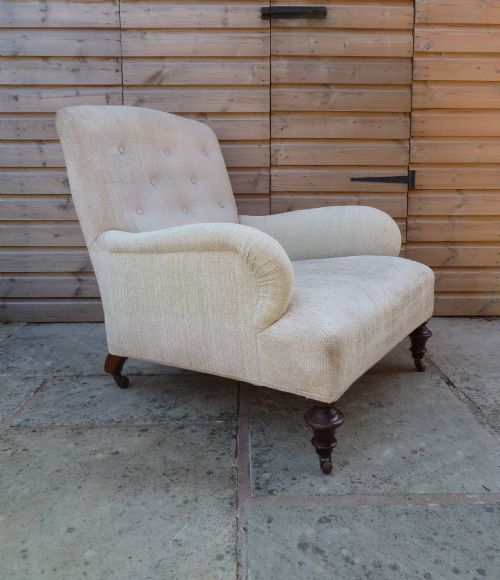
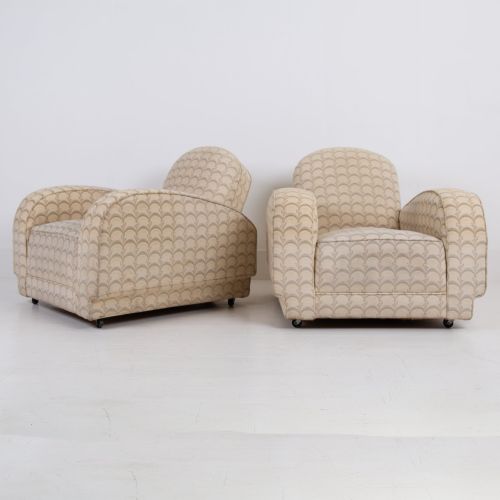
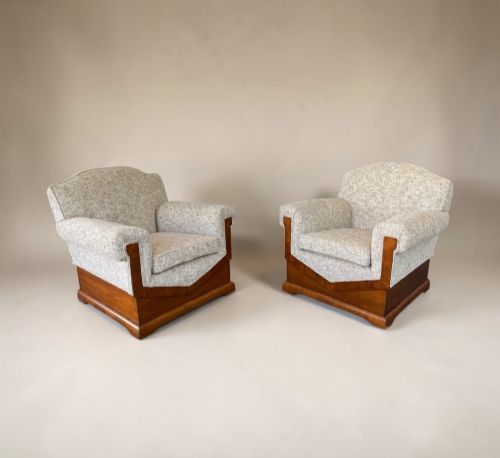
A beige fabric club chair provides deep, supportive seating rooted in traditional British and continental seating forms. When searching for a beige fabric club chair, buyers encounter pieces spanning the nineteenth century through to the mid-twentieth century, including Edwardian country house models and Art Deco lounge chairs. These armchairs typically present neutral upholstery that complements varied interior schemes while retaining period proportions.
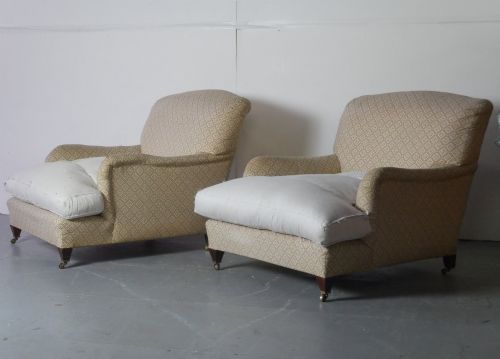
The selection ranges from large proportioned armchairs to matched pairs featuring scroll backs, Howard styles, and Woodstock designs. Many examples reflect vernacular English country house tastes alongside French Louis and Victorian influences. This variety allows collectors to find seating that matches specific historical periods while fulfilling modern functional needs.
Materials and construction
These armchairs rely on sturdy internal frames constructed from timber, wood, walnut, and mahogany. Makers built these supportive skeletons to withstand decades of heavy daily use, employing robust joinery methods suited to deep-seated forms. Metal and brass components sometimes appear in castors, springs, or structural fixings hidden within the frame.
Upholstery fabric provides the visible exterior surface, paired with internal stuffing and support materials appropriate to the manufacturing era. Surviving pieces demonstrate traditional upholstery techniques, ranging from simple textile coverings to decorative finishes like kilim carpets or themed horse racing prints.
Assessing quality in period seating
Quality in these armchairs stems from the integrity of the underlying timber frame and the balance of the proportions. Desirable pieces display harmonious lines, such as well-curved scroll backs and correctly scaled arms that support comfortable seating. The execution of signature styles, particularly Howard or Woodstock interpretations, marks the distinction between standard production and superior craftsmanship.
The choice and execution of the upholstery materials further separate examples within the range. Pieces retaining appropriate textile choices or specialist decorative elements demonstrate thoughtful curation by their makers. Structural soundness beneath the fabric remains the primary indicator of enduring merit.
Whytock & Reid·Howard and Sons
The Beige Fabric Club Chair Glossary
- Club chair
- A deep, comfortable armchair designed for relaxation, typically featuring low backs and upholstered arms. These seats became staples of English country houses and private clubs.
- Scroll back
- An armchair design where the top rail or arms curve outward in a scroll shape. This stylistic flourish appears frequently on nineteenth-century and Edwardian seating.
- Kilim
- A flatwoven textile originating from the Middle East and southeastern Europe. When used as upholstery, it adds distinctive geometric patterns and texture to an armchair.
- Edwardian
- Pertaining to the reign of King Edward VII, spanning the early twentieth century. Furniture from this era often reinterprets earlier comfortable domestic styles with lighter proportions.
Beige Fabric Club Chair: Frequently Asked Questions
How do I identify a country house armchair?
Country house armchairs are characterised by deep, generous proportions and unpretentious comfort designed for long periods of sitting. They frequently feature low backs, rolled or scroll arms, and upholstery chosen for domestic utility.
Evidence on this page shows these chairs appearing across nineteenth-century and Edwardian periods, often linked to specific traditional workshop styles such as Howard or Woodstock.
What is an Edwardian upholstered armchair?
Edwardian upholstered armchairs date from the early twentieth century and balance formal traditional styling with a distinct focus on domestic ease. They often utilise neutral fabric coverings or themed textiles like horse racing prints.
These chairs reflect the enduring popularity of deep seating arrangements within English country house interiors of that era.
How do Art Deco lounge chairs differ?
Art Deco lounge chairs from the 1930s introduce streamlined geometric influences and distinctive silhouettes compared to earlier Victorian or Edwardian seating forms. They maintain the comfortable club chair principle while embracing modern design sensibilities of the interwar period.
Pairs of these chairs appear alongside traditional models, offering a different stylistic direction within the same seating category.
Where do these armchairs fit best?
These neutral upholstered armchairs integrate smoothly into sitting rooms, libraries, and studies where comfortable seating is paramount. Their understated beige fabric allows them to anchor traditional or transitional decorative schemes without dominating a room.
Pairing options, such as matching Whytock & Reid armchairs, provide balanced seating arrangements for larger spaces.