



Beige Coastal Wall Artwork
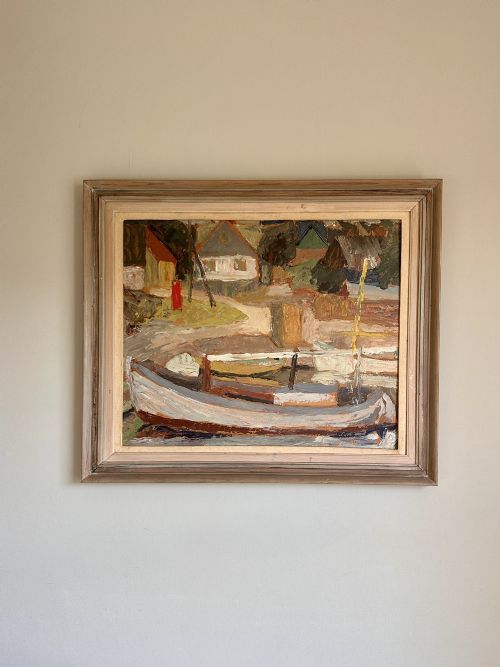
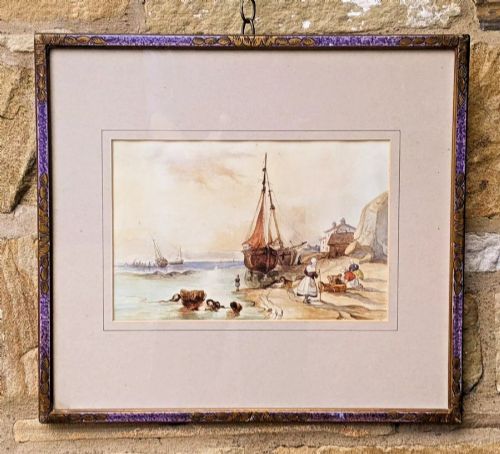
These beige coastal wall artwork pieces capture maritime scenes and seaside views through watercolours, oils, and gouache.
Beige Coastal Wall Artwork
When you search for beige coastal wall artwork, you are looking at paintings and watercolours depicting harbours, rivers, and shores from various periods. These works capture maritime scenes through the lens of nineteenth-century marine art, traditional European styles, and twentieth-century schools.
The versions you are most likely to meet on this page range from nineteenth-century watercolours of fishing harbours to modernist gouache paintings of sailboats. They span periods such as the nineteenth century, 1870, 1900, 1920, 1930, 1940, and 1960.
Originating largely from British and Scottish traditions, these pieces include works associated with the Newlyn School and British Impressionism. They offer a tangible connection to coastal history through depictions of locations like the River Humber, the Firth of Forth, and Sorrento.
Materials and techniques
These works are executed using watercolour pigment, oil paint, watercolour, ink, and gold leaf applied to paper and wood. Artists utilised these mediums to render coastal atmospheres, shipping scenes, and tidal landscapes with varied textures.
Support materials primarily consist of paper and wood panels, often framed behind glass to protect the delicate pigments. The combination of gouache, watercolour, and oil allows for both precise architectural details in harbour buildings and fluid interpretations of water and sky.
Beige Coastal Wall Artwork Retail Price Guide 2026
Typical asking prices for beige coastal wall artwork among the pieces listed under this phrase on Sellingantiques today, from the lower quarter to the upper quarter. They describe what is for sale here now, not the wider market.
Sailboats depicted at low tide maintain their composure even when the water completely vanishes.
Evaluating quality
Quality in these coastal works rests upon the artist's handling of light, atmosphere, and composition within the chosen medium. The distinction between standard decorative pieces and superior examples lies in the assuredness of the brushwork and the evocative capture of maritime space.
Context and provenance also influence standing, particularly when works can be attributed to recognised regional movements such as the Newlyn School or identified British painters. The integration of medium and paper or wood support determines the enduring visual presence of each painting.
The Beige Coastal Wall Artwork Glossary
- Gouache
- An opaque water-based paint that dries to a matte finish, allowing for bold blocks of colour and fine detail on paper.
- Watercolour
- A painting method in which the paints are made of pigments suspended in a water-based solution, often utilised for translucent coastal effects.
- Newlyn School
- An art colony based in Cornwall during the late nineteenth and early twentieth centuries, known for en plein air painting of coastal life.
- Provenance
- The chronological history of the ownership of a work of art, establishing its authenticity and origin.
- Seascape
- A work of art depicting the sea, ships, or coastal views as the primary subject.
Beige Coastal Wall Artwork: Frequently Asked Questions
What periods do these coastal paintings span?
The selection encompasses works from the nineteenth century through to the mid-twentieth century, including specific dates like 1870, 1900, 1920, 1930, 1940, and 1960.
These dates reflect movements from Victorian marine art to British modernism and the Newlyn School.
How should I hang watercolour art?
Watercolours on paper require protection from direct sunlight to prevent fading of the pigments and discolouration of the paper support.
Framing behind glass with appropriate mounts ensures the artwork remains stable in domestic environments.
What is the Newlyn School?
The Newlyn School was an art movement based in Cornwall that focused on realistic depictions of coastal scenes and local fishermen.
Paintings from this tradition often capture the atmospheric light and daily routines of working harbour communities.
What materials were used?
Artists employed paper and wood as supports, applying oil paint, watercolour pigment, ink, gouache, and occasionally gold leaf.
These varied mediums enabled both the fluid transparency of watercolours and the rich texture of oil paintings.