

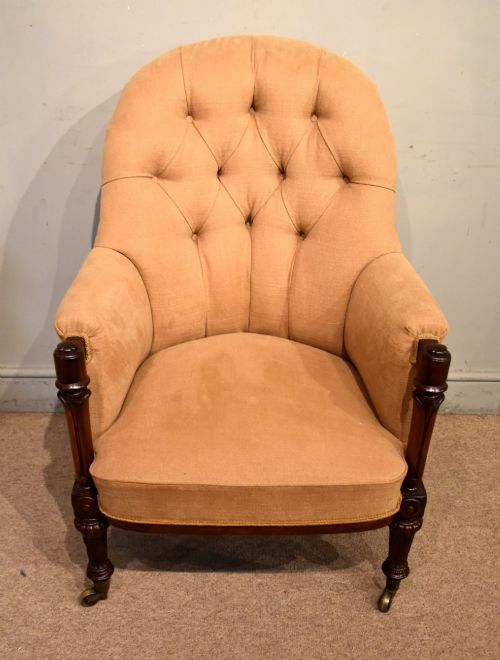
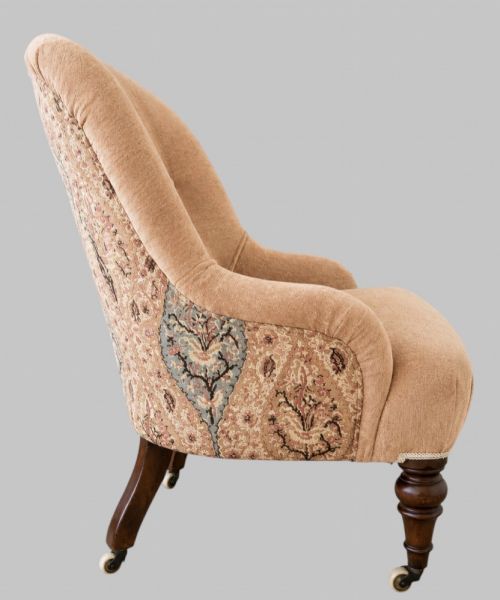


Beige Button Back Chair
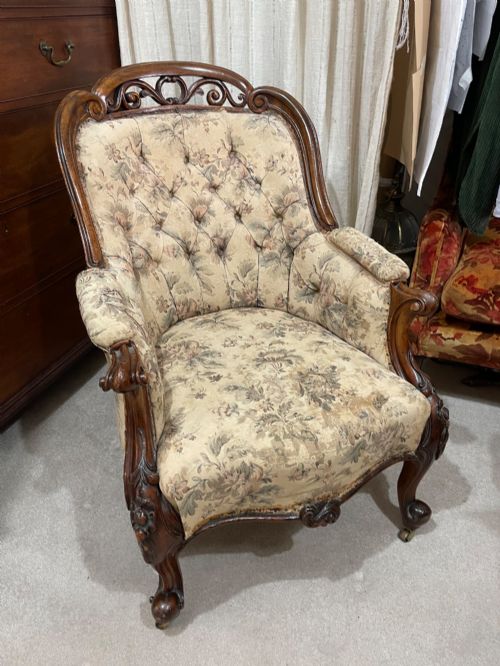
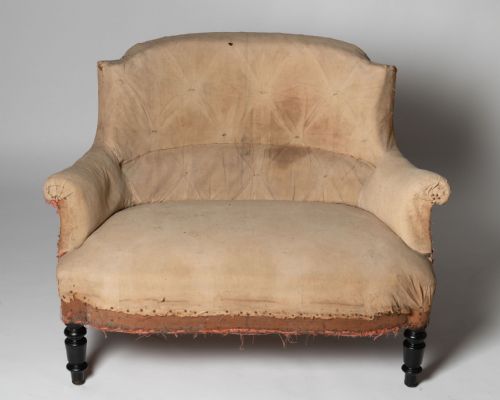
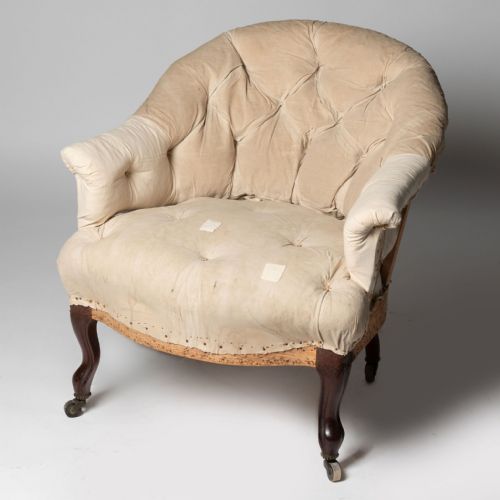
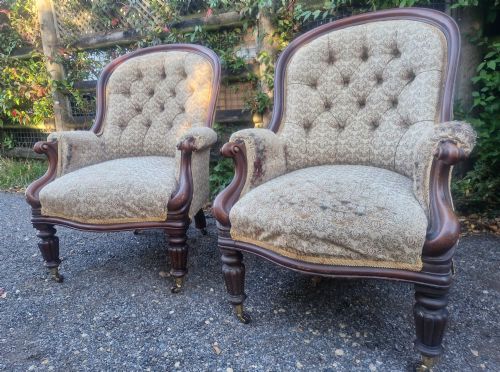
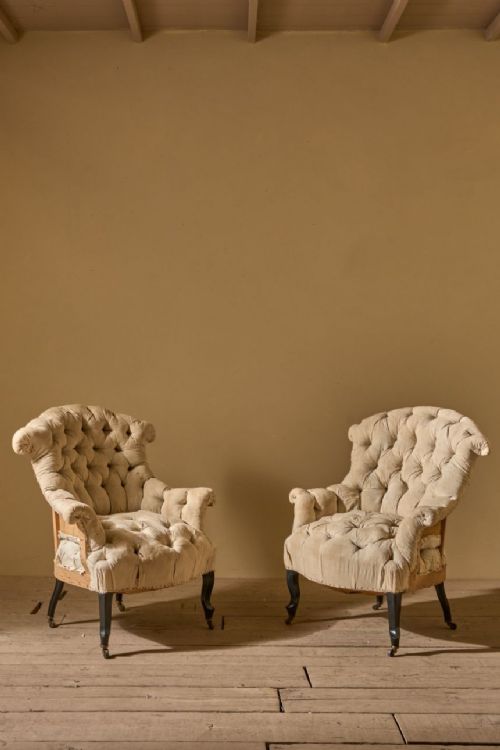
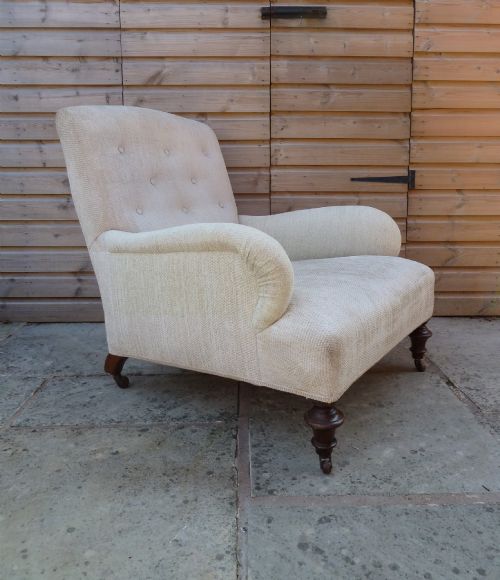
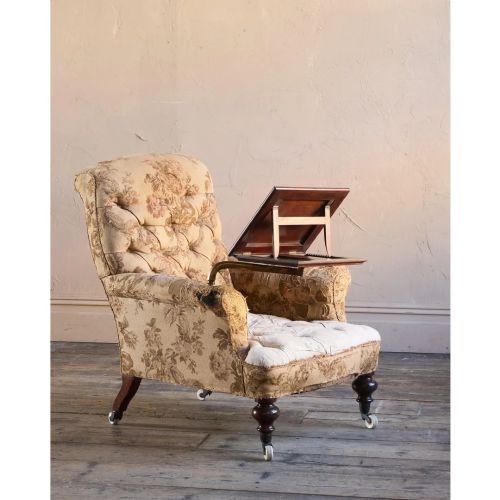
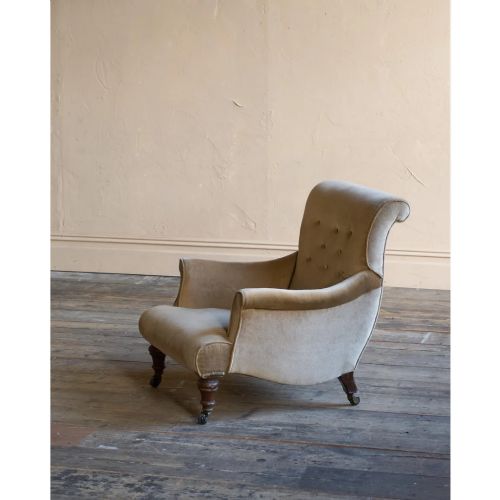
These beige button back chair examples bring nineteenth-century comfort and deep tufted upholstery straight to the traditional interior.
Beige Button Back Chair
A beige button back chair is typically a nineteenth-century seating form, spanning Victorian, Regency, and Napoleon III periods, designed for the library, fireside, or bedroom. These pieces appear as nursing chairs, slipper chairs, and low library armchairs.
The evidence shows forms ranging from small child chairs and bedroom chairs to substantial library armchairs and fireside chairs. Victorian examples in mahogany or walnut dominate the selection, alongside French chairs and country house styles.
How they were made
Frames are constructed from solid timber, specifically mahogany, rosewood, walnut, and wood, with occasional iron frames or brass details. Joinery supports the weight of deep padding and heavy sprung seats.
Upholstery relies on fabric, velvet, and specialised textiles like Robert Kime Avebury fabric, pulled tight by hand and secured with deep buttoning across the backrest.
Beige Button Back Chair Retail Price Guide 2026
Typical asking prices for beige button back chair among the pieces listed under this phrase on Sellingantiques today, from the lower quarter to the upper quarter. They describe what is for sale here now, not the wider market.
Listings span the nineteenth century, utilising mahogany, walnut, rosewood, velvet, and brass across Victorian, Regency, and Napoleon III periods.
What varies in quality
Quality rests upon the proportion of the wooden frame and the precision of the tufted buttoning. Finer pieces demonstrate sculpted mahogany or walnut arms and balanced framing that maintains its posture over time.
The distinction between standard workshop production and finer maker pieces lies in the crispness of the carved details and the integrity of the underlying frame construction.
The Beige Button Back Chair Glossary
- Button back
- A method of upholstery where buttons are pulled deep into the padding at regular intervals to create a diamond pattern. This technique secures the interior stuffing and provides firm support.
- Nursing chair
- A low-seated Victorian chair originally designed for feeding infants or sitting comfortably near a nursery fire. These pieces feature compact proportions and generous backrests.
- Spoon back
- A padded chair back shaped like the bowl of a spoon, curving inward to fit the human spine. It is frequently seen on Victorian and Regency library or fireside seating.
- Napoleon III
- A nineteenth-century French design period characterised by eclectic revival styles, deep comfort, and elaborate upholstery. Pieces from this era often feature rich fabric coverings and buttoned seats.
- Library armchair
- A sturdy, upholstered seat intended for prolonged reading, often paired with low arms or reading stands. These chairs prioritize substantial padding and robust wooden frames.
Beige Button Back Chair: Frequently Asked Questions
What is a button back chair?
A button back chair is a nineteenth-century seating form featuring deep tufted buttons pulled into the upholstered backrest.
This technique creates distinctive diamond indentations that hold the internal padding firmly in place while offering a supportive surface.
Where were nursing chairs used?
Nursing chairs were traditionally placed in bedrooms or nurseries for comfort during childcare.
Their low seats made them practical for sitting close to the floor or beside a low fireplace.
How do I date a Victorian armchair?
Dating relies on examining the timber frame, upholstery style, and structural materials such as mahogany or iron.
Victorian pieces often combine dark woods with sprung upholstery and specific design markers from the mid to late nineteenth century.
What woods were used in these frames?
Cabinet makers built these frames using dense hardwoods like mahogany, walnut, and rosewood.
Selected pieces also incorporate metal or iron components within the internal structure for added strength.