

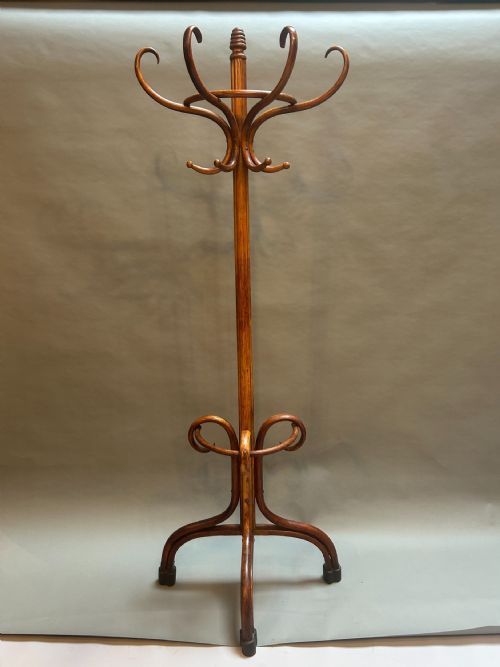


Beechwood Coat Tree
These beechwood coat tree pieces combine steam-bent engineering with practical utility, offering robust hallway storage designed for daily use.
Beechwood Coat Tree
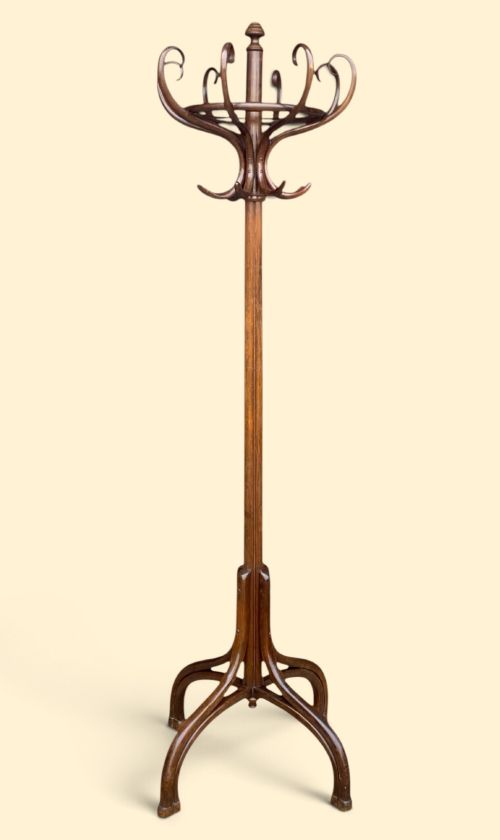
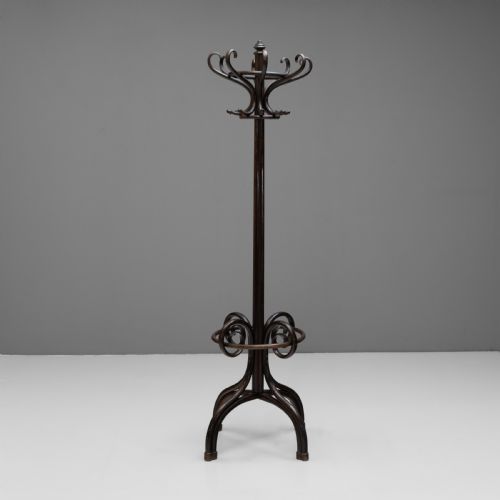
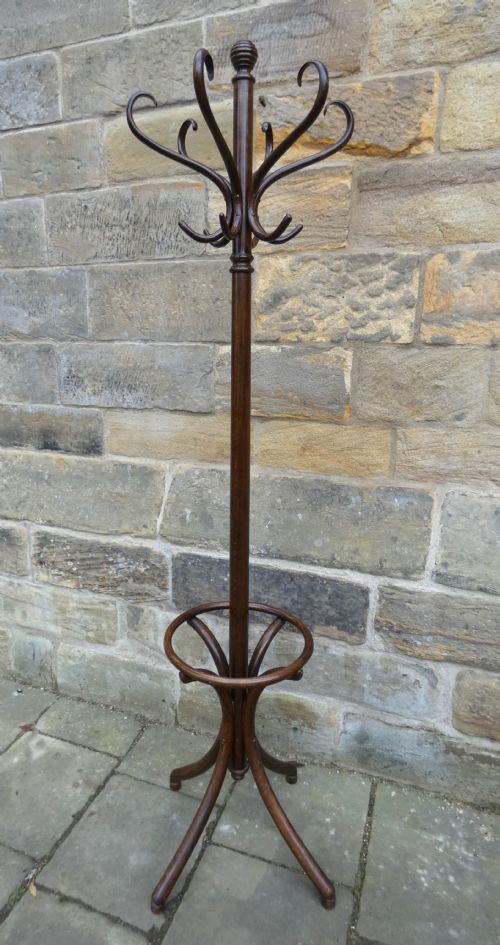
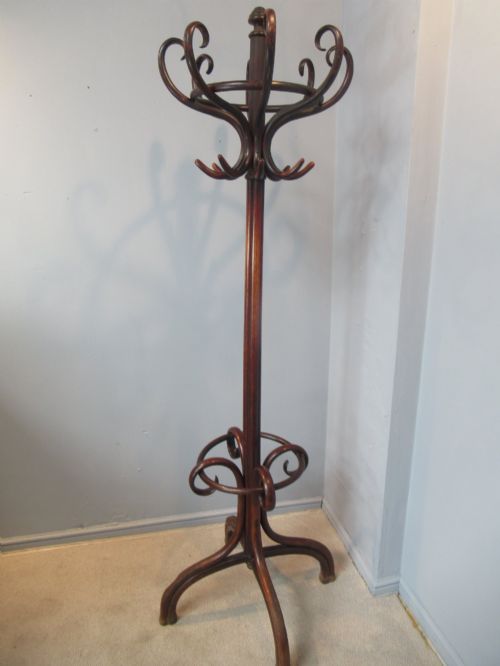
A beechwood coat tree is a vertical hall stand designed for hanging hats, coats, and accessories in an entranceway or hallway. The pieces seen here span the Victorian, Edwardian, and early twentieth century periods, reflecting a sustained period of domestic design innovation. These items frequently take the form of tall, freestanding poles with branching hooks at the top and often incorporate lower rings for umbrella and stick storage.
The versions most commonly met on this page are bentwood designs, frequently associated with Austrian makers and the Thonet style. They utilise steam to curve solid timber into rounded arches and sweeping scrollwork hooks. Demi-lune half hall stands and revolving variants also appear, offering alternative footprints for tighter spaces.
Originating largely from late nineteenth and early twentieth century production, these stands demonstrate how industrial steam-bending techniques entered the domestic interior. Their lighter weight compared to traditional carved oak or mahogany hall furniture made them versatile additions to smaller Victorian and Edwardian hallways.
How they were made
The construction of a beechwood coat tree relies on the bentwood technique, where straight sections of beech or beechwood are subjected to steam until pliable. Craftsmen then place the softened timber into metal forms or wooden jigs to dry and retain curved profiles such as loops, arches, and umbrella rings. This method produces strong, resilient structural components without the need for complex mortise and tenon joints at every junction.
Wood stain and applied wood finishes protect the underlying beech grain while evening out the colour across different component parts. Glass elements occasionally appear in the hardware or accessory trays of these stands, providing a contrasting texture to the polished bent timber. Screws and metal bolts frequently secure the central poles and branching hook assemblies together, allowing for structural stability under heavy garments.
Beechwood Coat Tree Retail Price Guide 2026
Typical asking prices for beechwood coat tree among the pieces listed under this phrase on Sellingantiques today, from the lower quarter to the upper quarter. They describe what is for sale here now, not the wider market.
Some revolving stands let you spin your winter overcoat like a merry-go-round while searching for your car keys.
What varies in quality
The quality of a beechwood coat tree depends on the integrity of the steam-bent curves and the thickness of the timber used in the main upright shaft. Superior examples maintain the tension and precise geometry of their curved hooks without sagging or distortion over decades of weight-bearing use. Finer pieces often feature maker labels or distinct stamps embedded into the wood, indicating output from established workshops such as Thonet or Fischel.
Thonet·Fischel
The Beechwood Coat Tree Glossary
- Bentwood
- Wood that has been shaped by steam and pressure into curved forms. This technique creates lightweight yet durable furniture frames without traditional joinery.
- Demi-Lune
- Half-moon shape, describing hall stands designed to sit flat against a wall. This profile saves floor space in narrow corridors.
- Revolving
- Turning on an axis, used to describe hall stands with rotating upper sections for easy access to hanging garments. This mechanism allows multiple coats to be reached from a stationary position.
- Thonet Style
- Furniture design following the pioneering bentwood methods developed by Michael Thonet. It is characterised by minimalist curved lines and functional lightness.
- Hall Stand
- A piece of furniture placed in an entrance hall for coats, hats, and walking sticks. These often combine vertical hanging hooks with lower umbrella wells.
Beechwood Coat Tree: Frequently Asked Questions
How do I clean bentwood?
Clean beechwood surfaces with a slightly damp cloth and dry them immediately to protect the wood finish. Avoid harsh chemical cleaners that can strip the vintage polish.
Condition the wood periodically with appropriate furniture wax to maintain the sheen and prevent the bent timber from drying out.
Are these stands sturdy enough for heavy coats?
These items were built to support heavy Victorian and Edwardian winter garments and walking gear. The bentwood construction distributes weight effectively down the central upright pole.
Distributing coats evenly around the hooks helps maintain balance and prevents undue strain on individual bentwood branches.
How do I date a bentwood stand?
Examine the piece for maker stamps, paper labels, or patent marks beneath the base or along the structural framing. Early nineteenth and twentieth century pieces often display distinct workshop branding.
Stylistic indicators such as Art Nouveau curves or Edwardian turning details also help narrow down the manufacturing decade.
Where should I place a coat tree?
Position the piece in an entrance hall or porch where guests can readily hang hats and coats upon arrival. Ensure there is adequate clearance around the circumference for hanging garments.
Keep the stand away from direct heat sources and strong sunlight to protect the wood stain and prevent the beech timber from warping.