

Bedroom Clothes Cabinet
A bedroom clothes cabinet offers generous storage for garments, merging practical utility with period craftsmanship.
Bedroom Clothes Cabinet
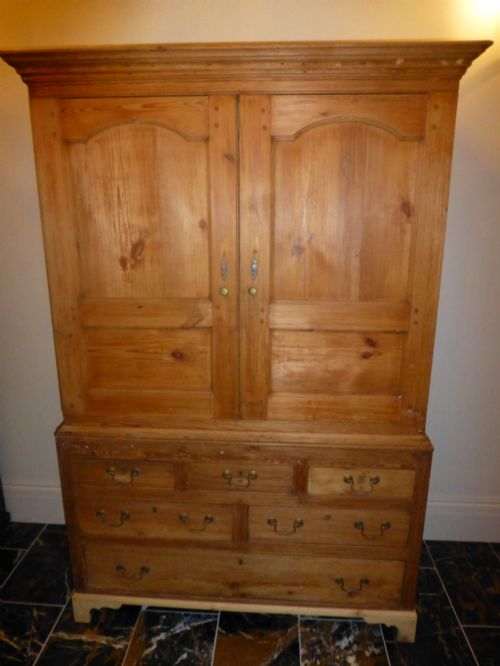
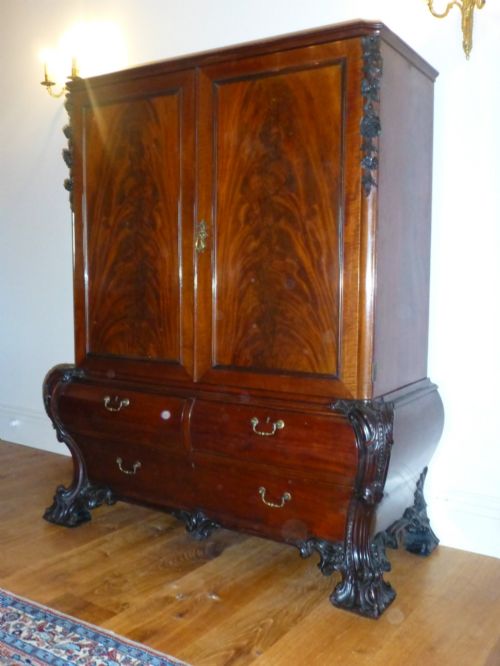
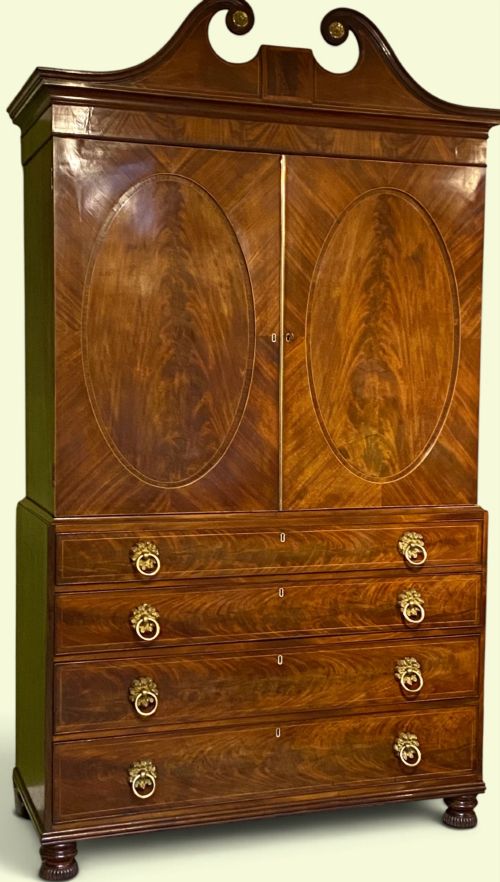
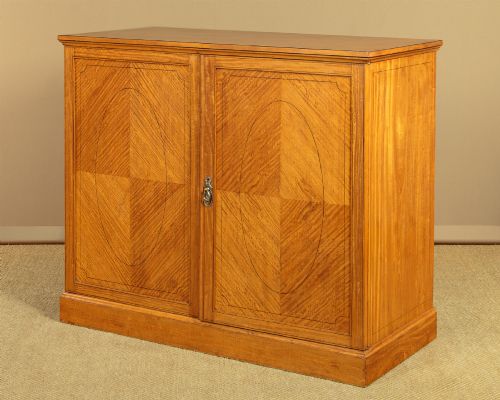
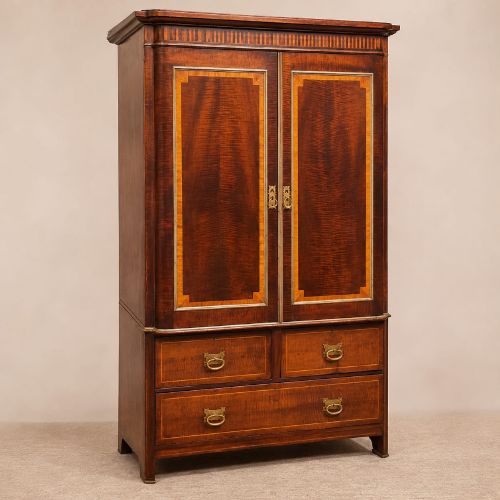
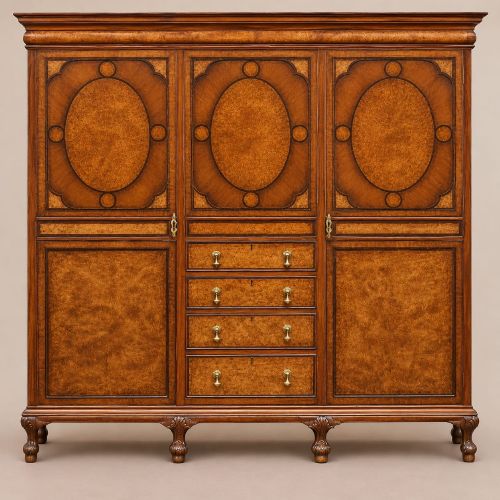
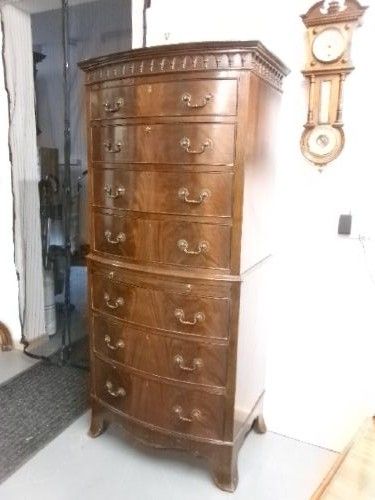
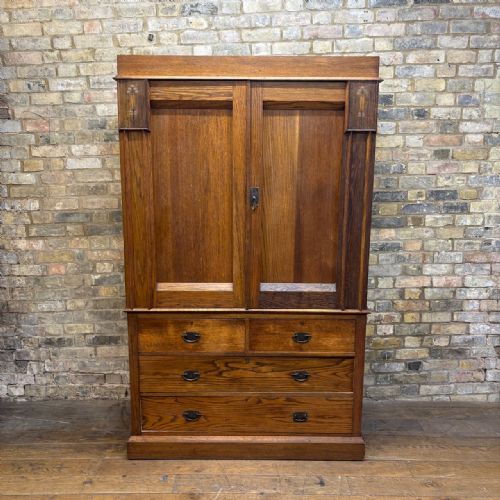
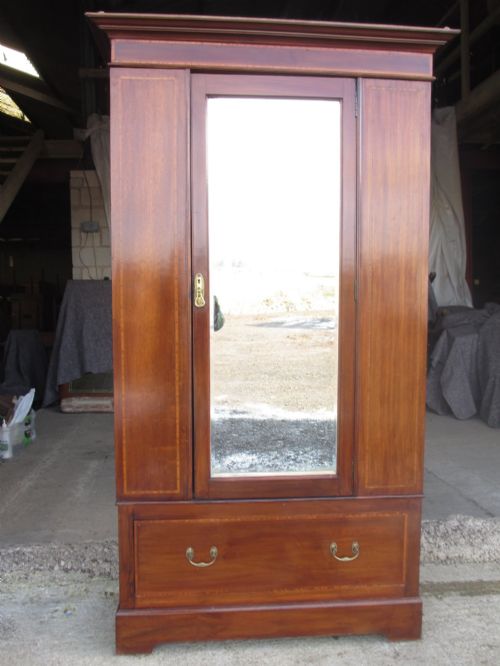
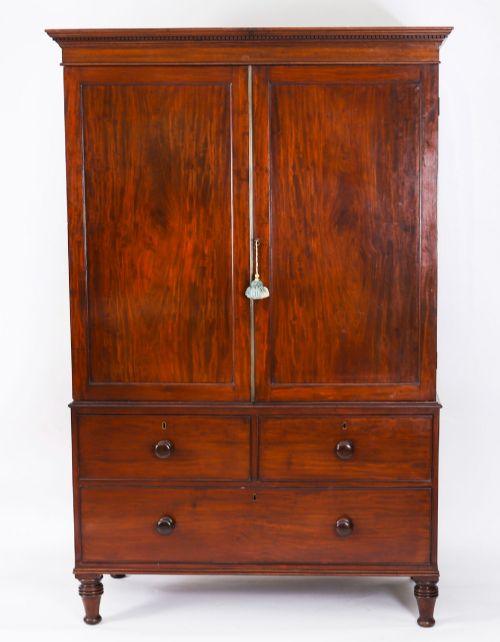
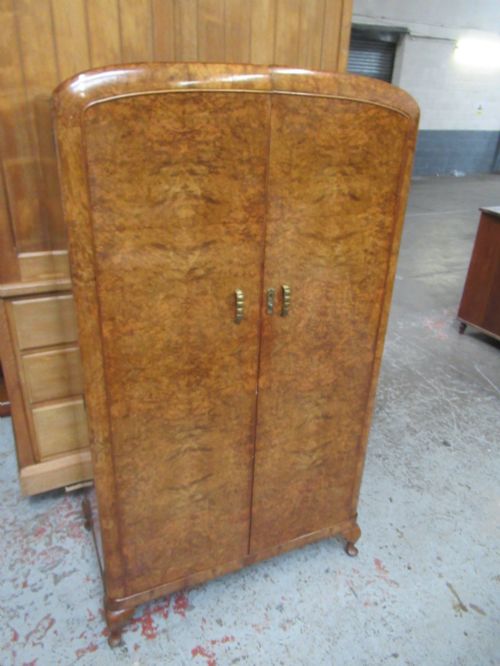
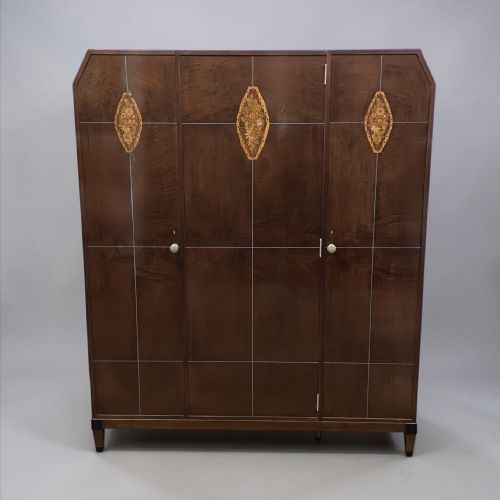
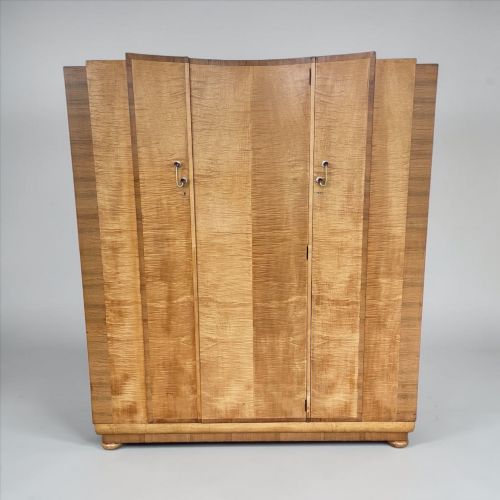
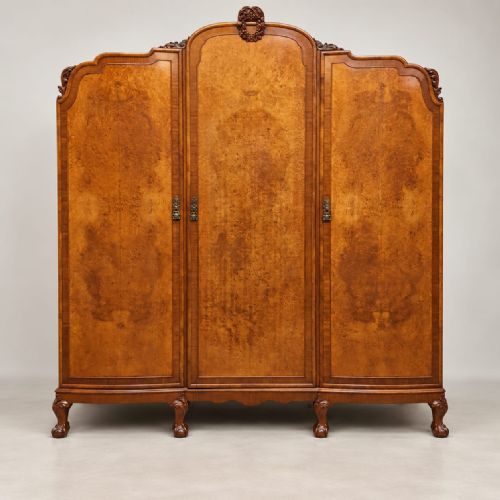
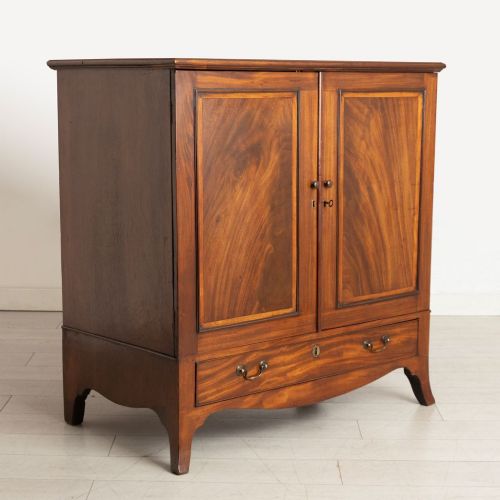
A bedroom clothes cabinet spans several distinct forms including wardrobes, linen presses, armoires, and compactum wardrobes. These pieces emerge across the Georgian, Victorian, Edwardian, and Art Deco periods, utilising traditional cabinet-making origins.
The most common examples on this page are mahogany and burr walnut wardrobes from the Georgian and 1920s eras, alongside nineteenth century linen presses. Buyers encounter both double and triple door configurations, frequently equipped with internal drawers and hanging space.
Assessing Standard and Detail
Quality separates along the depth of timber selection and the precision of the cabinet work. Superior examples display carefully matched veneer grains, intricate satinwood inlay, and hand-carved decorative motifs rather than plain surfaces.
The integrity of internal fittings, such as original sliding trays in linen presses or custom compartments in fitted wardrobes, marks the distinction between standard utilitarian pieces and high-end commissions.
Bedroom Clothes Cabinet Retail Price Guide 2026
Typical asking prices for bedroom clothes cabinet among the pieces listed under this phrase on Sellingantiques today, from the lower quarter to the upper quarter. They describe what is for sale here now, not the wider market.
Early pine wardrobes were frequently built massive to accommodate voluminous Victorian skirts, requiring entire rooms to be rearranged just to let the doors swing open.
Heals Of London·Hille for Harrods·Crown Furniture·Waring & Gillow·Maple & Co
The Bedroom Clothes Cabinet Glossary
- Linen Press
- A tall storage piece combining upper cupboard doors enclosing sliding trays with lower chest drawers.
- Compactum Wardrobe
- A multi-section wardrobe designed to hold various garments, incorporating hanging space, shelves, and internal drawers.
- Flame Mahogany
- Timber sliced to reveal a distinctive, flamy grain pattern, prized for high-grade cabinet fronts.
- Blind Fretwork
- Carved geometric ornamentation applied to cornices or friezes without piercing the wood right through.
- Inlay
- Contrasting woods or materials inserted into hollowed spaces on a surface to form decorative patterns.
Bedroom Clothes Cabinet: Frequently Asked Questions
How do I choose between a wardrobe and a linen press?
Wardrobes focus on hanging space for longer garments, whereas linen presses incorporate interior sliding trays originally intended for folded linen.
Consider the types of clothing you need to store and whether shelves or hanging rails suit your daily routine better.
Can these large cabinets be dismantled for moving?
Many nineteenth century and earlier pieces, such as knockdown wardrobes, were constructed to be fully disassembled into modular sections for transport.
Check the listing details to confirm whether a specific cabinet utilises bolts or knock-down fixings for assembly.
What is the difference between an armoire and a wardrobe?
An armoire is a traditional continental European cupboard form, while a wardrobe is typically British and often fitted with internal clothes hooks or hanging rails.
Both serve the primary function of storing garments, though armoires frequently display heavier provincial carving.
How do I identify Art Deco clothing cabinets?
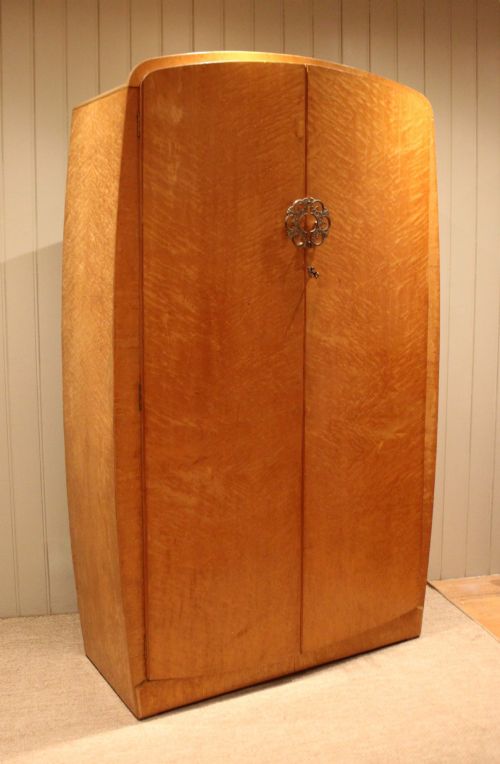
Art Deco cabinets dating around the 1930s favor clean geometric lines, contrasting veneers like birds eye maple and walnut, and minimal ornamentation.
They often present a streamlined silhouette that contrasts with the heavier, carved detailing seen on Victorian pieces.