


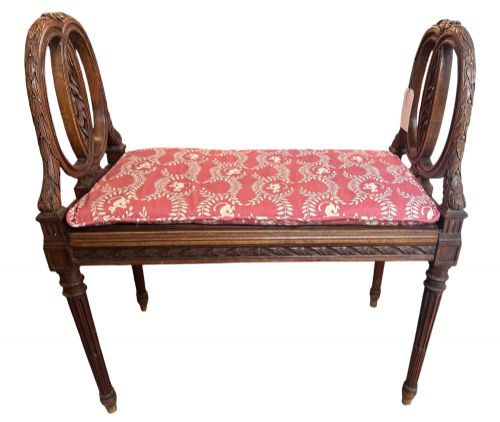


Bed End Stool Bench
A bed end stool bench brings low seating and soft upholstery directly to the foot of a bed or the span of a window.
Bed End Stool Bench
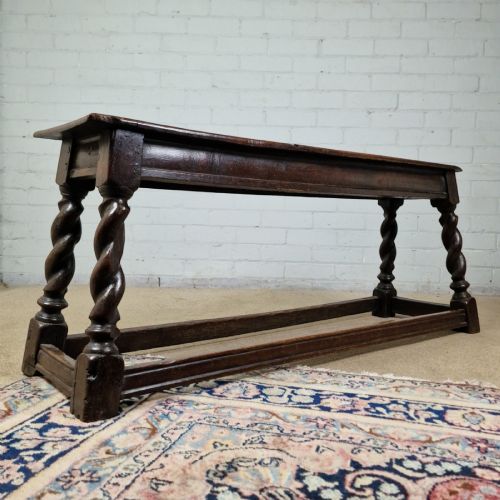
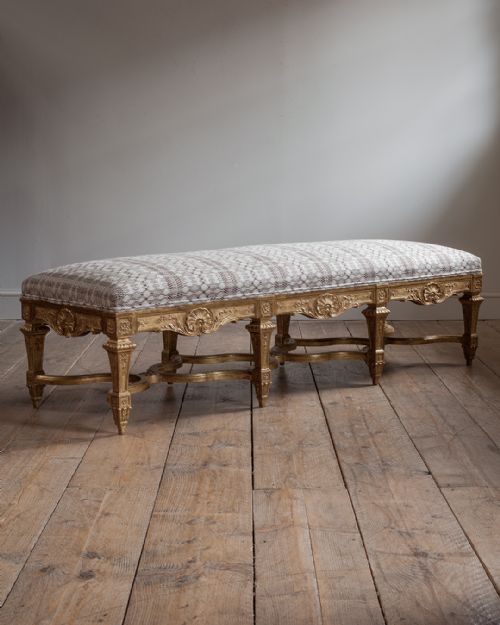
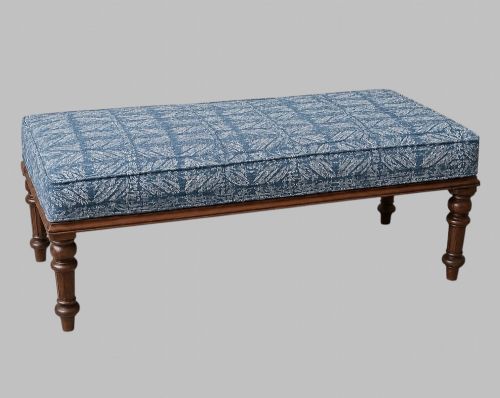
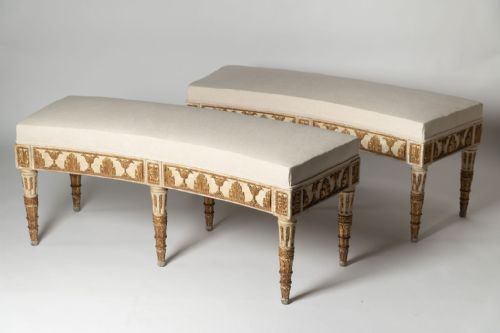
A bed end stool bench takes many shapes across the inventory, ranging from narrow window seats and long dressing stools to low foot boards and large ottomans. These items serve rooms where a compact seat or foot rest is required without blocking light or passage.
The pieces span multiple eras, including the eighteenth century, the nineteenth century, the Edwardian period, and the early twentieth century. Makers of these centuries drew on diverse styles such as Victorian, Regency, French Provincial, Arts and Crafts, English Baroque, Louis XIV Revival, and Italian Neoclassical.
Materials and Construction
Carpenters formed the frames of these benches using solid hardwoods such as mahogany, walnut, oak, birch, and rosewood, alongside softer painted woods and gilded wood. Carved details like ball and claw feet, fluted legs, and cabriole supports appear frequently across the structural frames.
Upholstery defines the upper surface, utilising fabrics including velvet, linen, and branded textiles like those from Robert Kime, Liberty, and William Morris. Brass accents and painted finishes provide additional surface decoration to the timber structures.
Some nineteenth-century makers evidently believed nobody could ever have too many places to sit while looking out the window.
Standards of Craft
Quality rests on the integrity of the timber frame and the precision of any carved ornamentation, such as hand-carved cabriole legs or ball and claw details. Heavier solid woods and tighter joinery distinguish the superior examples from simpler utilitarian forms.
The standard of upholstery and the retention of period textiles or appropriate designer fabrics significantly influence the finish. Professional re-upholstering using traditional stuffing and high-grade fabric preserves the architectural balance of the window seat or long stool.
The Bed End Stool Bench Glossary
- Window seat
- A long, narrow form of stool or bench designed specifically to fit within the architectural recess of a window bay.
- Ottoman
- A low, fully upholstered seat or footstool lacking a back or arms, often built on a substantial wooden frame.
- Cabriole leg
- A furniture leg that curves outward at the knee and tapers inward toward the foot, typical of many refined seating designs.
- Giltwood
- Timber that has been coated with a thin layer of gold leaf or gilt paint to create a rich decorative surface.
- Duet stool
- An extended music or piano stool built to accommodate more than one person side by side.
Bed End Stool Bench: Frequently Asked Questions
Where should I place a bed end stool bench?
These benches sit comfortably at the foot of a bed, along a hallway, or beneath a low window where extra seating is useful. Their compact height ensures they remain unobtrusive in bedrooms and dressing rooms.
Positioning one in a reception room provides a flexible spot for resting shoes or books without dominating the floor space.
How do I identify a window seat?
Window seats typically feature a long, narrow proportion designed to match the width of a window frame or bed end. They often incorporate open frames or low upholstered tops that do not obstruct outside light.
Earlier examples may display stylistic details from the Georgian, Victorian, or Edwardian eras on their exposed wooden legs and rails.
Are these benches suitable for daily sitting?
Most of these pieces are structurally sound and built on sturdy hardwood frames of mahogany, walnut, or oak. Regular use is well supported provided the joints remain tight and the internal webbing is secure.
Pieces with delicate giltwood or intricate carved frames benefit from thoughtful placement where they will not experience heavy industrial wear.
What styles are common among these stools?
The inventory encompasses a wide variety of historical styles, from restrained eighteenth-century forms to ornate Louis XIV Revival giltwood and Victorian walnut designs. Arts and Crafts and French Provincial pieces also appear frequently.
This broad stylistic range allows buyers to match a bench to specific period interiors or mix them into eclectic modern rooms.