
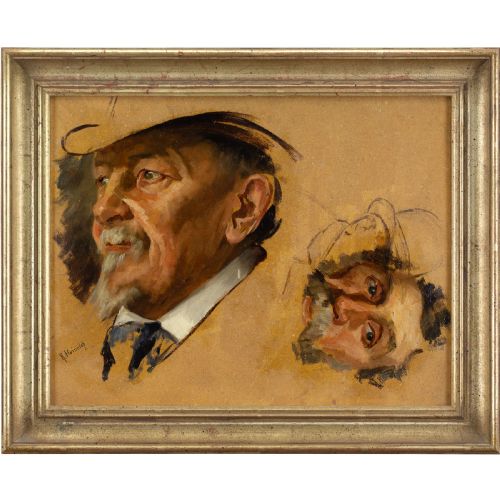
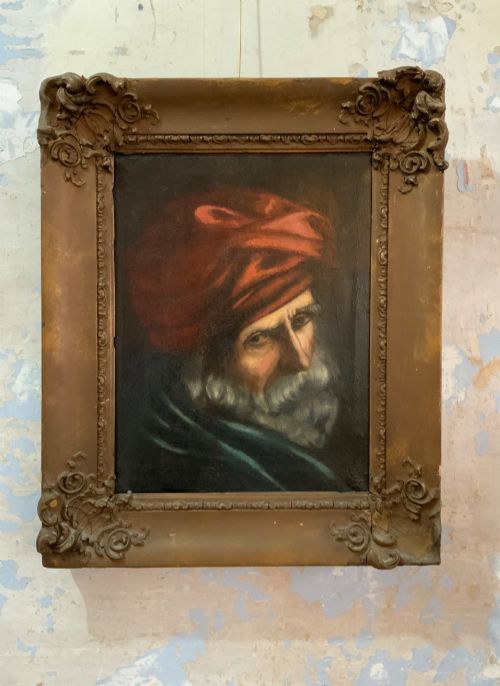
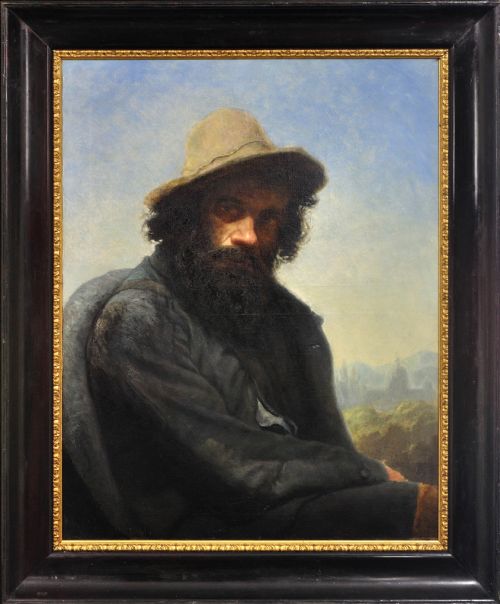
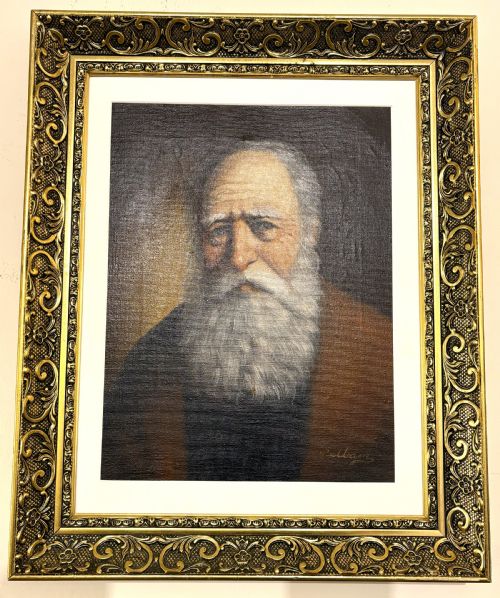


Bearded Man Portrait Painting
A bearded man portrait painting captures character and gravity through oil on canvas or panel, offering a connection to sitters from past centuries.
Bearded Man Portrait Painting
When you search for bearded man portrait painting, you encounter oil paintings on canvas and wood panel originating predominantly from the nineteenth century. The subjects range from identified figures such as engineers and curators to unidentified gentlemen, philosophers, and historical characters.
The works span academic realism, Orientalism, and post-impressionism, reflecting European schools from Britain, France, Germany, and Denmark. Most pieces arrive in period frames, often gesso or gilt moulding, preserving their original presentation.
How they were made
Artists built these works primarily using oil paint applied to stretched canvas or wooden panels, sometimes incorporating gold leaf within the decorative framing. Pigments were layered to achieve depth in facial hair, skin tones, and fabric textures.
Support structures typically involved wood stretchers for canvases or rigid timber panels, housed within gilt gesso or moulded frames that were often contemporaneous with the painting.
Materials recorded across these artworks include oil paint, canvas, wood, gold leaf, and gilt moulding.
What varies in quality
The distinction between works rests on the artist's handling of light, anatomical precision, and the psychological depth captured in the sitter's expression. Masterful brushwork defines the texture of a beard and the luminosity of skin, separating skilled academic execution from simpler decorative output.
Condition of the pigment layer, stability of the canvas or wood panel, and the originality of the accompanying gilt moulding also influence the standing of an individual piece.
Albin Mattenheimer·Edouard Julien·Ferdinand Victor Leon Roybet·Frederick Goodall·Bernd Funke·Frederick Christian Lund·William Robert Dickinson·Roberto Venturi·George Frederic Watts·Otto Rothenburgh·William Biscombe Gardner·Henry John Dobson·Fritz Reusing·Georg Achen·Frederik Vermehren
The Bearded Man Portrait Painting Glossary
- Canvas
- A heavy woven fabric used as a surface for oil painting. It is typically stretched tightly over a wooden frame before pigment is applied.
- Oil paint
- A slow-drying paint made by combining pigment particles with a drying oil such as linseed. This medium allows for smooth blending and rich depth of colour.
- Gilt moulding
- Decorative timber framing treated with a thin layer of gold leaf or metallic gilt finish. It was frequently shaped with ornate gesso ornamentation.
- Academic realism
- A style of painting produced under the influence of European academies of art, prioritising accurate observation, classical composition, and technical proficiency.
- Panel
- A flat wooden support used as an alternative to canvas for oil paintings. It provides a rigid surface that withstands warping when properly seasoned.
Bearded Man Portrait Painting: Frequently Asked Questions
What periods do these portraits come from?
The available pieces originate largely from the nineteenth century, with examples extending into the seventeenth century and the mid-twentieth century.
Styles shift from academic realism and Orientalism to post-impressionist approaches, reflecting the prevailing artistic standards of each era.
How were these paintings framed originally?
Many works are housed in their original gilt gesso or moulded timber frames, which complement the dark tones common in nineteenth-century portraiture.
These frames often show period wear that matches the age of the canvas or panel within.
Who are the subjects in these paintings?
The sitters include named professionals such as geologists, engineers, and museum curators, alongside anonymous gentlemen, philosophers, and figures in historical costume.
European schools are well represented through works depicting German, French, Danish, and British subjects.
How do I care for an oil painting on wood or canvas?
Keep the artwork away from direct sunlight and dramatic fluctuations in room temperature or humidity to protect the wood panel and canvas support.
Dust the surface and frame gently with a dry, soft brush without applying cleaning solutions to the oil paint.