
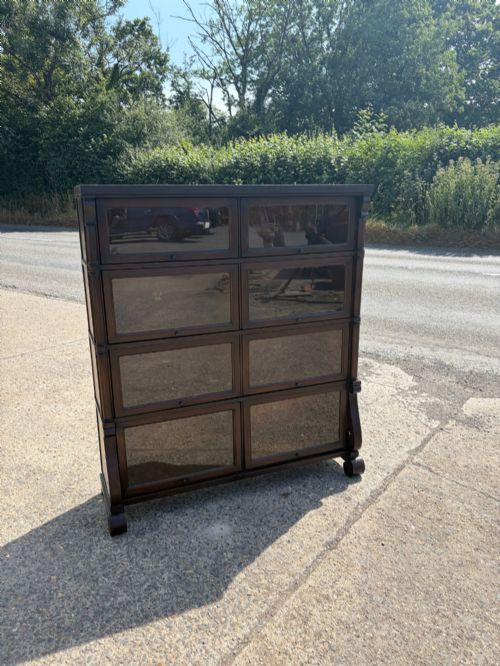
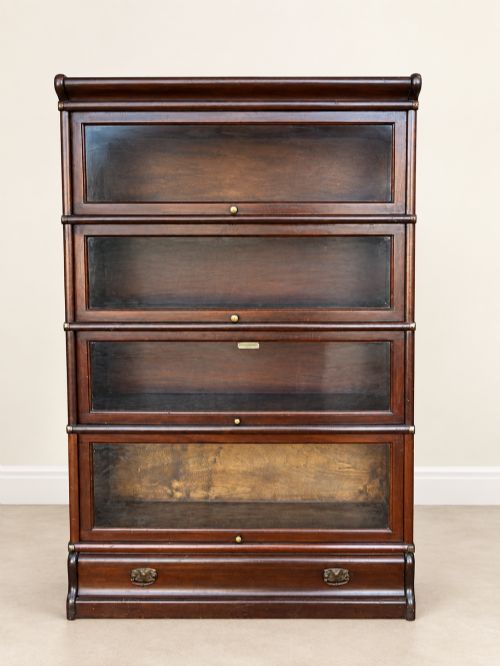
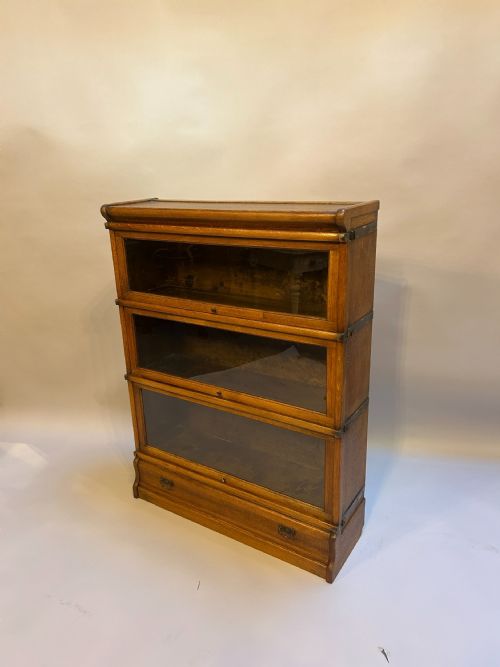
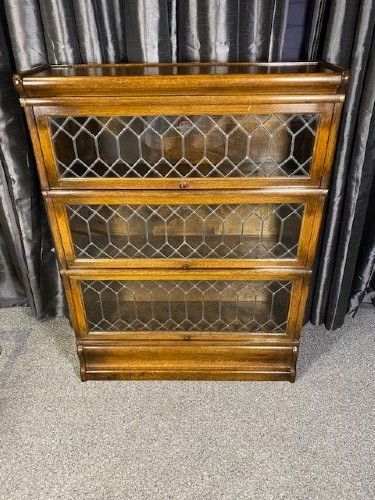
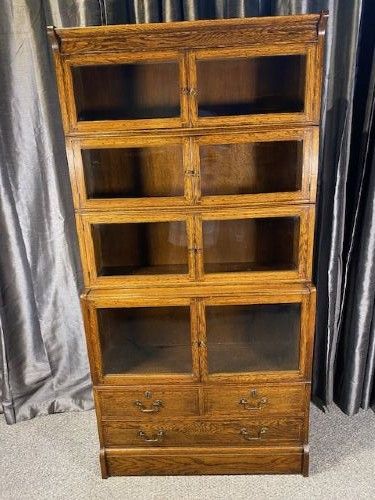
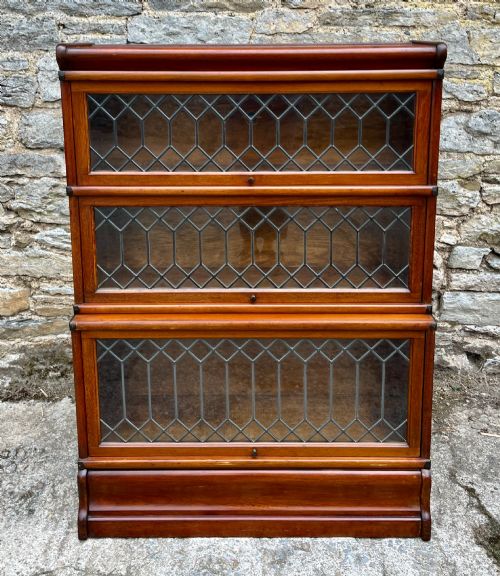
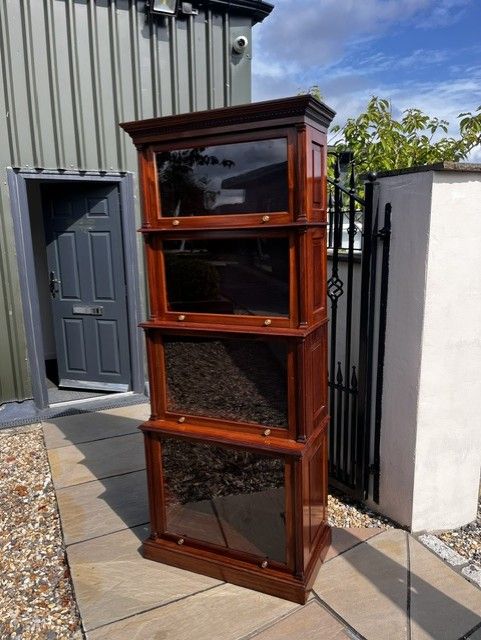

Barrister Sectional Bookcase
A barrister sectional bookcase brings modular versatility and period character to any room, offering individual glass-fronted tiers that stack together.
Barrister Sectional Bookcase
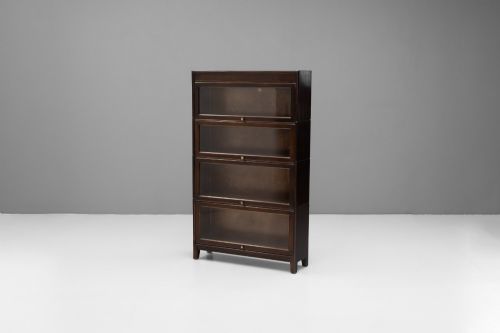
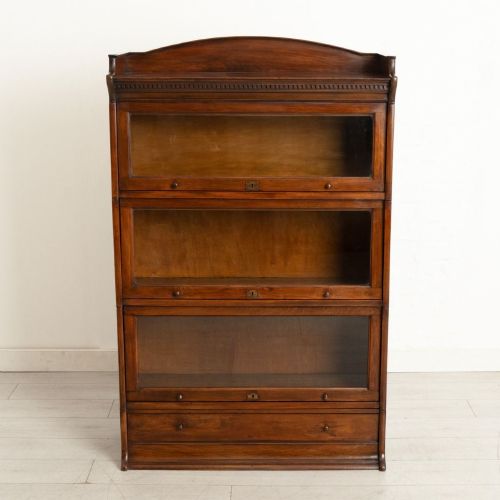
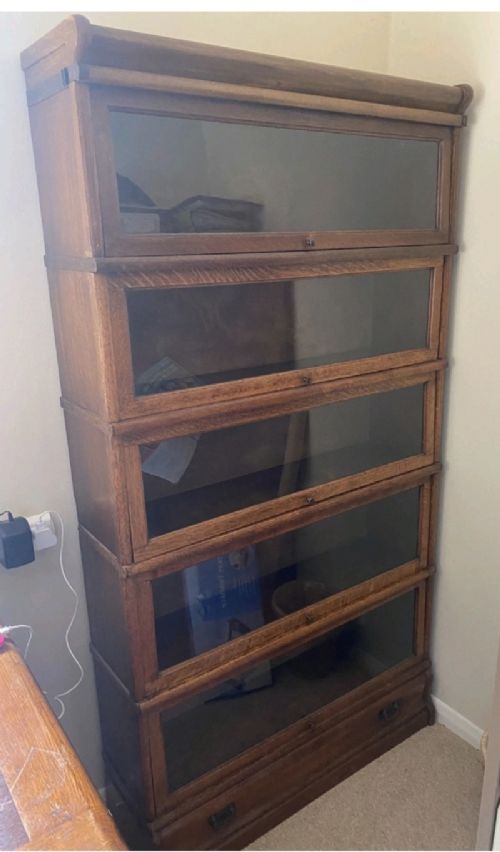
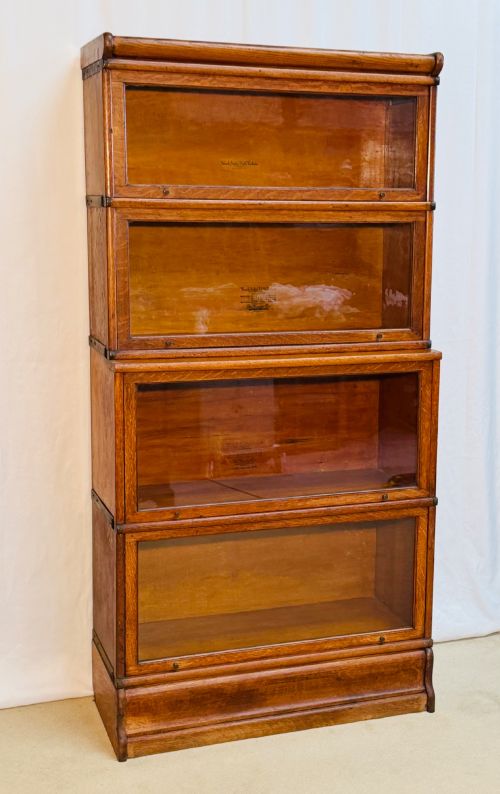
A barrister sectional bookcase consists of modular tiers that stack one upon another, allowing collectors to build tall storage units or keep lower configurations. Most examples encountered on this page date from the Edwardian era through the nineteen-thirties, reflecting a period when office and domestic libraries required adaptable storage.
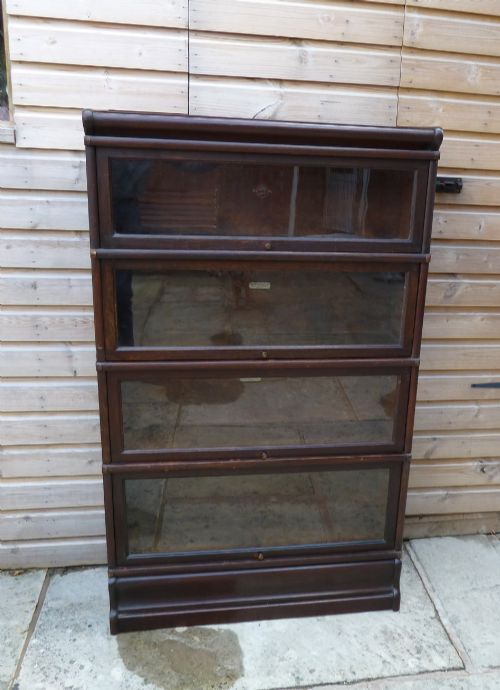
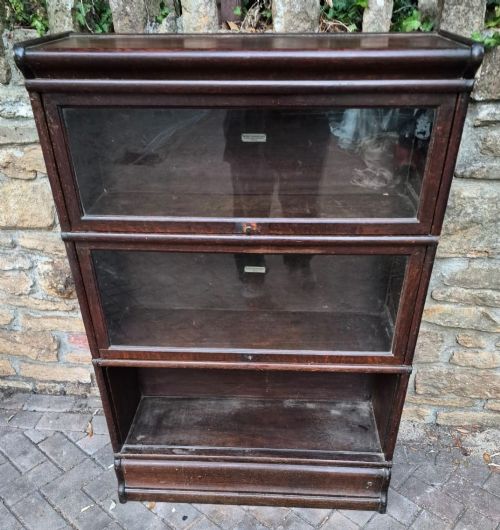
The form typically comprises multiple glazed sections with upward-lifting doors that slide back into the cabinet above the books. Oak and mahogany dominate the offerings, spanning simpler utilitarian office pieces to finely inlaid examples designed for domestic display.
Materials and construction
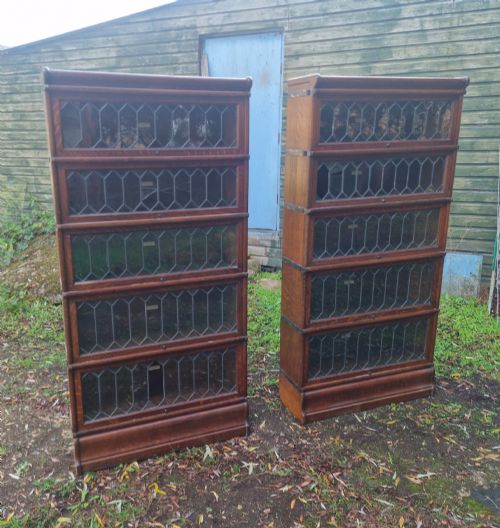
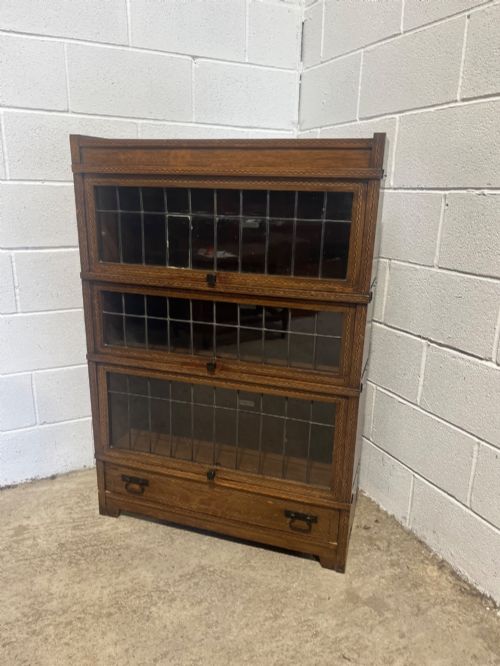
Cabinet makers utilised solid timber frameworks of oak and mahogany, often pairing them with brass hardware and glass panels. Many doors incorporate leaded glass segments, dividing the transparent surface into smaller geometric panes.
The stacking mechanism relies on internal metal clips or interlocking wooden lips that stabilise each tier independently. This modular engineering allowed offices and homes to expand their shelving capacity vertically without purchasing entirely new furniture.
Listings feature oak and mahogany constructions spanning the Edwardian era through the nineteen-thirties.
Assessing quality and craftsmanship
Quality reveals itself in the choice of timber and the precision of the stacking mechanism, where superior pieces use solid mahogany or figured golden oak rather than plain veneers. The movement of the glass doors should feel balanced and smooth, guided by reliable metal scissor actions or sliding tracks.
Maker provenance also elevates certain examples, with established firms applying refined brass detailing and careful inlay work. Simpler office cabinets from the same period prioritise robust utility over decorative flourishes.
Globe Wernicke·Lebus·Minty·Gunn·AMYL
The Barrister Sectional Bookcase Glossary
- Sectional
- Built from independent modular tiers that stack together to form a complete cabinet. This design allows the entire bookcase to be disassembled for transport or reconfigured with additional sections.
- Leaded glass
- Glass panes held together within narrow cames of lead to form decorative geometric patterns. This technique strengthens large transparent areas and adds visual texture to cabinet doors.
- Tier
- An individual stackable shelf unit enclosed by its own glazed door. Tiers vary in height to accommodate different book sizes.
- Glazed door
- A door fitted with glass panels to display contents while protecting volumes from dust. In these bookcases, the glass is traditionally held within wooden or leaded frames.
Barrister Sectional Bookcase: Frequently Asked Questions
How do the doors open?
The glass doors lift upward on metal arms and slide completely inside the top of the shelf compartment. This mechanism allows users to access books easily without swinging doors outward into the room.
Once pushed inside, the door rests horizontally above the volumes until pulled forward and down again.
Can I separate the sections?
Yes, each tier lifts away from the section beneath it once the top cornice and base are removed. The modular construction was specifically engineered for effortless disassembly and transport.
Collectors can rearrange tier heights or reduce the overall height of the cabinet to suit different spaces.
What woods are most common?
Oak is the most frequently encountered timber, appearing in both dark tones and golden varieties. Mahogany is also common, particularly in slightly more decorative domestic models.
Walnut occasionally appears among the listed items, offering a distinct grain pattern from the standard oak and mahogany finish.
How do I date these bookcases?
Most examples originate from the Edwardian period up through the nineteen-thirties, typically identified by construction style, timber selection, and hardware details. Maker stamps and brass tags often provide specific production eras.
Arts and Crafts influences or Art Deco geometric lines help narrow down the decade of manufacture.