







Baroque Wooden Box
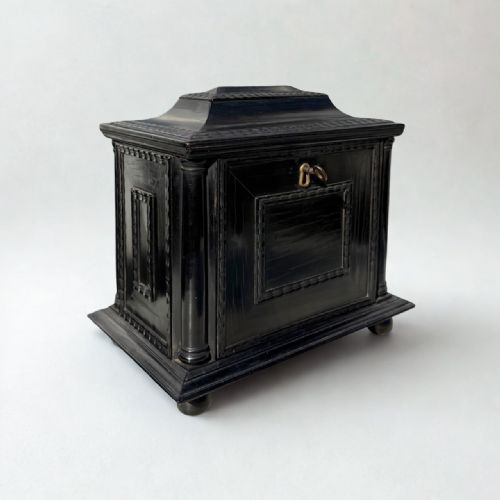
A baroque wooden box brings heavy timber, dark veneers and intricate carving straight to a desk or tabletop.
Baroque Wooden Box
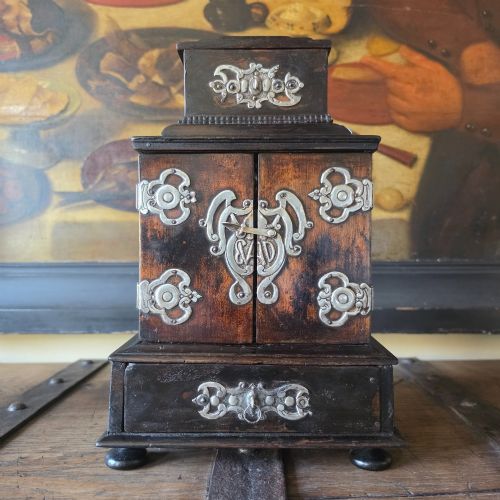
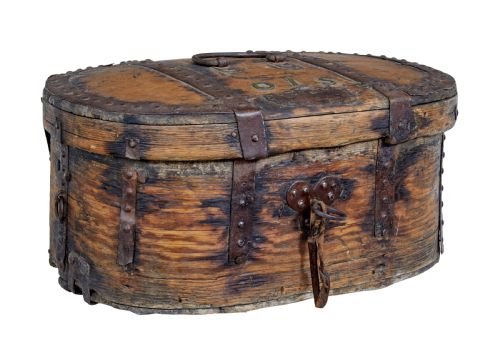
A baroque wooden box takes several forms across this selection, ranging from small jewelery cabinets and table caskets to substantial strongboxes and chests. These pieces serve as functional storage vessels while doubling down on decorative impact through rich surface ornamentation.
The versions most commonly met here span the seventeenth and eighteenth centuries, originating from continental workshops in Italy, Flanders, Spain and Germany. Makers from these regions utilised dense hardwoods and dramatic grain patterns to achieve a striking visual presence.
Later nineteenth-century revival pieces also appear, mirroring the heavier proportions and ornate detailing of earlier centuries. Buyers searching for a baroque wooden box will find everything from simple oak and iron-bound storage boxes to elaborate marquetry coffre forts.
How they were made
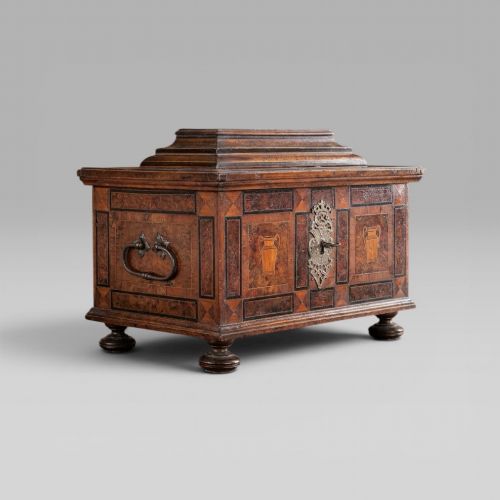
Construction relies heavily on robust structural timbers like oak and walnut, which provide a stable carcase for intricate exterior decoration. Artisans applied exotic veneers such as kingwood, ebony and burr wood over these foundations, often arranging oyster veneers in repeating geometric patterns.
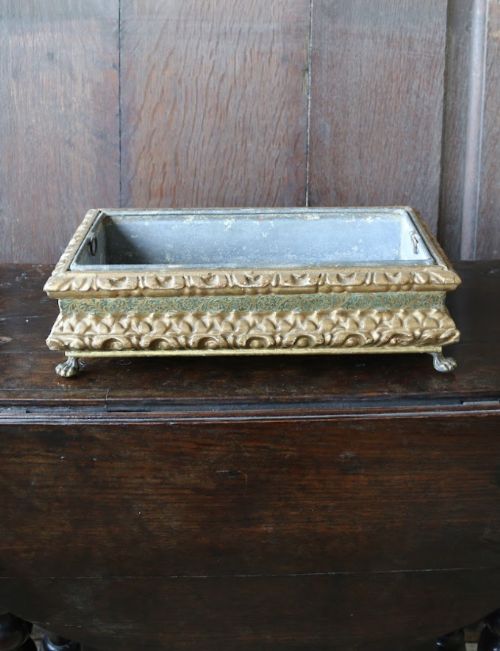
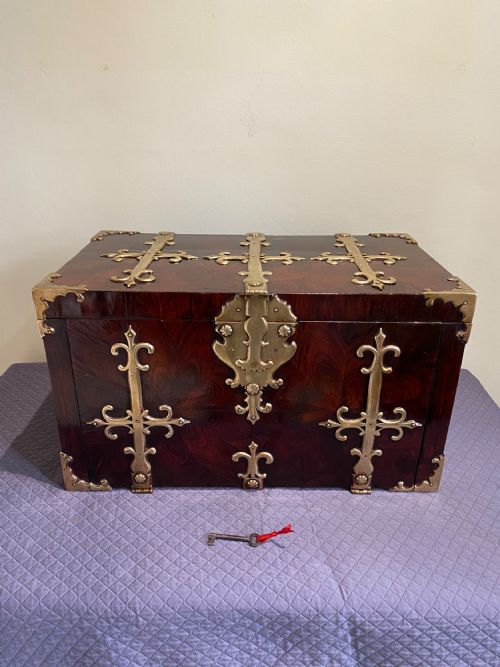
Surface embellishment frequently involved marquetry, parcel gilding and carved gilt wood details that catch the light against dark grain. Heavy mounts, locks and straps in brass, iron and wrought iron were integrated to secure valuables while enhancing the formidable appearance of the piece.
Baroque Wooden Box Retail Price Guide 2026
Typical asking prices for baroque wooden box among the pieces listed under this phrase on Sellingantiques today, from the lower quarter to the upper quarter. They describe what is for sale here now, not the wider market.
Listings span the seventeenth, eighteenth and nineteenth centuries, featuring walnut, oak, kingwood, ebony and wrought iron.
What varies in quality
The standard of a baroque wooden box depends largely on the complexity of its timber work and the precision of its veneers. Pieces featuring detailed marquetry, fine oyster veneer patterns or intricate carved gilt wood demonstrate a higher level of workshop skill.
The integration of metalwork also marks the difference between standard storage and master craftsmanship. Robust wrought iron mounts, functional brass locking mechanisms and original hardware contribute significantly to the overall integrity and visual weight of the box.
The Baroque Wooden Box Glossary
- Coffre fort
- A strongbox or heavily reinforced chest designed for securing valuables, typically fitted with complex iron locking mechanisms.
- Oyster veneer
- Thin slices of branch wood cut across the grain to create circular or oval patterns resembling oyster shells, popular in seventeenth-century cabinetmaking.
- Marquetry
- Inlaid patterns of wood veneer and other materials applied to a structural carcase to form pictorial or geometric designs.
- Cassone
- A large Italian chest or coffer traditionally used for storing household valuables or wedding trousseaus.
- Parquetry
- Geometric mosaic woodwork formed by small veneer pieces fitted together to create repeating patterns across a flat surface.
Baroque Wooden Box: Frequently Asked Questions
What were these boxes used for?
These boxes served as secure storage for jewellery, documents, currency and other high-value personal possessions in wealthy households.
Their robust construction and complex locking mechanisms ensured that contents remained protected from theft and damage during daily use.
How do I spot a revival piece?
Nineteenth-century revival pieces often display machine-cut elements, standardised joins and timber treatment that differs from seventeenth-century stock.
Comparing the internal linings, hardware construction and wear patterns against known seventeenth-century examples helps clarify the dating.
Where were most boxes made?
Continental workshops in Italy, Flanders, Spain and Germany produced the majority of the examples seen in this selection.
Regional preferences dictated whether a piece took the form of an ebony table cabinet, a walnut jewelery box or an iron-bound coffre fort.
How should I clean the wood?
Maintenance requires gentle dusting with a soft cloth to prevent abrasive particles from scratching vulnerable veneers and carved gilt surfaces.
Harsh chemical polishes must be avoided in favour of traditional waxes that preserve the natural finish of walnut, ebony and kingwood.