

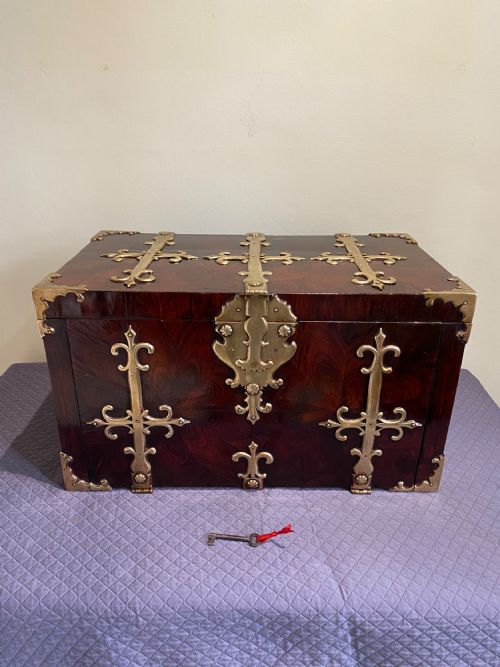


Baroque Wood Chest
These baroque wood chest pieces bring dramatic continental presence into a room, offering rich timber surfaces and sculptural forms.
Baroque Wood Chest
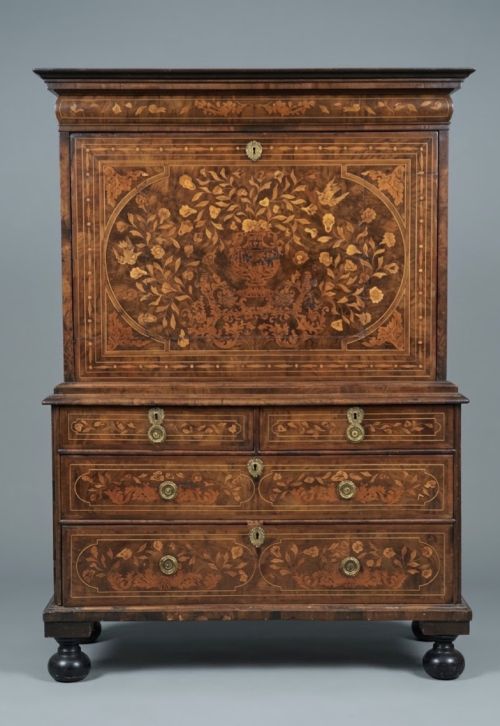
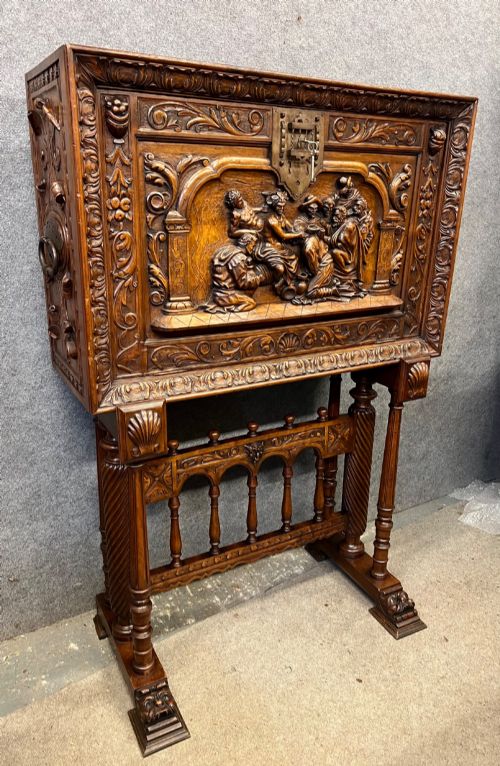
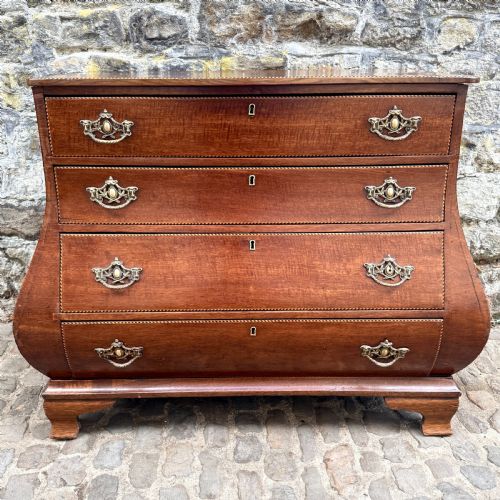
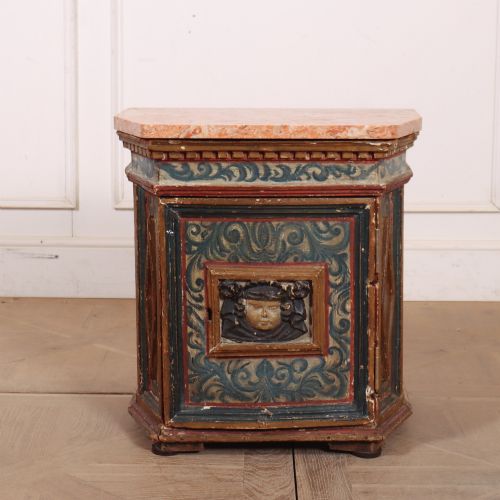
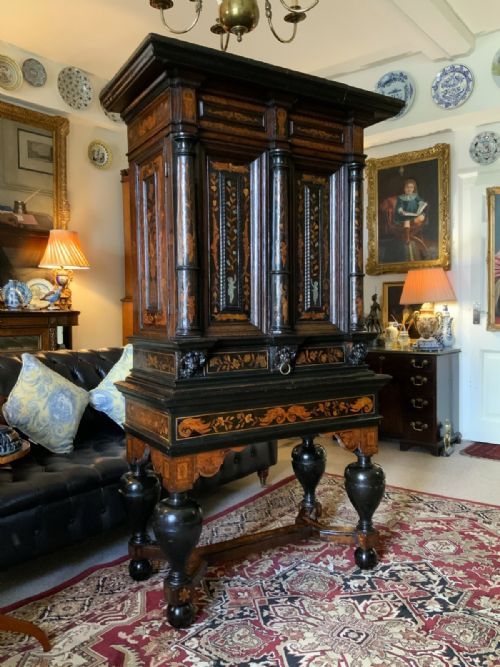
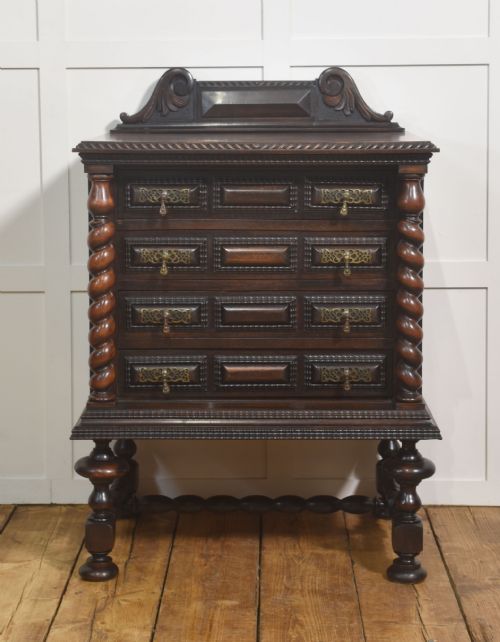
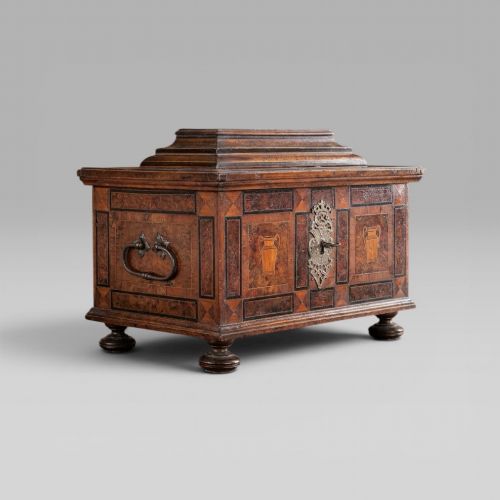
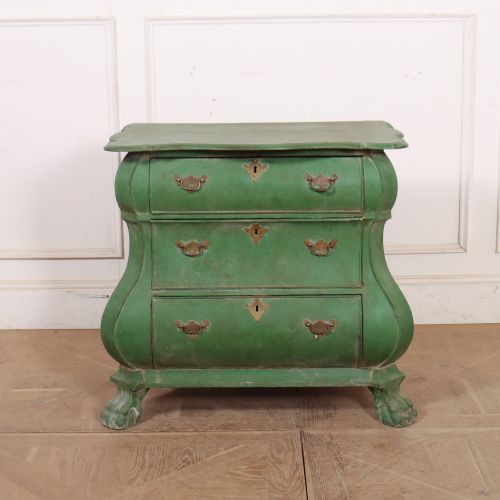
When you search for a baroque wood chest, you encounter substantial storage furniture spanning the seventeenth and eighteenth centuries, alongside later revival pieces. The selection here leans heavily towards continental European examples, particularly Dutch bombe commodes, Italian commodes, and various tabletop caskets and cabinets.
Forms range widely from large oak chests of drawers and walnut commodes to compact strongboxes, writing desks, and cabinets on stands. Regional variations dominate the inventory, showing distinct Dutch, Italian, Flemish, and Iberian characteristics across walnut, oak, and exotic woods.
Materials and construction
Cabinetmakers utilised robust primary timbers such as oak and walnut, often applying decorative veneers of burr walnut, rosewood, kingwood, and olive wood oyster pieces. Marquetry and parquetry patterns frequently adorn the surfaces, sometimes enhanced by pewter inlay or painted finishes.
Structural complexity appears in serpentine and bombe profiles, where timber is shaped to create swelling drawer fronts and sides. Brass handles, escutcheons, and claw feet complete the assembly, alongside specialised ironwork found on earlier strongboxes and caskets.
Baroque Wood Chest Retail Price Guide 2026
Typical asking prices for baroque wood chest among the pieces listed under this phrase on Sellingantiques today, from the lower quarter to the upper quarter. They describe what is for sale here now, not the wider market.
Materials featured across the current listings include walnut, burr walnut, oak, fruitwood, mahogany, rosewood, and painted wood.
Markers of distinction
Quality rests in the precision of the timber selection and the complexity of the veneer work, where symmetrical grain alignment elevates a piece. Superior examples display crisp carving and careful integration of secondary woods rather than heavy modern restoration.
The sophistication of the hardware and the integrity of the structural joinery further separate standard items from exceptional survivals. Original painted surfaces or patinated finishes untouched by aggressive stripping hold greater appeal for serious collectors.
The Baroque Wood Chest Glossary
- Bombe
- A swelling or bulging contour characteristic of continental furniture. This curved profile requires skilled joinery to shape timber drawers and frames harmoniously.
- Marquetry
- Decorative patterns created by fitting different wood veneers into a glued matrix. Craftsmen use varied grain and colour to form pictorial or geometric designs.
- Oyster veneer
- Thin circular slices cut across small branches or roots to create swirling patterns. This technique was popular in seventeenth-century cabinet making.
- Commode
- A low chest of drawers introduced from France during the period. These pieces generally feature several wide drawers and ornate brass hardware.
- Casket
- A small decorative box or chest used for storing valuables or documents. Many examples feature intricate parquetry or locking mechanisms.
Baroque Wood Chest: Frequently Asked Questions
Where should I place a baroque chest?
These pieces demand space to showcase their sculptural fronts and rich timber grains, making them well-suited as focal points in hallways or reception rooms.
Keep them away from direct heat sources and strong sunlight to protect aged veneers and prevent timber movement.
How do I clean a wooden chest?
Dust regularly with a dry, soft cloth and apply a quality beeswax periodically to nourish the historic timber.
Avoid silicone-based polishes or excessive moisture, which can damage aged finishes and lift delicate veneers.
Are these chests practical for storage?
Deep drawers and sturdy internal compartments make many of these forms entirely functional for modern clothing or linen storage.
Smaller caskets and cabinets serve well for organising documents, jewellery, or smaller household items.
How do I distinguish regional styles?
Dutch examples often feature pronounced bombe curves and rich marquetry, whereas Italian pieces frequently display painted decoration or bold walnut carving.
Flemish and Iberian variants tend to incorporate dense timbers like ebony and rosewood with geometric parquetry patterns.