



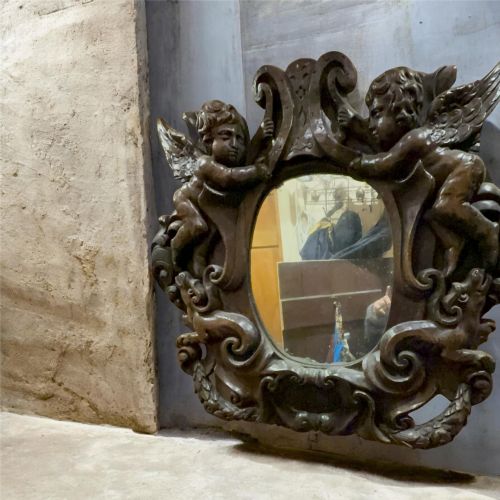

Baroque Mirror Frame
A baroque mirror frame delivers opulent architectural depth and elaborate carving, turning a simple reflective surface into a monumental wall centrepiece.
Baroque Mirror Frame
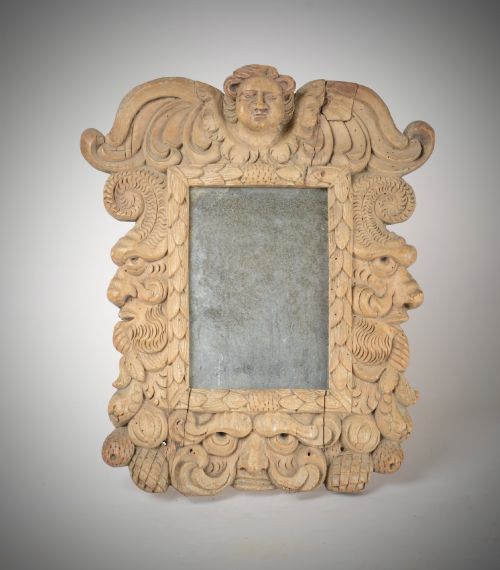
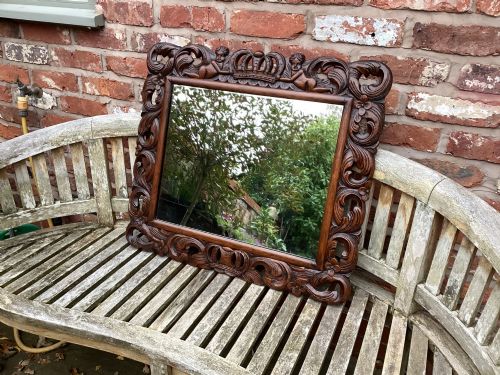
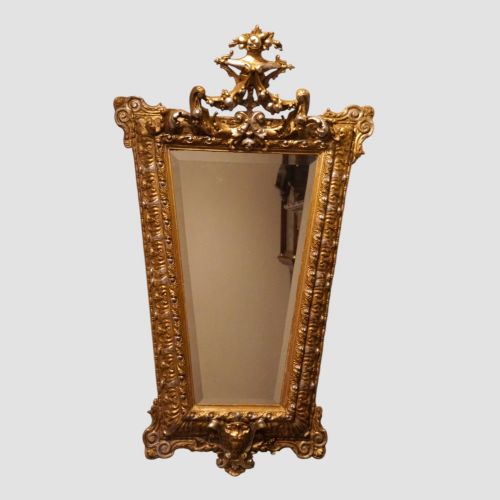
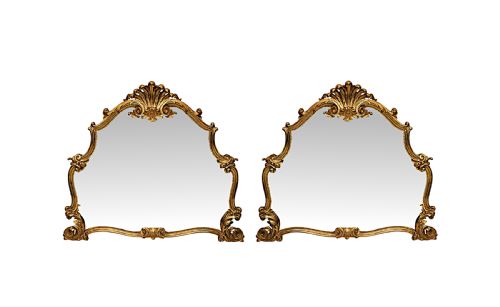
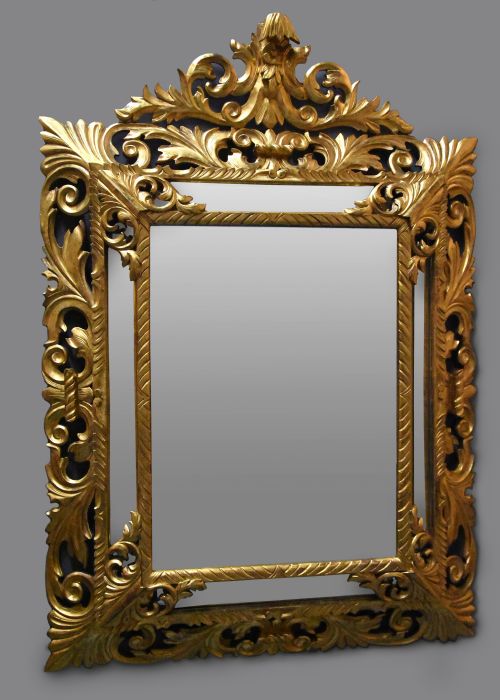
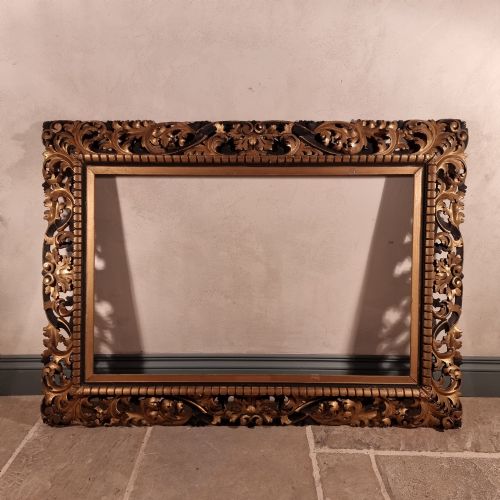
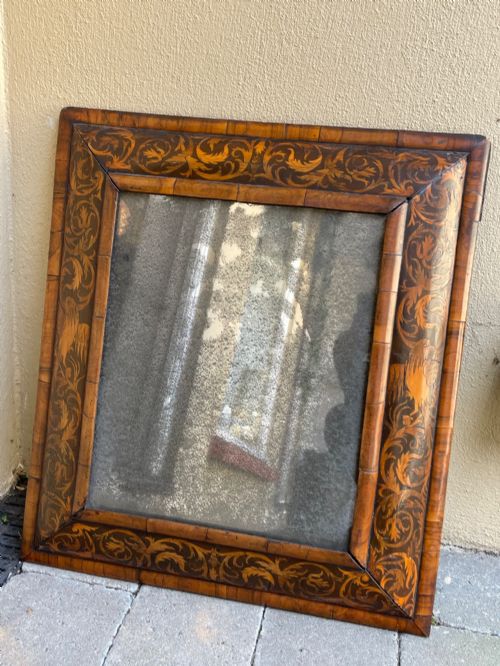
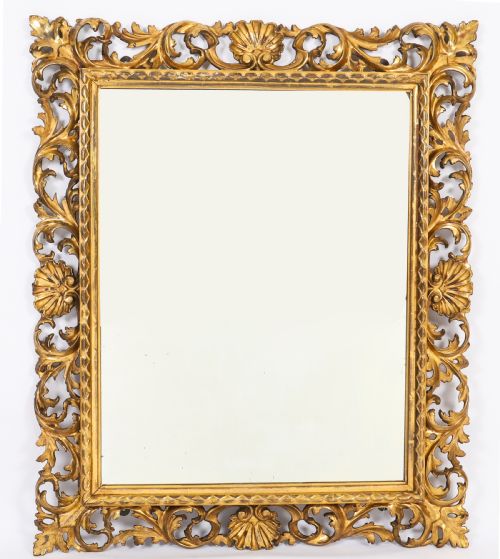
A baroque mirror frame embodies the dramatic flair of seventeenth and eighteenth-century design, utilising bold scrolls, acanthus leaf motifs, and deeply recessed mouldings. Buyers searching for a baroque mirror frame will encounter substantial wall mirrors, cushion-profile frames, and elaborate picture frames adapted to hold glass. Pieces originating from Italian workshops, particularly Florence and Venice, dominate the selection alongside later nineteenth-century revivals.
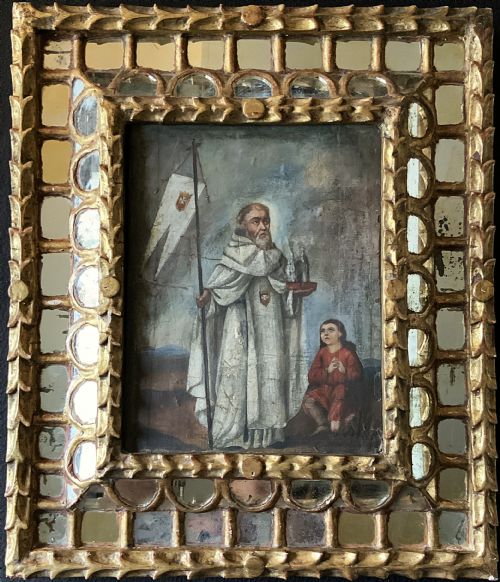
The physical presence of these pieces ranges from intimate table mirrors to imposing overmantel and pier mirrors designed for grand reception rooms. Regional variations include French cushion frames, Spanish school painting frames, and Flemish repousse brass borders alongside standard carved wooden constructions. Many examples integrate religious iconography, such as reliquary mirrors featuring flaming heart motifs.
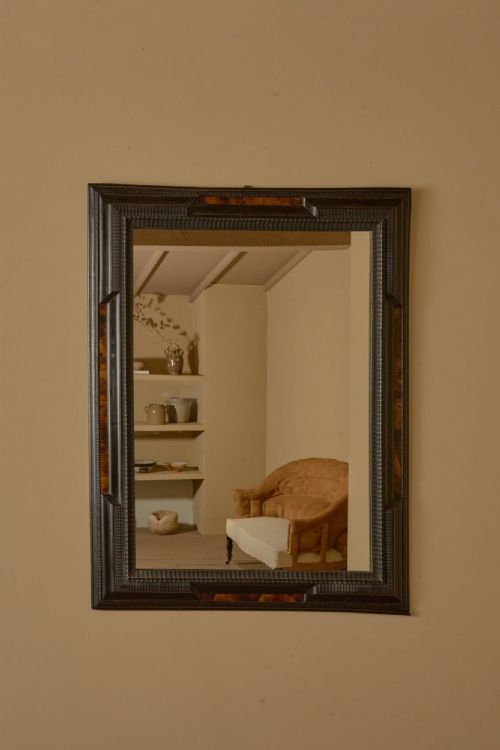
Dating spans from authentic seventeenth and eighteenth-century survivals to nineteenth-century baroque revival pieces and early twentieth-century interpretations. Carved giltwood forms the predominant aesthetic, while alternative surfaces incorporate ebonised wood, faux tortoiseshell, and silver-gilt applications. Each variation retains the heavy sculptural relief characteristic of the style.
Materials and construction
Makers shaped the structural foundations from solid timber substrates including oak, limewood, and general carved wood before applying decorative surface treatments. Artisans carved intricate scrollwork and decorative masks directly into the wood or built up high-relief ornamentation using layered gesso.
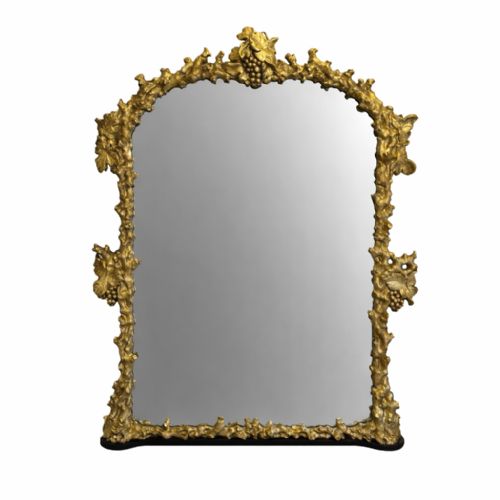
Gilding techniques involved applying gold leaf or silver-gilt over prepared gesso surfaces to achieve a brilliant metallic sheen that caught candlelight. Early mirrors frequently incorporate original mercury plate glass, exhibiting distinct hand-beveled edges and subtle surface irregularities consistent with historical manufacturing methods.
Baroque Mirror Frame Retail Price Guide 2026
Typical asking prices for baroque mirror frame among the pieces listed under this phrase on Sellingantiques today, from the lower quarter to the upper quarter. They describe what is for sale here now, not the wider market.
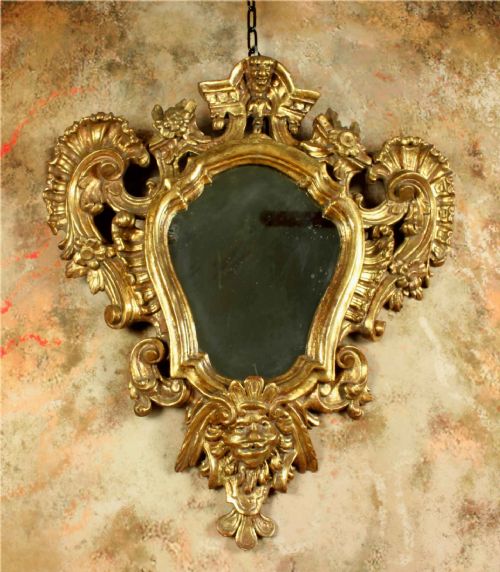
One remarkably expressive frame includes a carved lion's head keeping a watchful eye over the room.
Assessing craftsmanship and execution
The distinction between ordinary and exceptional quality rests upon the depth, sharpness, and fluidity of the hand-carved ornamentation. Superior examples display crisp undercut foliage, balanced symmetry in architectural scrolls, and harmonious proportions across the cushion profile.
Surface preparation and the application of gold leaf dictate the richness of the final appearance, where skilled burnishing creates varied matte and reflective textures. The integrity of the original wood substrate and the preservation of early silver-gilt or giltwood layers further separate masterwork frames from standard production.
The Baroque Mirror Frame Glossary
- Baroque
- A European style spanning the seventeenth and early eighteenth centuries characterised by ornate detail, dramatic movement, and grand scale. This aesthetic prioritises emotional impact and theatrical display in decorative arts.
- Giltwood
- Timber that has been coated with a thin layer of gold leaf over a prepared gesso ground. This technique creates a durable, luminous metallic finish favoured in high-status frame production.
- Gesso
- A plaster-like mixture applied to wood substrates to create a smooth surface for gilding or to be moulded into high-relief decorative motifs. It allows carvers to achieve intricate details that would be difficult to execute directly in timber.
- Cushion mirror
- A frame profile featuring a broad, sloping border that swells outward toward the outer edge, creating a pillow-like dimensional effect. This form was widely utilised during the seventeenth century.
- Pier mirror
- A tall wall mirror specifically designed to hang on the narrow section of wall between two windows. These pieces often matched console tables placed directly beneath them.
Baroque Mirror Frame: Frequently Asked Questions
How do I hang a heavy baroque mirror frame?
Substantial frames require professional wall anchors fixed directly into structural studs to support the considerable weight of carved timber and glass. Using heavy-duty z-bar brackets or integrated steel hanging hardware ensures the piece remains secure against the wall.
Position the mirror at eye level where natural light from windows can illuminate the gilded surfaces and amplify the reflective depth of the glass. Avoid hanging heavy frames on hollow drywall without proper reinforcement.
Are these frames made of solid wood?
Most antique frames utilise solid timber foundations such as oak, limewood, or pine to provide structural stability for the carved elements. Artisans then applied layers of gesso over the wood base to sculpt fine decorative details.
This composite construction allowed craftsmen to achieve elaborate relief work that resisted warping better than carved wood alone. The underlying timber remains visible from the reverse side of unbacked pieces.
What is the difference between original and revival pieces?
Seventeenth and eighteenth-century originals exhibit authentic age-related patina, hand-wrought joinery, and early mercury plate glass with natural foxing. These pieces reflect the specific material technology and carving styles of their original period of manufacture.
Nineteenth-century revival frames replicate earlier baroque aesthetics using contemporary mechanical tools and standardised sheet glass while maintaining high sculptural standards. Both categories offer distinct historical interest depending on whether a buyer seeks period authenticity or nineteenth-century interpretation.