



Baroque Gilt Wall Sconce
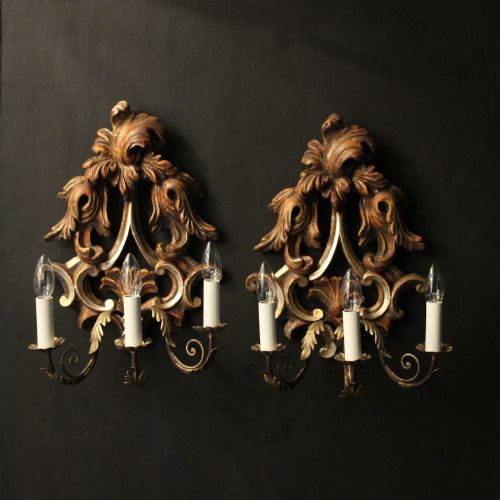
A baroque gilt wall sconce brings dramatic illumination and rich metallic texture to an interior, drawing the eye with elaborate carved ornament.
Baroque Gilt Wall Sconce
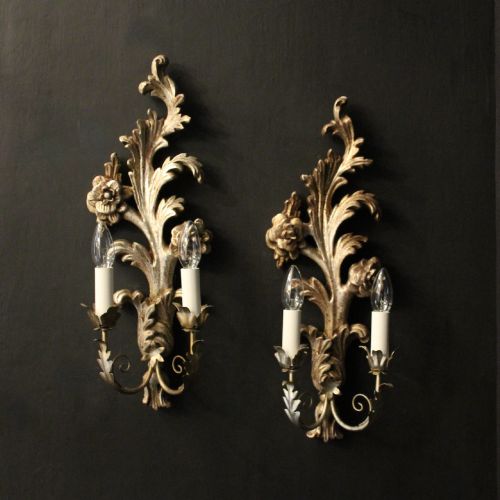
A baroque gilt wall sconce is a wall-mounted lighting fixture designed to hold candles or electric bulbs, defined by ornate historical styling and gilded surfaces. When exploring this selection, buyers will frequently encounter pieces originating from Italy and France, spanning from the seventeenth century through to revivals in the nineteenth and early twentieth centuries.
The forms vary from single-arm brackets and twin-arm wall lights to substantial three-branch sconces, girandole mirrors, and decorative wall brackets. Italian Florentine and Rococo influences dominate the selection, often incorporating carved wood, gesso, and polychrome detailing alongside traditional gilded finishes.
Materials and construction methods
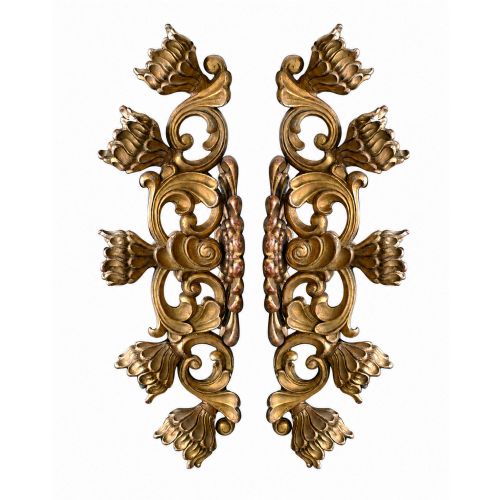
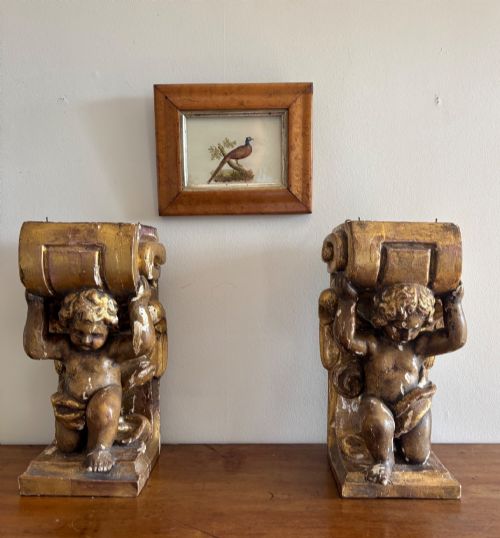
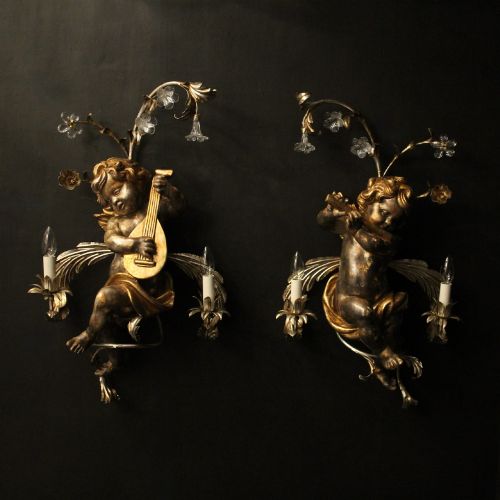
These fixtures rely heavily on carved wood, gesso, and cast bronze or brass, shaped into complex scrolls, cherubs, and asymmetrical foliage. Artisans applied layers of gold or silver leaf over a prepared gesso and bole ground on wooden foundations, or cast metal components with high precision.
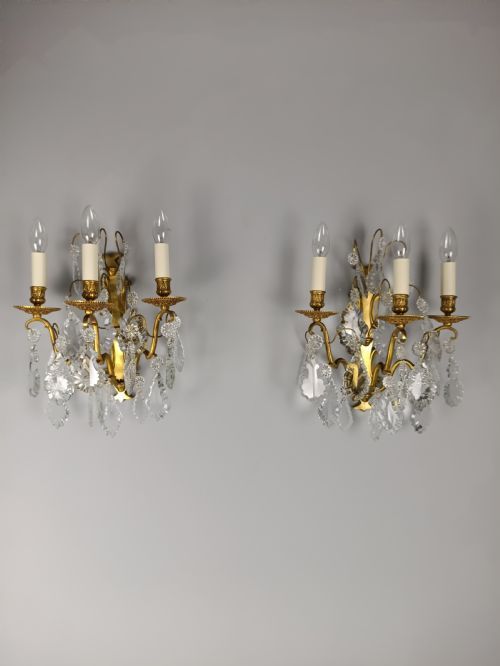
The application of surface finishes ranges from traditional water gilding on carved timber to gilded polychrome paint and silver leaf. Metal sconces frequently utilise cast bronze or brass, sometimes incorporating crystal drops or Murano glass elements to enhance the diffusion of light.
Italian Florentine and French Louis XIV styles dominate the selection, frequently taking the form of twin-arm and triple-arm configurations.
Assessing quality and craftsmanship
The distinction between standard and superior pieces rests upon the depth and crispness of the carving or metal casting. Finer examples display meticulous hand-tooling in the gesso and wood, ensuring that scrollwork and figurative details retain sharp definition beneath the gilding.
Surface preservation also dictates quality, as original gold leaf patination holds greater integrity than later repainting or crude touch-ups. The structural cohesion of multi-arm branches and the harmonious integration of mirrors or glass elements reflect the original maker's skill.
The Baroque Gilt Wall Sconce Glossary
- Giltwood
- Wood that has been coated with gold leaf or gold paint. This finish provides the characteristic metallic brilliance seen on traditional wall lights.
- Gesso
- A plaster mix applied to a wooden base to create a smooth surface for carving and gilding. It allows for intricate relief ornamentation.
- Girandole
- An ornamental bracket wall light featuring a mirror plate. The reflective glass multiplies the illumination from candles or bulbs.
- Polychrome
- Decorated in several colours. This technique often appears alongside gilding on Italian wooden wall fixtures.
- Candelabra
- A branched candlestick holder designed for multiple light sources. These form the larger multi-arm sconces found in the collection.
Baroque Gilt Wall Sconce: Frequently Asked Questions
How do I clean a gilded wall sconce?
Dust gently with a very soft, dry brush to protect the delicate gold leaf or gesso surface.
Avoid using liquid cleaners, polishes, or damp cloths, as moisture can lift the metallic leaf from the wooden or metal base.
Are these sconces wired for electricity?
Many historical wall lights have been adapted for modern electrical wiring over time, while others retain their original candle-holding format.
Check individual listings to see whether a piece is currently fitted for electric bulbs or remains configured for candles.
How do I distinguish eighteenth-century pieces from later revivals?
Period pieces display authentic wear patterns in the wood, gesso, and gilding consistent with centuries of age.
Nineteenth and twentieth-century revivals often utilise similar stylistic vocabulary but show different tooling marks, modern hardware, or more uniform surface wear.
Where should I mount a large gilt sconce?
These fixtures suit prominent positions such as either side of a fireplace, above a sideboard, or flanking a large mirror.
Ensure the wall construction can support the weight, particularly for substantial carved wood, bronze, or mirrored bracket designs.