





Baroque Furniture Mount
A baroque furniture mount secures and elevates case furniture, bringing tangible historic weight and intricate cast or chased detail to European cabinetry.
Baroque Furniture Mount
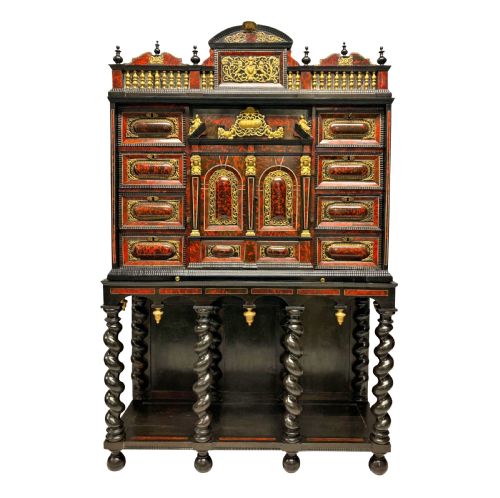
When you search for baroque furniture mount, you examine hardware and decorative fittings applied to substantial case pieces from the seventeenth and eighteenth centuries. These items draw attention through their distinct regional styles, spanning Spanish, Portuguese, Flemish, and French workshops.
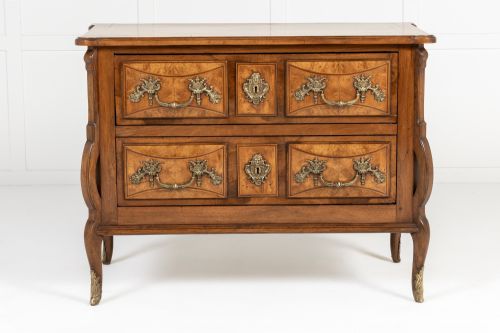
The versions most frequently encountered on this page relate to grand case furniture such as cabinets on stands, chests of drawers, and writing cabinets. They originate across the seventeenth century, the eighteenth century, and the nineteenth century, reflecting long-standing decorative traditions.
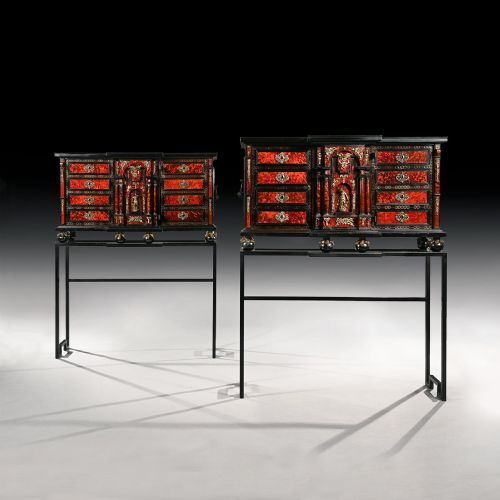
Makers integrated these fittings onto diverse foundational timbers including walnut, rosewood, tortoiseshell, and ebonised wood. Each element provides functional reinforcement alongside ornamental presence on commodes, display cabinets, and storage boxes.
Materials and construction
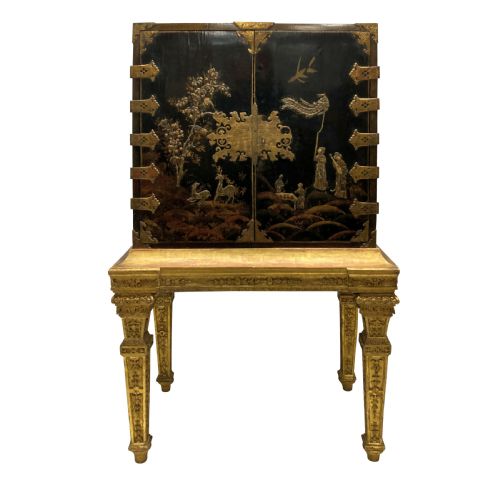
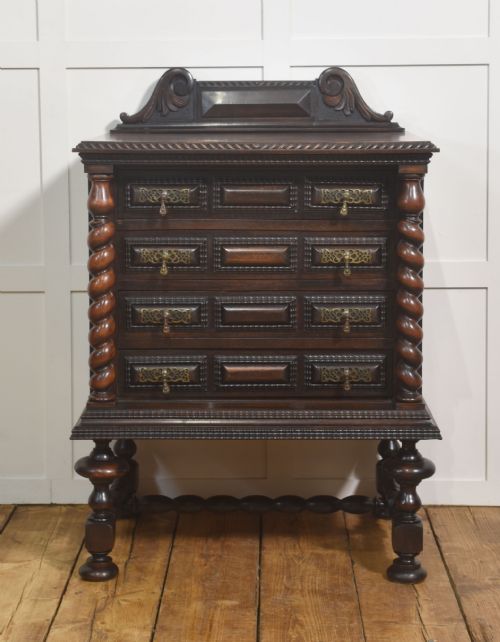
Craftsmen forged and cast these pieces primarily in brass and gilt bronze, utilising metalworking techniques suited to heavy domestic service and ornate display. These metallic components were then secured to robust carcases of walnut, rosewood, and burr walnut.
Specialist workshops applied exotic veneers such as tortoiseshell and ebonised wood to the main structures, anchoring the mounts firmly into the timber surfaces. The interaction between polished metalwork and dark or figured woods defines the physical construction of these pieces.
Baroque Furniture Mount Retail Price Guide 2026
Typical asking prices for baroque furniture mount among the pieces listed under this phrase on Sellingantiques today, from the lower quarter to the upper quarter. They describe what is for sale here now, not the wider market.
Materials recorded on this page range from plain iron and brass to tortoiseshell, ebonised wood, and gilt bronze.
Assessing quality
The standard of a piece rests upon the crispness of the casting and the depth of the chasing within the metalwork. Superior examples display sharply defined motifs and harmonious integration with the underlying timber carcase.
Workmanship varies between robust provincial forging and highly refined court production, such as French Napoleon III Boulle or Flemish architectural styles. The integrity of the original association between the mount and the furniture remains a central consideration.
The Baroque Furniture Mount Glossary
- Bargueño
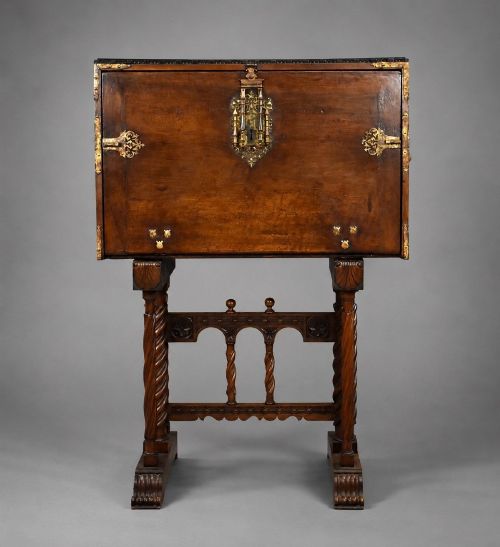
- A traditional Spanish cabinet on a stand featuring a drop-front writing desk and numerous small drawers. This form often incorporates elaborate metal mounts and decorative hardware.
- Boulle
- A form of marquetry consisting of tortoiseshell and brass inlay developed in France. It frequently appears alongside ornate gilt bronze mounts on display cabinets and commodes.
- Commode
- A low chest of drawers introduced in the seventeenth century and widely developed during the eighteenth century. These pieces rely heavily on decorative mounts to accent their curved bombé or serpentine fronts.
- Chinoiserie
- European decorative style imitating Chinese artistic traditions, popular during the seventeenth and eighteenth centuries. It appears on lacquer and painted cabinets on stands.
- Gilt bronze
- Copper alloy treated with a layer of gold, also known as ormolu. This material provides a durable, lustrous surface for decorative mounts.
Baroque Furniture Mount: Frequently Asked Questions
What is a baroque furniture mount?
A baroque furniture mount is a decorative or functional metal fitting attached to seventeenth and eighteenth-century case furniture. These elements provided structural reinforcement while enhancing the visual weight of cabinets and chests.
They appear across various regional styles, including Spanish, Flemish, and French interpretations, executed in brass or gilt bronze.
How were these mounts used?
Makers fixed these metal pieces to corners, drop-fronts, drawers, and key escutcheons on heavy storage furniture. They protected vulnerable wooden edges from impact during daily use.
Beyond utility, the mounts served as primary decorative statements on grand pieces like cabinets on stands and commodes.
How do I live with these pieces?
Integrating these historical items into a modern interior requires stable environmental conditions away from direct heat sources. Wood and metal components respond to extreme humidity shifts, so consistent room temperatures help preserve them.
Gentle dusting with a dry cloth maintains the surface without wearing down the historic patination on the brass or bronze.
How can I tell periods apart?
Distinguishing between periods involves examining the evolution of the metal casting style and the underlying furniture form. Seventeenth-century examples often display heavier architectural proportions, while eighteenth-century pieces lean towards curved bombé shapes and lighter rococo influence.
Nineteenth-century revivals, such as Napoleon III work, frequently emulate earlier French styles with heightened symmetry and precision.