


Baroque Floral Still Life
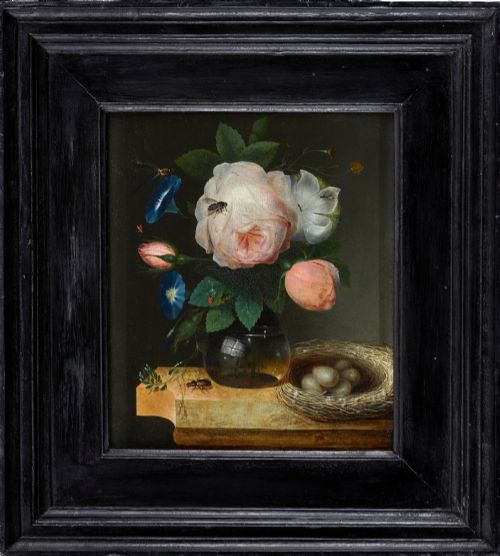
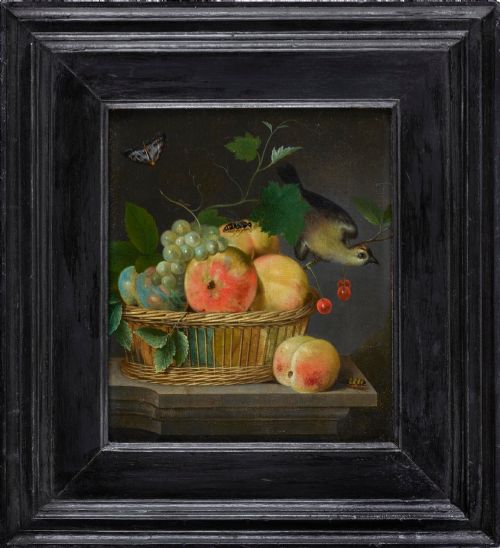
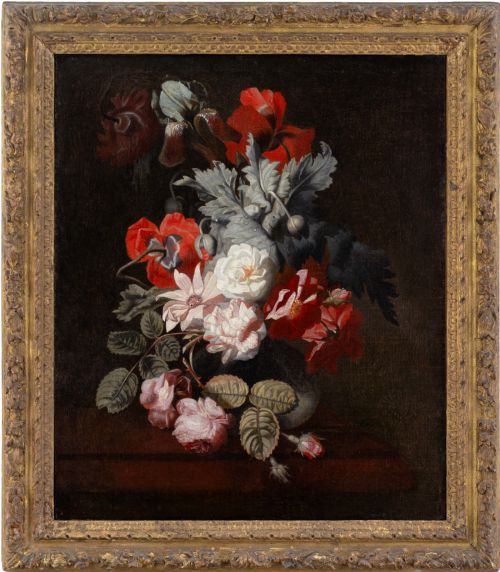
These baroque floral still life paintings bring rich seventeenth-century botanical studies and ornate floral compositions directly into your interior.
Baroque Floral Still Life
A baroque floral still life captures elaborate arrangements of roses, tulips, and fruit rendered in oil paint on canvas, wood panels, or painted leather screens. These pieces emerge from seventeenth-century Flemish and Dutch traditions, alongside later interpretations spanning the eighteenth, nineteenth, and twentieth centuries.
You will most commonly encounter oil on canvas paintings and oil paintings on panel depicting classical floral bouquets, wicker baskets filled with fruit, and architectural urns. The selection ranges from seventeenth-century works by named masters to later European school paintings and decorative screens.
The enduring appeal lies in the dramatic play of light against dark backgrounds, characteristic of the baroque style, combined with meticulous botanical detail. Collectors seek these works for their rich colour palettes and historical presence in traditional and modern spaces alike.
Materials and construction
The technique relies on layering oil pigments to achieve deep shadows and luminous highlights, capturing the texture of delicate petals and ripening fruit. Wood panels and canvas serve as the traditional foundation, while specialised surfaces such as painted leather appear in decorative folding screens.
The documented periods range from seventeenth-century Flemish works to twentieth-century classical revivals and Italian school paintings.
What separates the finest examples
Quality rests in the precision of the brushwork and the anatomical accuracy of the flora and fauna depicted within the composition. Master works exhibit subtle gradations of light and shadow that create genuine depth, whereas lesser examples rely on flat application and stiff arrangements.
The handling of secondary elements, such as insects, water droplets, or wicker textures, distinguishes high-tier studio output from routine decorative production. Original surfaces and period framing also elevate a piece, preserving the integrity of the work over centuries.
Gaspar Peeter Verbruggen·Simon Pietersz Verelst·Calzolari
The Baroque Floral Still Life Glossary
- Baroque
- A European artistic style from the seventeenth and early eighteenth centuries characterised by drama, deep shadow, and exuberant ornamentation. It produced many of the most celebrated floral paintings in art history.
- Giltwood
- Wood that has been coated with a thin layer of gold leaf or powder. It is frequently seen on the ornate frames housing classical oil paintings.
- Gesso
- A paint mixture consisting of a neutral binder mixed with chalk, gypsum, or pigment. It provides the smooth preparatory surface for wood panels and the relief detail on gilded frames.
- Trompe l'oeil
- An art technique that uses realistic imagery to create the optical illusion that the depicted objects exist in three dimensions. This style appears in decorative floral and fruit compositions.
- Oil on canvas
- Pigments bound in a drying oil medium applied to a stretched woven fabric support. This represents the primary medium for historical paintings in this category.
Baroque Floral Still Life: Frequently Asked Questions
How do I date a baroque floral still life?
Dating relies on examining the support medium, such as canvas or oak panels, alongside the preparation techniques and pigments used by the artist. Stylistic cues like the arrangement of the flowers and the framing also provide strong indicators of the period.
Historical attribution often points to seventeenth-century Flemish or Dutch workshops, though later revivals from the eighteenth through twentieth centuries emulate these exact classical motifs.
Where should I hang a floral still life?
These works suit dining rooms, libraries, or drawing rooms where traditional furniture and warm lighting complement the deep tones of the oil paint. Placing them away from direct sunlight protects the canvas and pigment layers from fading.
Pairing a painted canvas with a period giltwood frame enhances its visual weight, allowing it to serve as a focal point above a mantelpiece or sideboard.
What is the difference between canvas and panel works?
Canvas supports became widely adopted during the golden age for their flexibility and ability to hold large compositions of elaborate floral arrangements. Wooden panels, particularly oak, provide a rigid surface often favoured in earlier northern European works.
Both substrates require stable indoor humidity and temperature to prevent warping of the wood or cracking of the oil paint layer over time.
What subjects accompany flowers in these paintings?
Compositions frequently incorporate seasonal fruit in wicker baskets, architectural urns, and small creatures such as birds or insects resting among the petals. These elements symbolise the fleeting nature of life and add narrative depth to the botanical study.
Venetian and Northern European schools each brought distinct approaches to these assemblages, balancing botanical precision with dramatic baroque lighting.