



Baroque Carved Sconces
Baroque carved sconces bring dramatic lighting and sculptural woodcarving to an interior, shaped by centuries of Italian design.
Baroque Carved Sconces
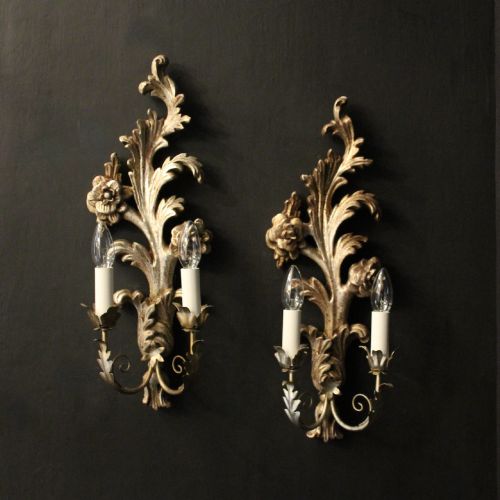
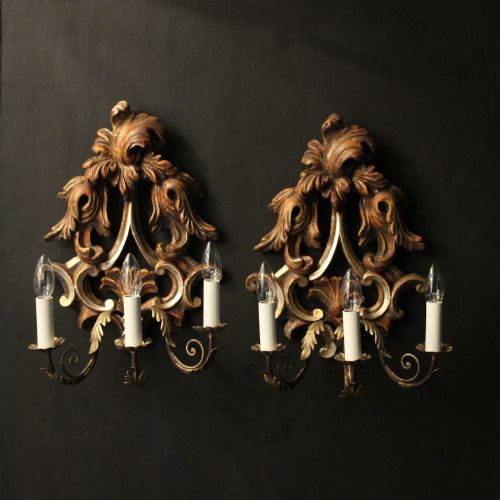
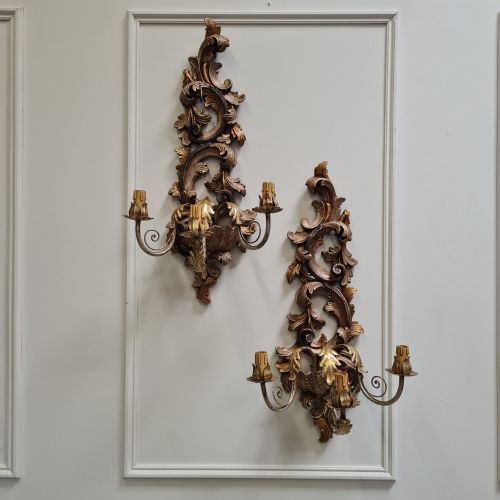
Baroque carved sconces are decorative wall-mounted light fittings and brackets designed to hold candles or electric bulbs, taking forms such as twin arm wall lights, wall brackets, and girandole mirrors. When you search for baroque carved sconces, you encounter pieces primarily originating from Italy, including Florentine and regional workshops.
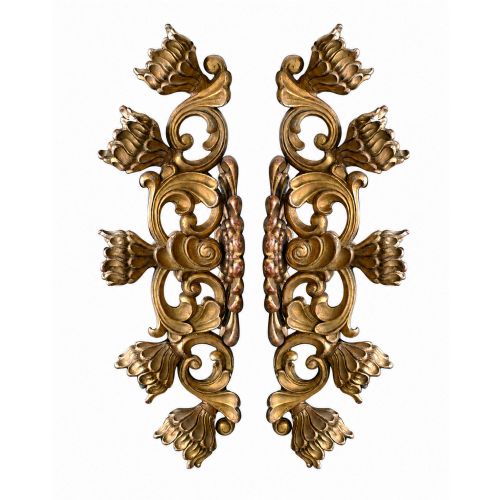
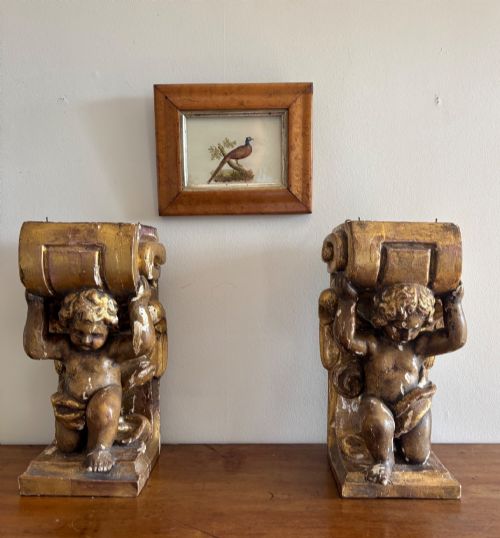
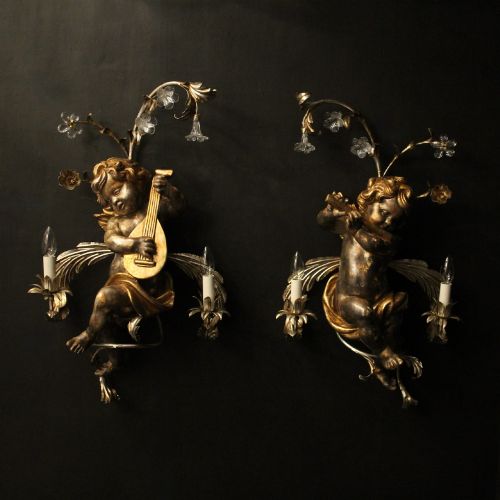
The selection ranges from seventeenth-century originals to twentieth-century revivals, alongside nineteenth-century interpretations. Pairs dominate the offerings, frequently featuring carved cherubs, scrolling foliage, and multi-branch arm configurations.
Materials and construction
Wood serves as the primary structural material, shaped through hand-carving techniques to create intricate relief work and figural elements. Carpenters and artisans applied gesso as a smooth base layer before finishing the surfaces.
Gilding techniques involve the application of gold leaf or silver leaf to create reflective metallic finishes. Polychrome paint finishes also appear across the selection, adding colour and contrast to the carved wooden forms.
Several pieces double as small wooden cherubs and blackamoor figures holding up the lights, watching the room with fixed wooden expressions.
Distinctions in craftsmanship
Quality rests in the depth and precision of the hand-carving, where crisp details in foliage and figures distinguish finer examples from simpler production. The application of gold and silver leaf determines the richness of the surface reflection.
The structural integrity of the wooden arms and backplates influences the overall calibre of the piece. Period execution from the seventeenth and eighteenth centuries commands greater attention than later revival iterations.
The Baroque Carved Sconces Glossary
- Giltwood
- Wood that has been coated with a thin layer of gold leaf or gold paint. This technique creates a luminous, reflective surface popular in classical lighting design.
- Gesso
- A plaster-like mixture applied to wood as a preparation layer for painting or gilding. It provides a smooth ground for intricate carved details.
- Girandole
- An ornamental bracket wall light featuring a mirror. The reflective glass enhances the illumination from the candle arms.
- Polychrome
- Decorated in several colours. This finish adds painted detail to carved wooden figures and architectural motifs.
- Candelabra
- A branched candlestick holder designed for multiple candles. These often form the functional arm structure of wall lights.
Baroque Carved Sconces: Frequently Asked Questions
How were baroque carved sconces used?
These fixtures were mounted to walls in grand rooms to hold candles, projecting light across interiors while reflecting candlelight off gilded surfaces.
They served both as functional illumination and as decorative wall sculptures that commanded attention in reception spaces.
How do I live with baroque carved sconces?
Position them at eye level in hallways, dining rooms, or living spaces where their carved details can be appreciated up close.
Ensure the wall structure can support the weight of solid wood and metal components, particularly with larger multi-branch examples.
How do I tell periods apart?
Seventeenth and eighteenth-century examples exhibit authentic wear patinas and period-specific joinery techniques distinct from later revivals.
Twentieth-century interpretations often adopt earlier styles like the Louis XIV manner while utilising twentieth-century wiring methods if adapted.
What materials are common?
Carved wood forms the base of nearly every piece, paired with gesso and metal elements for structural support.
Surfaces are typically finished in gold leaf, silver leaf, or polychrome paint rather than plain exposed timber.