




Baroque Arm Chair
These baroque arm chair examples bring dramatic, heavy-carved presence to a room, offering commanding seating built on centuries of European design tradition.
Baroque Arm Chair
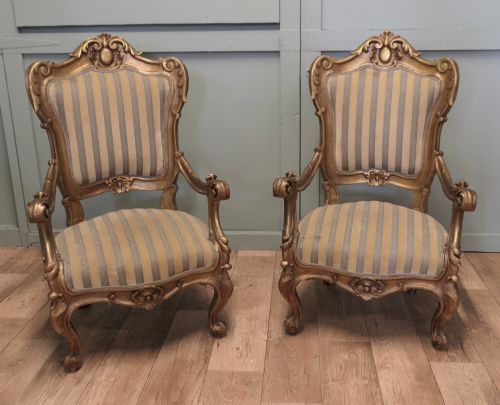
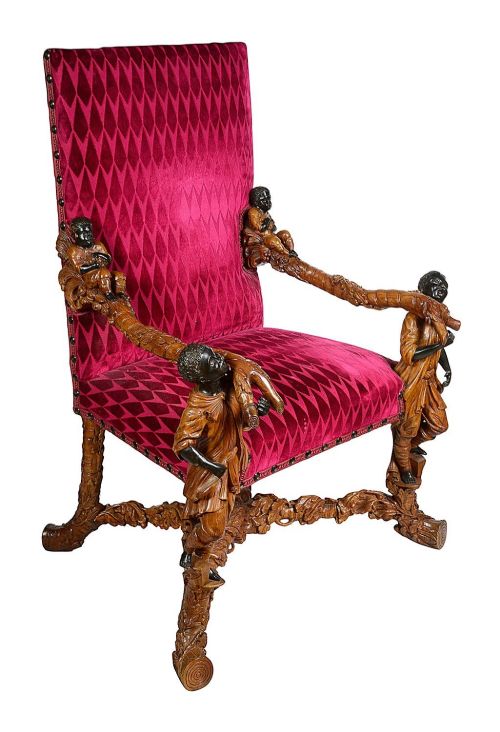
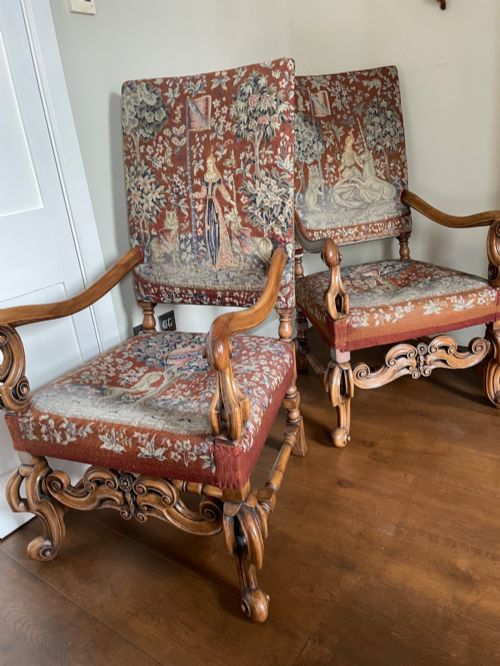
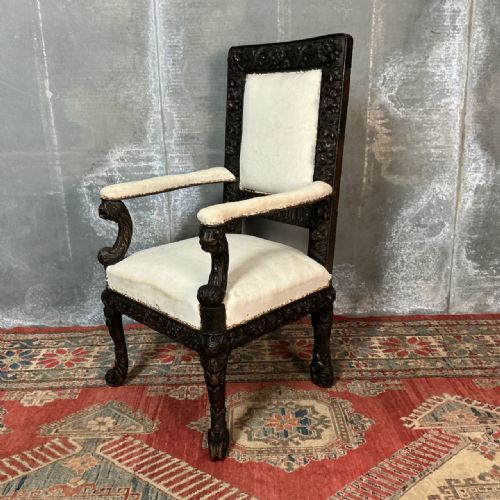
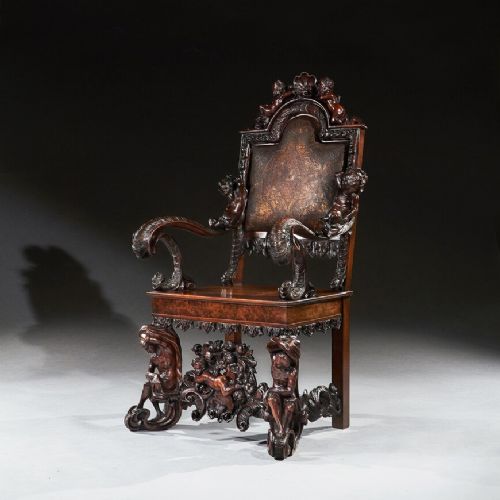
When you search for a baroque arm chair, you encounter a lineage of grand seating spanning from the seventeenth century through to later revival periods. These forms include walnut framed throne chairs, marquetry elbow chairs, and heavily carved giltwood or oak seating.
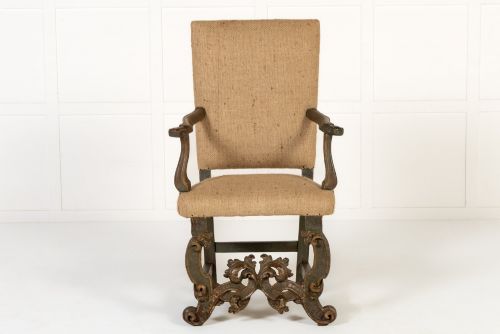
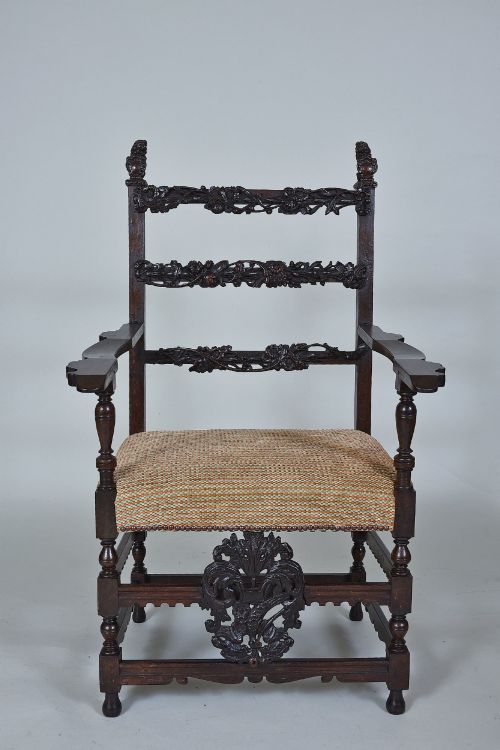
The versions most commonly met on this page originate from Italian, Dutch, and English workshops across the seventeenth, eighteenth, and nineteenth centuries. Makers embraced ornate silhouettes, high backs, and substantial arm supports designed for formal interiors.
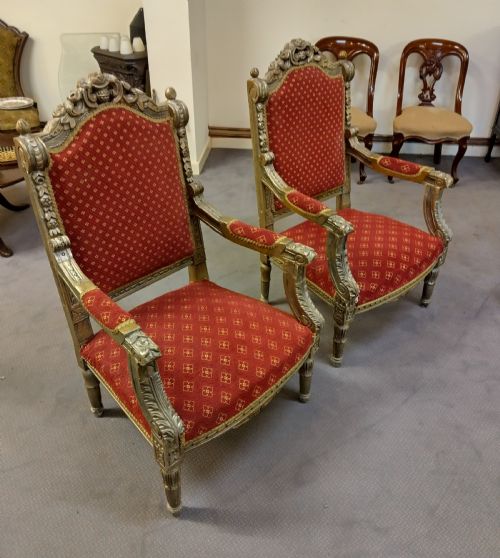
Revival pieces from the nineteenth and early twentieth centuries also appear frequently, capturing the exuberant carved details of earlier eras in oak, walnut, and gilt finishes. Each piece demonstrates a strong architectural presence that anchors a traditional room.
How they were made
Timbers such as walnut and oak form the structural backbone of these seats, providing the dense foundation required for deep, sculptural carving. Craftsmen also utilised giltwood to achieve a brilliant, reflective surface on ceremonial and high-status seating.
Surface decoration relies heavily on intricate hand carving, complemented by inlaid marquetry work on Dutch examples. Upholstery techniques incorporate traditional textiles, needlework, fabric, leather, and hessian to pad the substantial frames.
Baroque Arm Chair Retail Price Guide 2026
Typical asking prices for baroque arm chair among the pieces listed under this phrase on Sellingantiques today, from the lower quarter to the upper quarter. They describe what is for sale here now, not the wider market.
Primary materials recorded across these seats include walnut, oak, giltwood, needlework, and leather.
What varies in quality
The distinction between standard examples and exhibition quality work lies primarily in the crispness and depth of the hand carving. Pieces attributed to specific skilled carvers display superior anatomical proportions and fluid scrollwork that lesser workshops fail to replicate.
Material selection also dictates overall merit, with figured walnut and dense oak holding up better structurally over centuries than softer timber alternatives. The integrity of the original frame construction and the fidelity of the revival period details govern the standing of each piece.
Andrea Brustolon
The Baroque Arm Chair Glossary
- Marquetry
- The art of applying pieces of veneer to a structure to form decorative patterns. Dutch examples frequently utilise this technique on elbow chairs.
- Giltwood
- Timber that has been coated with gold leaf or a gilt finish. This treatment creates a brilliant, reflective surface often seen on revival armchairs.
- Carolean
- Pertaining to the reign of King Charles II, influencing English furniture design with rich carving and squab cushions.
- Throne armchair
- A tall, commanding seat designed with an elevated back to project authority and status within a grand interior.
Baroque Arm Chair: Frequently Asked Questions
What defines a baroque arm chair?
A baroque arm chair is characterised by exuberant carved decoration, substantial wooden frames, and prominent scrolled arms.
These pieces typically date from the seventeenth and eighteenth centuries, or appear as nineteenth century revivals utilising walnut, oak, and giltwood.
How do I place one in a modern room?
These commanding chairs function best as standalone statement pieces in neutral spaces where their detailed carving can stand out.
Pairing a walnut or giltwood armchair with contemporary surroundings creates a deliberate contrast between historic craftsmanship and modern simplicity.
Are nineteenth century revivals authentic?
Nineteenth century revival pieces are authentic antiques in their own right, produced during periods of intense historicism.
They replicate seventeenth and eighteenth century styles using period techniques, often exhibiting exceptional carving quality by named makers and skilled workshops.
What woods were used for these chairs?
Walnut and oak are the primary timbers encountered in these listings, chosen for their strength and suitability for deep carving.
Some pieces also feature gilt finishes applied over timber frames to achieve a dramatic, reflective appearance suited to formal reception rooms.