

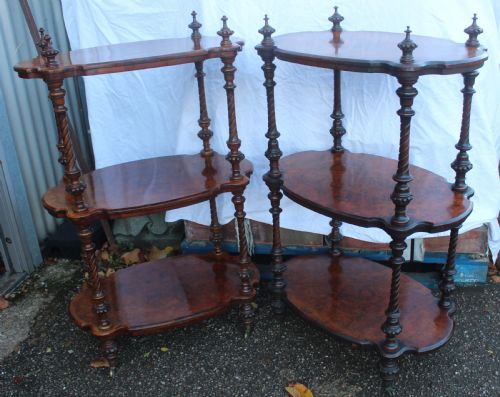
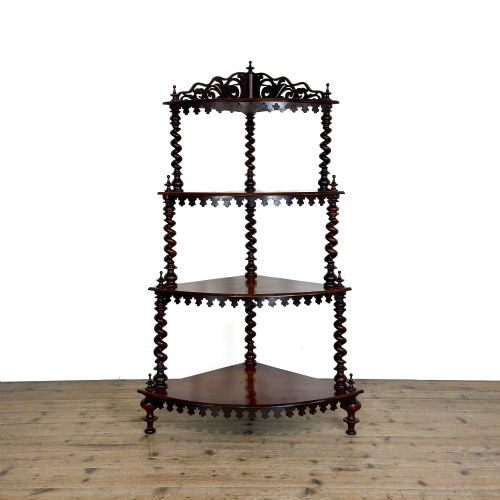
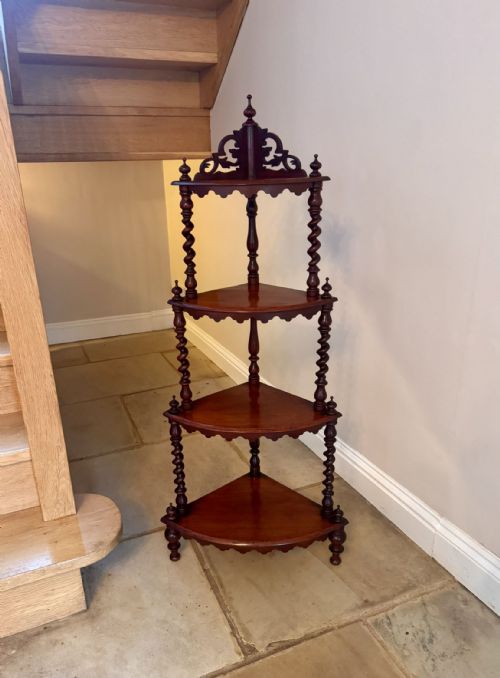
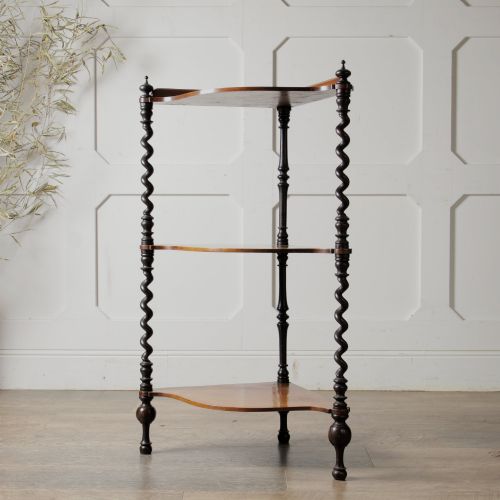


Barley Twist Shelving
Barley twist shelving comprises tiered wooden stands and display furniture built primarily during the Victorian and Regency periods to hold books and ornaments.
Barley Twist Shelving
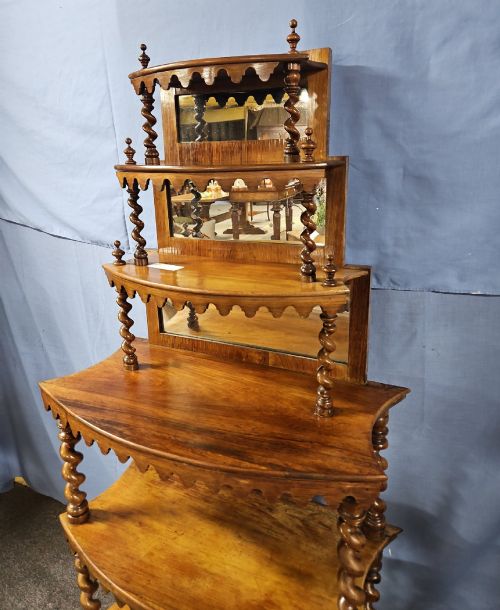
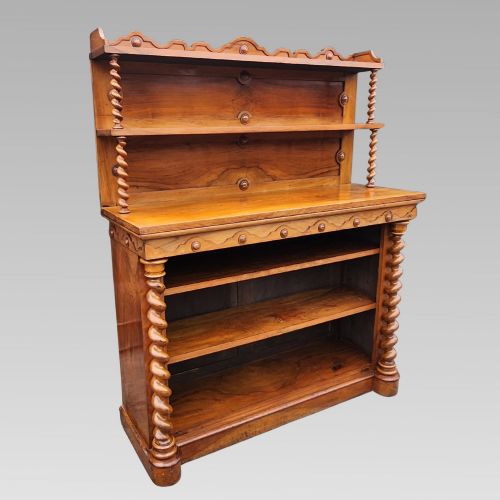
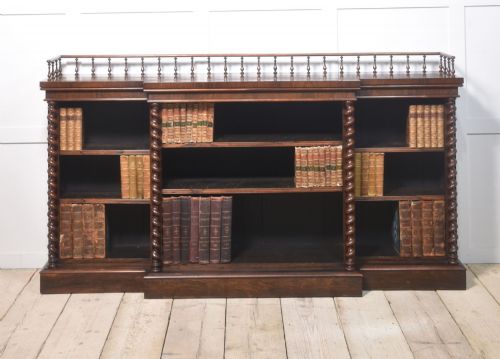
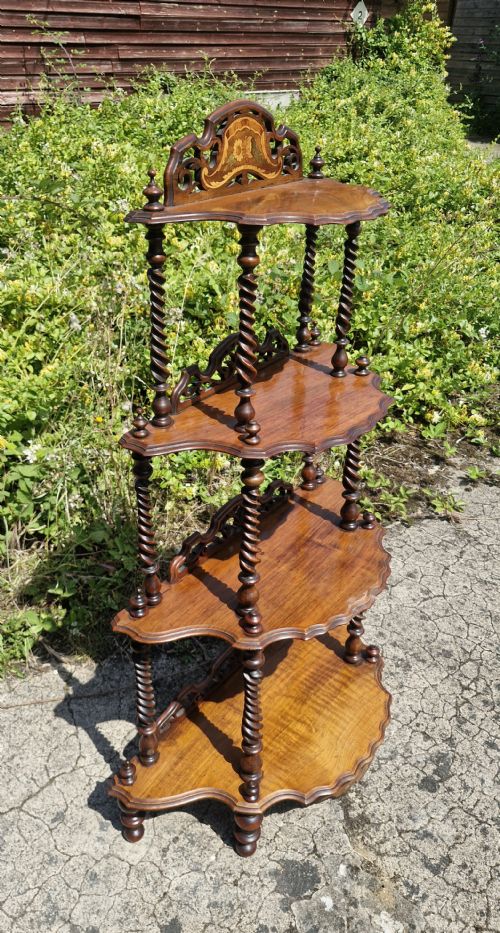
Barley twist shelving centres on multi-tiered furniture designed for display and storage, encompassing object types such as whatnots, etageres, open bookcases, corner stands, and display units.
The pieces appearing under this search phrase are predominantly Victorian and nineteenth-century examples, alongside select Regency and William IV pieces, featuring multi-tiered platforms supported by upright columns.
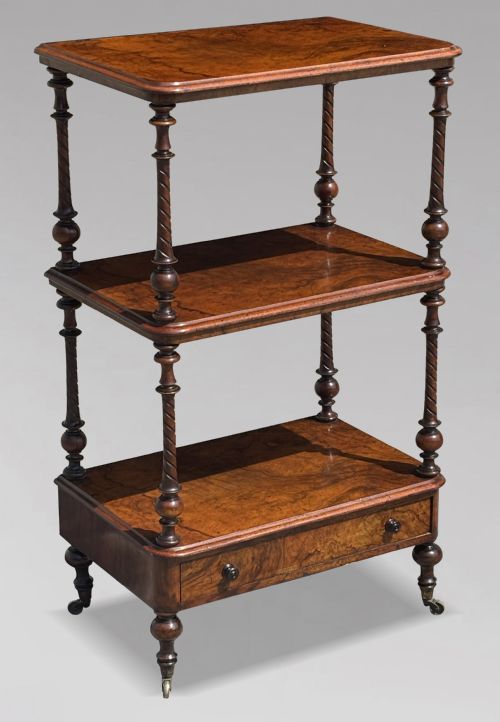
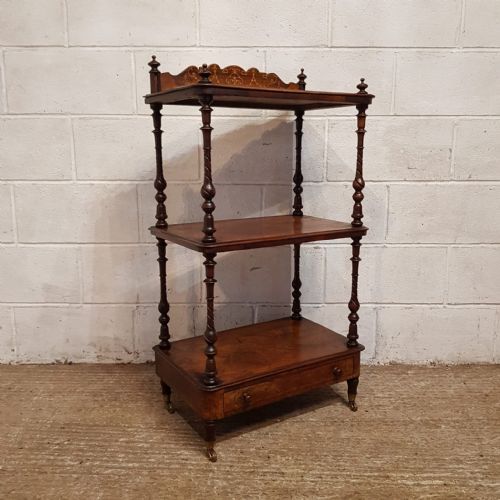
Buyers encounter corner whatnots, freestanding multi-tier etageres, and shelf units with varying tier counts, some incorporating single drawers, glazed sections, or inlaid decoration alongside the characteristic twisted woodwork.
How they were made
Cabinet makers utilised dense hardwoods including walnut, burr walnut, rosewood, mahogany, and occasional oak to construct the structural uprights and tiered shelves of these display units.
Makers shaped the characteristic spiral supports using lathe-turning techniques, sometimes incorporating hollow barley twist profiles alongside inlaid wood details and carved friezes.
Additional elements incorporated into construction include brass fittings, mirrored backs, glass panels, and painted finishes seen on French pieces from the early twentieth century.
Barley Twist Shelving Retail Price Guide 2026
Typical asking prices for barley twist shelving among the pieces listed under this phrase on Sellingantiques today, from the lower quarter to the upper quarter. They describe what is for sale here now, not the wider market.
What varies in quality
The grade of timber selected defines the upper tier of these pieces, with figured burr walnut and richly grained rosewood marking out superior examples from standard mahogany or plain wood builds.
Complexity of construction separates simpler corner units from elaborate multi-tier etageres featuring integrated drawers, inlaid wood marquetry, and finely turned hollow twist columns.
The Barley Twist Shelving Glossary
- Whatnot
- An open multi-tiered piece of furniture designed for displaying ornaments, books, or small possessions, popular throughout the nineteenth century. These items typically feature between three and six shelves supported by turned pillars.
- Etagere
- A French term for a tiered display stand similar in function to a whatnot, providing multiple open platforms for objects. They appear in walnut and rosewood across Victorian and Regency listings.
- Burr walnut
- A specialised wood veneer taken from the burl growth of a walnut tree, yielding swirling, highly figured grain patterns. Cabinet makers utilised this material on top-tier Victorian console tables and display shelves.
- Canterbury
- A low multi-partitioned stand originally designed for holding sheet music or books, occasionally combined with whatnot shelving units in Victorian designs. It sits on small feet or castors for mobility.
- Demi-lune
- A half-moon or semicircular shape utilised for tables and corner display stands designed to fit flush against a wall.
Barley Twist Shelving: Frequently Asked Questions
What is barley twist shelving?
Barley twist shelving refers to multi-tiered display furniture featuring spiral turned wooden columns supporting horizontal shelves. These pieces function as whatnots, etageres, and open bookcases.
Originating principally in the nineteenth century, these units provide open storage and display space for books and decorative objects within domestic interiors.
How were whatnots used?
Victorians used whatnots as versatile display stands in drawing rooms and parlours to hold ornaments, ceramics, and books. Their multi-tier design maximised vertical display space.
Some variants included lower drawers or compartments for smaller items, combining open display with enclosed storage.
What woods are common?
The listings show makers predominantly used walnut, burr walnut, and rosewood for these tiered display units. Mahogany and oak also appear across various periods.
Figured veneers like burr walnut and rich rosewood grain denote finer decorative pieces from the Victorian and Regency eras.
How do I date a piece?
Dating relies on stylistic markers, timber choice, and period characteristics recorded across Victorian, Regency, and nineteenth-century examples. Regency and early Victorian pieces often utilise rosewood and mahogany.
Later Victorian pieces from the eighteen-eighties frequently showcase burr walnut veneer, inlaid details, and elaborate turned columns.