



Barley Twist Display Cabinet
A barley twist display cabinet brings tactile turned columns to your room, framing curiosities and books with architectural warmth.
Barley Twist Display Cabinet
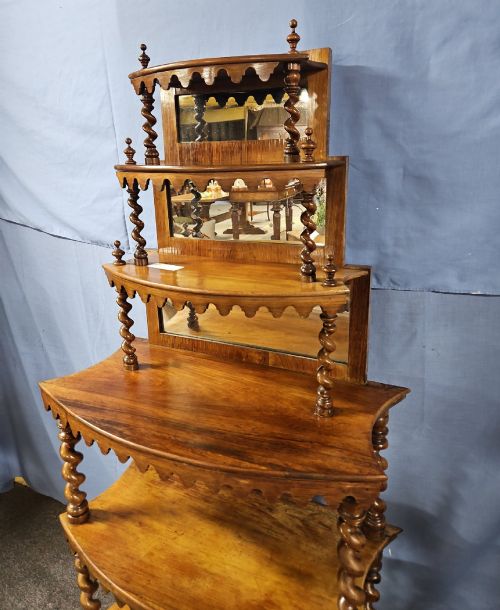
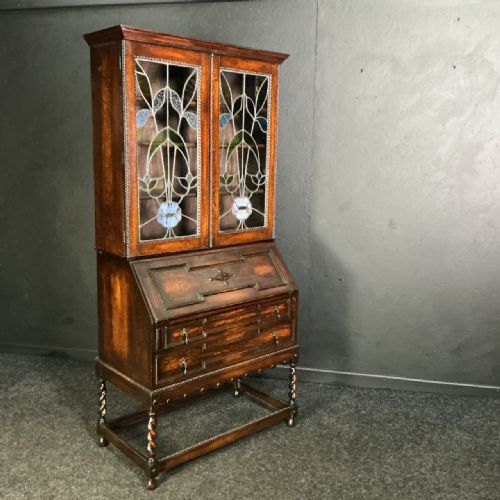
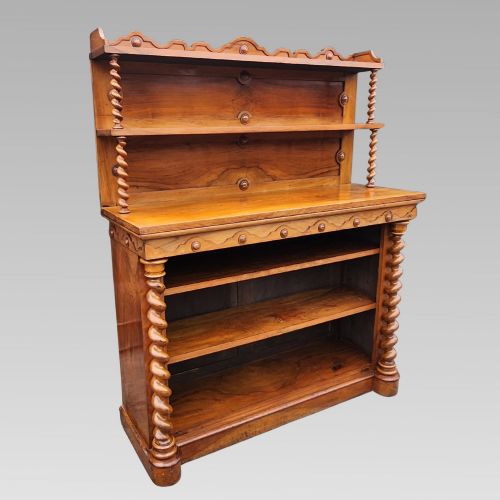
When you search for a barley twist display cabinet, you meet various timber forms from the nineteenth century onwards, including bookcases, corner whatnots, side cabinets, and credenzas.
The pieces on this page span the Victorian era, the nineteen-twenties, and mid nineteenth-century periods, often finished with glazed doors or open shelving units.
Jacobean revival and Gothic revival influences frequently shape the oak and rosewood frames, giving these cabinets their distinct historical character.
How they were made
Cabinet makers turned solid timbers such as oak, walnut, padauk, and rosewood on lathes to create the characteristic helical columns that define the style.
Glazing, mirror panels, and brass hardware are integrated into the heavier wood structures to display and reflect contents safely.
Makers utilised traditional joinery alongside applied carvings, fabric linings, and marble tops to finish bureau bookcases and sideboards.
Barley Twist Display Cabinet Retail Price Guide 2026
Typical asking prices for barley twist display cabinet among the pieces listed under this phrase on Sellingantiques today, from the lower quarter to the upper quarter. They describe what is for sale here now, not the wider market.
Formations on this page range from glazed bookcases and credenzas to multi-tiered whatnots and gun cabinets.
What varies in quality
The precision of the woodturning and the depth of the timber figuring set individual cabinets apart, distinguishing robust craftsmanship from simpler production.
Original glass panes, intact brass fittings, and well-fitted doors reflect higher standards of construction in period examples.
The integrity of the structural joints and the richness of the polished timber surfaces determine the overall presence of the piece.
Holland and Sons
The Barley Twist Display Cabinet Glossary
- Barley twist
- A decorative turning technique resembling a helix or rope, common on the uprights and columns of Victorian furniture.
- Whatnot
- An open set of multi-tiered shelves designed for displaying ornaments and small decorative objects.
- Credenza
- A low-standing side cabinet, often featuring glazed or panelled doors and decorative columns.
- Bureau bookcase
- A combination piece featuring a slanted writing flap beneath an upper section of shelving or glazed doors.
- Padauk
- A dense tropical hardwood known for its deep colour and durability, used in nineteenth-century cabinetry.
Barley Twist Display Cabinet: Frequently Asked Questions
How do I date a barley twist cabinet?
Dating relies on timber choice, construction methods, and stylistic cues such as Victorian revival or Jacobean influences. Rosewood and heavy walnut often point to mid nineteenth-century work, while lighter oak finishes frequently align with nineteen-twenties production.
Examining the backboards, drawer linings, and screw types helps confirm the period of manufacture alongside the turning style.
Where should I place a display cabinet?
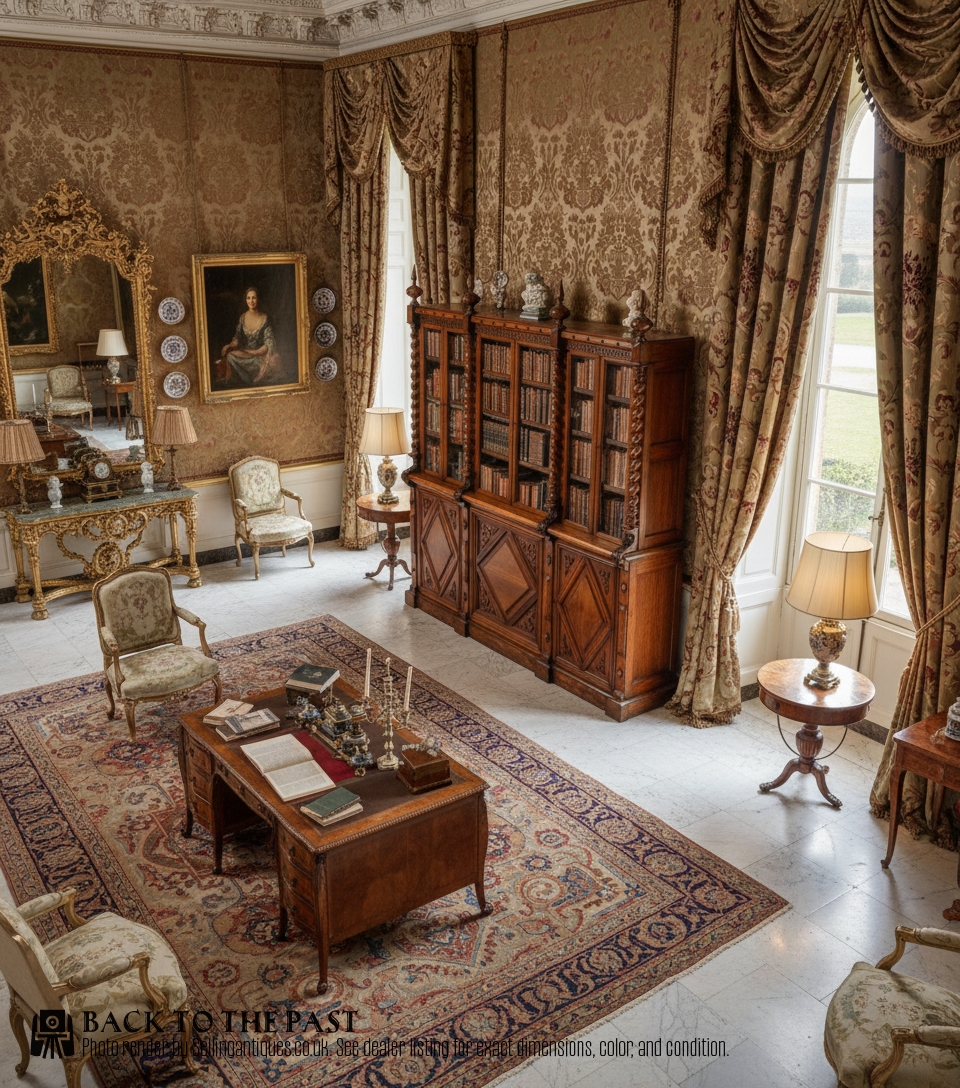
These cabinets suit living rooms, dining spaces, or hallways where their turned columns can be viewed without obstruction. Placing them away from direct sunlight protects the polished timbers and internal fabrics.
Ensure the floor is level, particularly with taller bookcases and corner whatnots, to keep the doors hanging true.
What is the difference between a whatnot and a cabinet?
A whatnot consists of open tiers designed purely for display and easy access to ornaments or books. Cabinets enclose the contents behind glazed or solid wooden doors, offering protection from dust.
Both forms frequently incorporate barley twist uprights as a decorative structural element.
How do I care for antique timber?
Dust the wood regularly with a dry, soft cloth and avoid chemical polishes that build up a residue over time. Maintaining a stable room temperature prevents the timber from splitting or warping.
Glass panes benefit from gentle cleaning with a mild solution applied to a cloth rather than sprayed directly.