
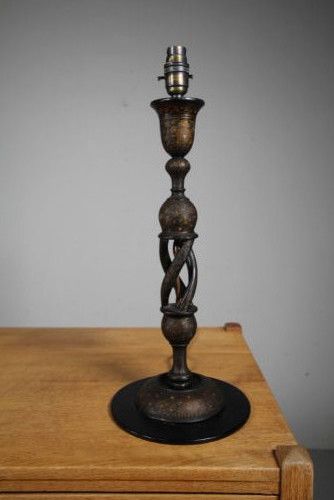
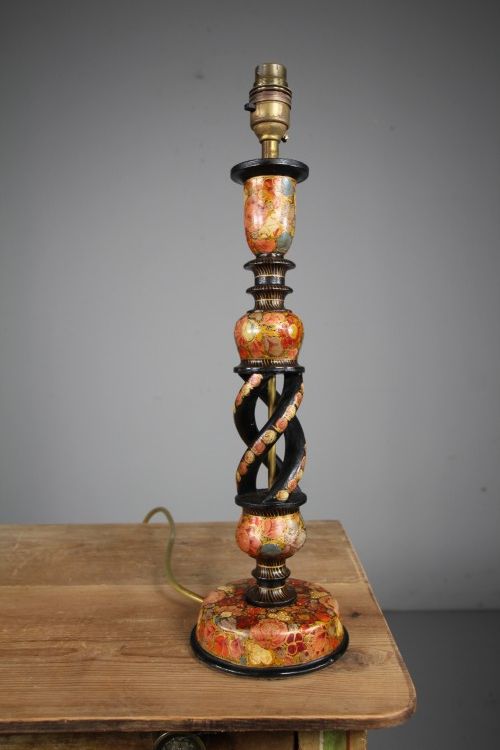


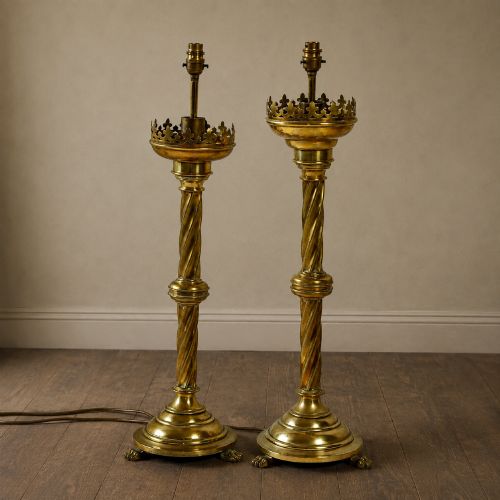

Barley Twist Column Table
A barley twist column table brings movement and texture to a room, turning a functional support into a work of turned woodwork.

Barley Twist Column Table
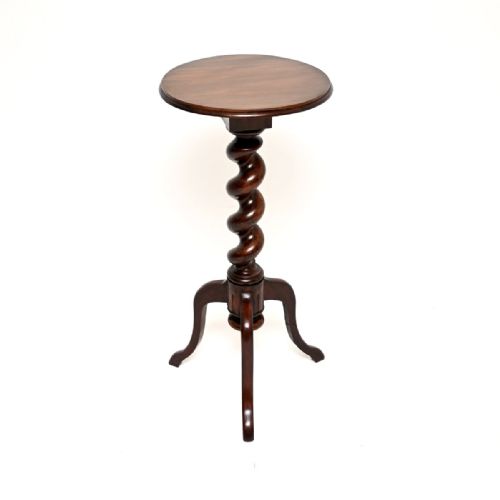
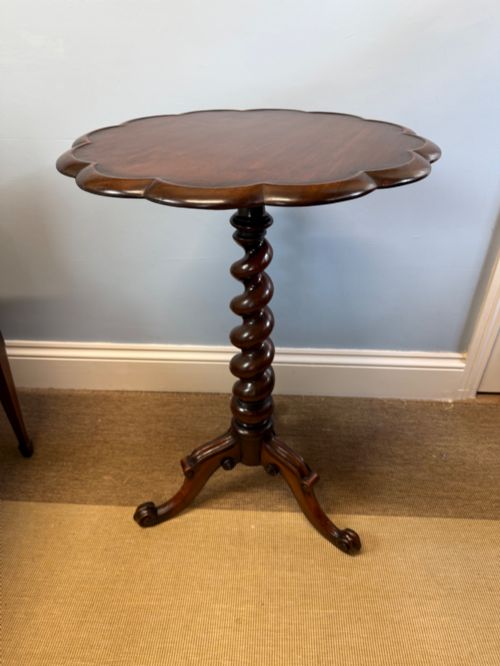
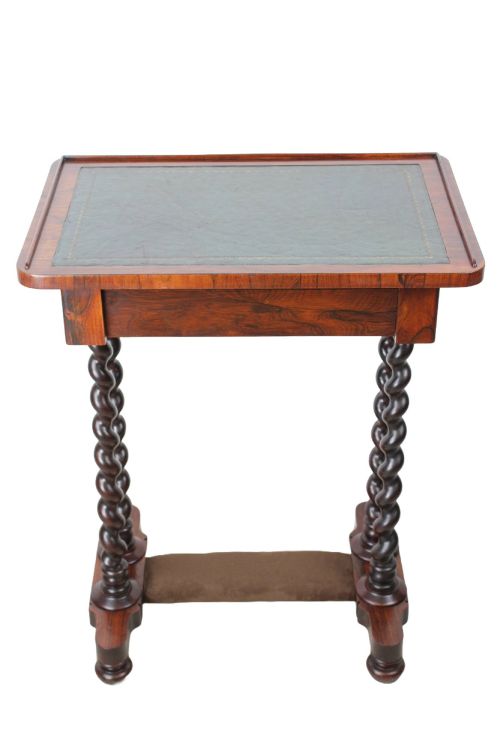
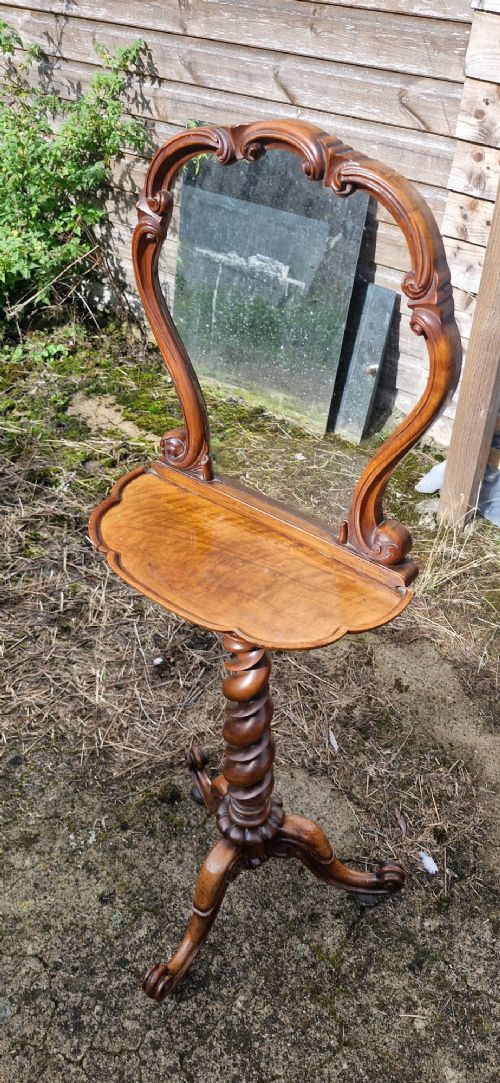
A barley twist column table centres on a helical turned shaft that supports a small surface, serving as an occasional table, side table, plant stand, or lamp table. These pieces appear across several periods, including the Victorian era, the Regency period, and the 1920s.
The forms vary from tripod wine tables and occasional tables to plant stands and tall lamp tables. Walnut, mahogany, oak, and rosewood form the main timber structures, while brass also appears in candlesticks and table lamps sharing this column style.
How they were made
Craftsmen turned timber on a lathe to create the helical twist, utilising dense hardwoods such as mahogany, walnut, oak, and rosewood. The columns support tops in circular, octagonal, or drop-leaf configurations.
Metal versions utilise cast or worked brass, shaping the metal into the characteristic helical twist for use in candlesticks and table lamps. Wood surfaces often display polished finishes that highlight the grain of flame mahogany, burr walnut, or burr maple.
Listings feature woods including mahogany, walnut, oak, rosewood, burr maple, and burr elm alongside brass elements.
What varies in quality
The definition of the turning separates simpler pieces from finer examples, where the helical cut maintains crisp edges and consistent depth down the entire length of the column. Timber selection also dictates the grade, with figured grains like flame mahogany and burr walnut marking out superior items.
Joinery and stability define the construction standard, particularly in tripod bases and stem connections where firm joints prevent wobbling. The integrity of the original surface finish and secondary timbers further distinguish high-grade examples from later reproductions.
T Thomason And Co
The Barley Twist Column Table Glossary
- Barley twist
- A helical turned column resembling a twisted rope or barley sugar. This form appears on table pedestals, lamp stems, and plant stands.
- Occasional table
- A small movable table designed for light use in a reception room. These pieces function as wine tables, lamp bases, or side supports.
- Torchere
- A tall stand designed to hold a light, candle, or plant. Examples often incorporate a slender central column and a tripod base.
- Teapoy
- A small box or chest on a central pillar, originally used for storing tea. Many examples on the market double as occasional tables or spirit stands.
- Tripod base
- A three-legged support system common on occasional tables and candle stands. This design provides stability on uneven floors.
Barley Twist Column Table: Frequently Asked Questions
What is a barley twist table used for?
A barley twist column table serves as an occasional surface for lamps, drinks, or decorative objects. Their compact footprint makes them suitable for placement beside seating or in corners.
Taller versions function as plant stands or torcheres to elevate greenery or lighting. Smaller wine tables provide a stable surface for holding glasses or books.
How do I date an antique twist table?
Dating relies on timber choice, construction methods, and stylistic cues from periods like the Victorian era, Regency, or the 1920s. Examining the underside and secondary woods reveals the manufacturing techniques of the time.
Turned profiles and finishes also shift across decades, with 19th-century pieces often showing dense hardwoods and hand-polished surfaces, while later items reflect 1920s revival preferences.
Are these tables sturdy enough for daily use?
Most occasional tables and plant stands handle everyday items like table lamps and small objects reliably. Tripod bases distribute weight effectively when the joints remain tight.
Care should be taken with tall, slender torcheres or tilt-top wine tables, which have higher centres of gravity. Placing them out of high-traffic pathways prevents accidental tipping.
What woods are common in these pieces?
Mahogany and walnut form the majority of the wooden frames, often selected with figured veneers like flame grain or burr walnut. Oak appears frequently in 1920s plant stands and Jacobean revival pieces.
Rosewood and burr maple also feature in select Regency and Georgian examples, while brass is common in lamp bases and candlesticks.