


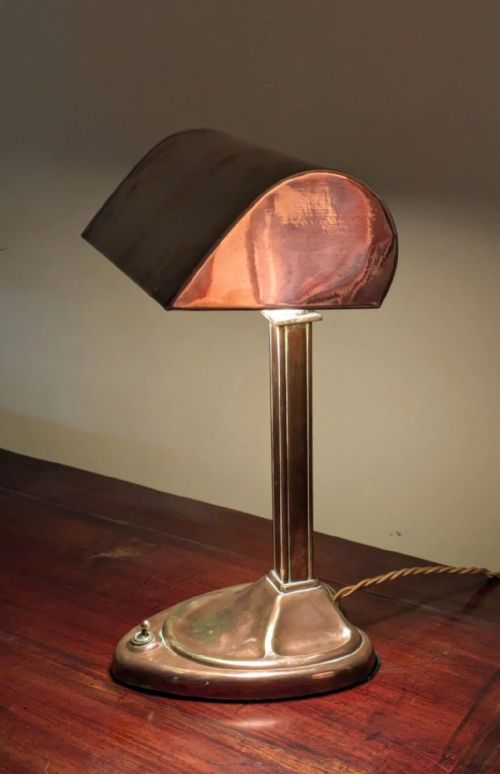


Bankers Task Lamp
A bankers task lamp is a mechanical desk light built for focused work, combining heavy metal bases with adjustable arms.
Bankers Task Lamp
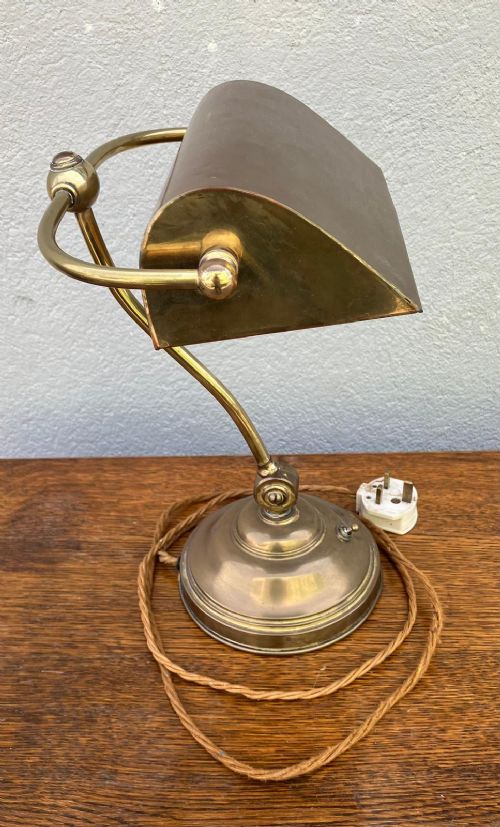
A bankers task lamp serves as a functional desk light designed to direct illumination precisely where needed during reading or writing. These task lamps emerge from several distinct periods, stretching back to the nineteenth century and moving through Edwardian and Art Deco designs.
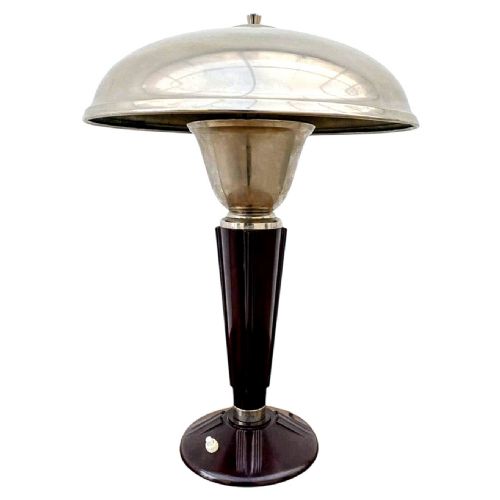
The most common examples on this page date from the nineteen twenties and nineteen thirties, often showing industrial forms or clean modernist lines. Buyers encounter pieces styled in French industrial, Bauhaus, and traditional aesthetics alongside simpler adjustable desk lamps.
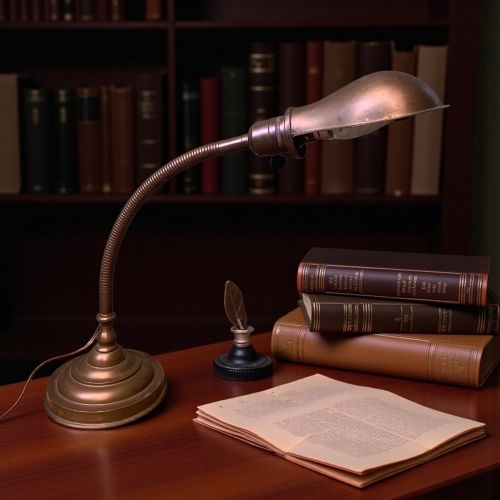
Origins span British, French, and continental workshops, utilising flexible joints, swan neck stems, and heavy metal bases to hold position. Forms range from standard brass desk lamps to specialised notary and Pullman designs featuring glass shades.
Materials and construction
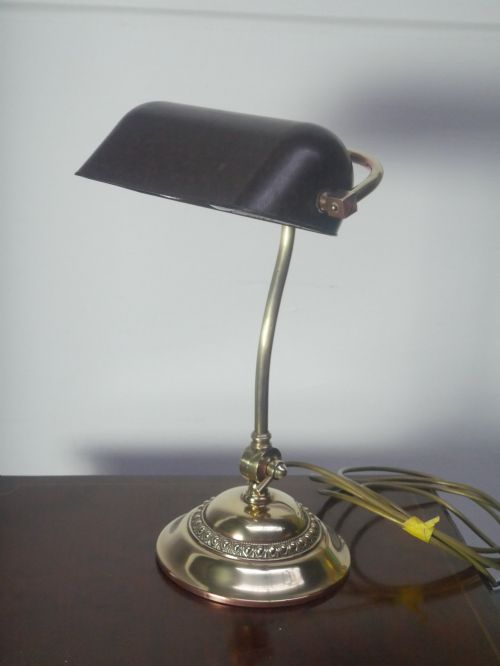
Makers built these lamps predominantly in brass, copper, bronze, and chrome, giving the stands substantial weight to support adjustable arms. Articulated joints allow the user to angle the light, whilst weighted bases keep the lamp stable on a flat surface.
Shades utilise frosted glass, opaline glass, and moulded bakelite to diffuse the light bulb glare directly over paperwork. Metal components are cast, spun, or tubular, joined by screws and hinges designed for daily movement in offices and studies.
Listings feature desk lamps spanning from eighteen sixty through to nineteen thirty, incorporating materials like bronze, chrome, bakelite, and frosted glass.
Distinctions in quality
Quality rests upon the engineering of the joints, the thickness of the metal used in the stem, and the purity of the cast bronze or brass. Superior pieces maintain their tension over decades of adjustment without sagging.
The glass shades show differences in weight, bubble distribution, and moulding depth, with high-end examples using heavy frosted or opaline glass. Designer attributions and regional manufacturing standards further separate standard utilitarian desk lamps from exceptional workshop productions.
Eileen Grey·Wilhelm Wagenfeld
The Bankers Task Lamp Glossary
- Articulated
- A jointed arm or stem that moves and holds position at various angles. This mechanism allows the user to direct the beam exactly where required.
- Swan neck
- A curved metal upper stem resembling the neck of a swan. This classic form provides a graceful arc over the desk surface.
- Opaline glass
- A milky, translucent glass often used for lamp shades to soften and diffuse the glare. It produces an even, gentle spread of light.
- Bakelite
- An early form of synthetic thermosetting plastic used for switches, plugs, and lamp shades during the early twentieth century. It offers durability and a characteristic dense finish.
- Notary lamp
- A traditional desk light historically associated with legal offices and administrative desks. These often incorporate heavy bronze bases and adjustable shades.
Bankers Task Lamp: Frequently Asked Questions
Where were these lamps originally used?
These lights were designed for administrative desks, banks, law offices, and architectural drafting tables where direct illumination was essential. Their heavy bases kept them secure on crowded wooden surfaces.
Over time, they moved from commercial environments into domestic studies and libraries as decorative household objects.
How do I date a vintage desk lamp?
Dating relies on identifying material choices like bakelite or chrome alongside stylistic markers such as Art Deco geometry or Edwardian brass work. Patents stamped onto the metal or characteristic manufacturing marks can also narrow down the production era.
Comparing the wiring style and switch type provides further clues, though electrical components are frequently updated for modern safety.
Can I use modern light bulbs in these?
Modern LED or incandescent bulbs fit most vintage sockets provided the wattage matches the lamp's electrical capacity. Care must be taken with older shades to ensure heat does not damage fragile historic glass or early plastics.
Consulting a qualified electrician ensures the internal wiring safely accommodates contemporary power sources.