






Bamboo Turned Table
A bamboo turned table brings tactile timber framing into a room, offering functional surfaces fashioned to mimic organic cane or worked from solid hardwoods.
Bamboo Turned Table
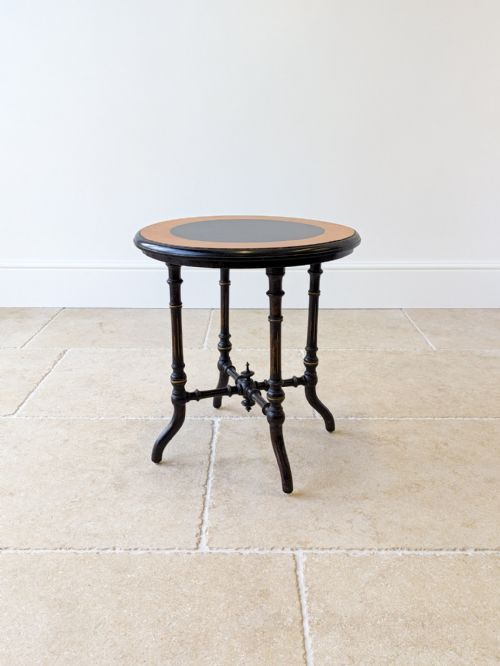
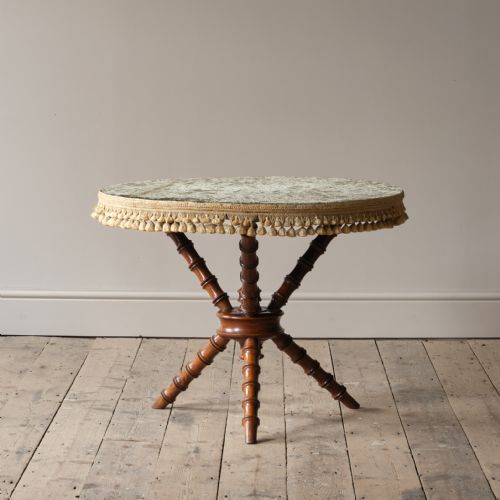
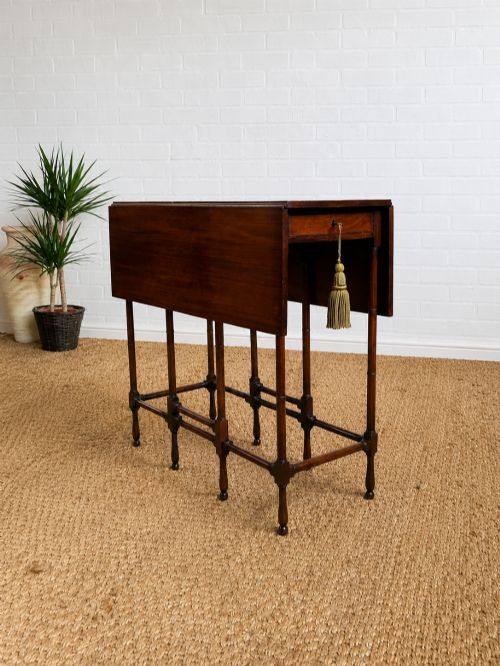
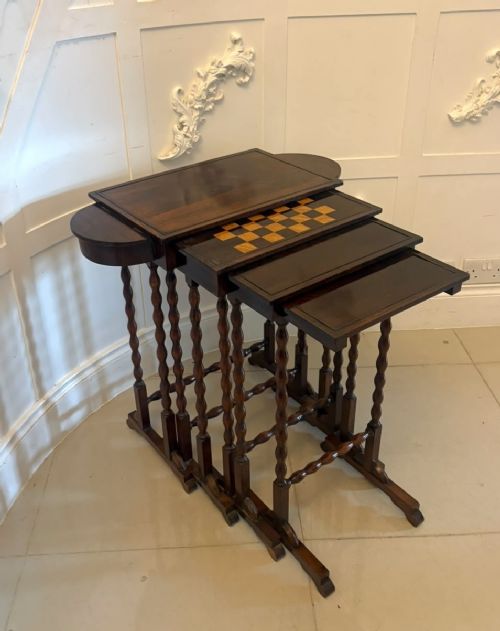
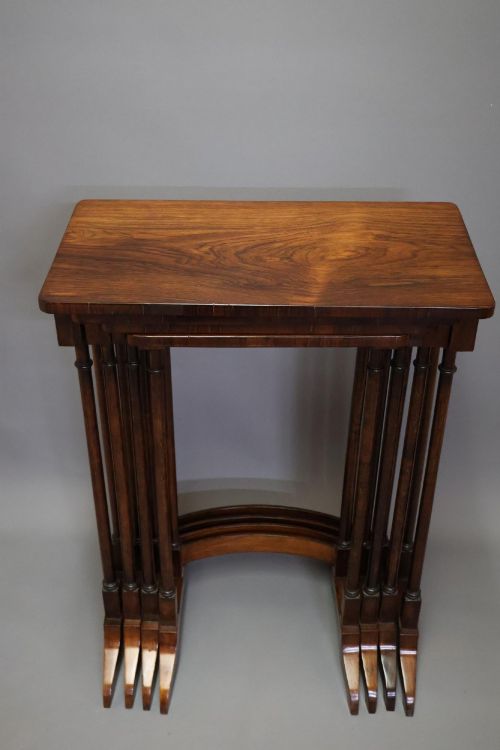
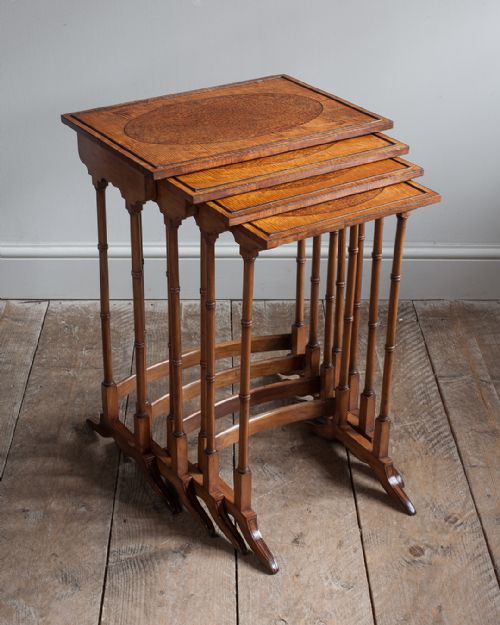
A bamboo turned table encompasses an array of occasional, side, bedside, dressing, and nested tables spanning the nineteenth century, Regency, Victorian, and Edwardian eras. Pieces often take the form of quartetto nests or gypsy tables, alongside bedside cabinets and drop-leaf designs.
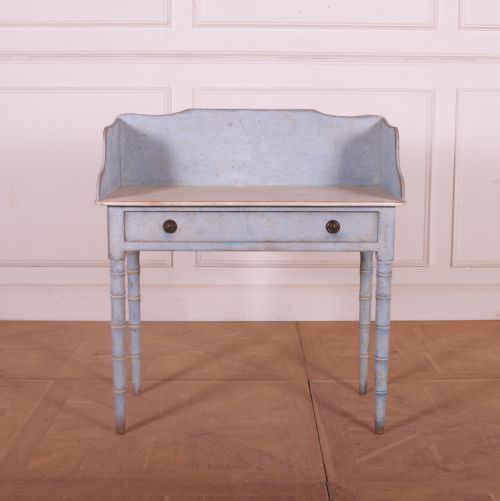
Makers utilised simulated or faux bamboo alongside solid mahogany, rosewood, and satinwood, occasionally incorporating velvet or brass details. The selection ranges from French folding variants to Scottish Victorian examples and Georgian style occasional pieces.
How they were made
Craftsmen shaped dense timbers like mahogany, rosewood, and satinwood into rounded, jointed profiles that imitate natural bamboo shoots. Turning lathes created the characteristic ringed segments, while pine and boxwood formed secondary framing or decorative inlay.
Construction involved stable joinery for nests of four and drop-leaf mechanisms, paired with velvet inserts or integrated chess boards. Surface finishes preserved the deep grain of the woods or applied simulated bamboo paint effects to pine.
Bamboo Turned Table Retail Price Guide 2026
Typical asking prices for bamboo turned table among the pieces listed under this phrase on Sellingantiques today, from the lower quarter to the upper quarter. They describe what is for sale here now, not the wider market.
Some tables double as chess boards, proving that nineteenth-century folk took their parlour games very seriously indeed.
What varies in quality
Attribution elevates a piece, as seen in documented Scottish Victorian work by known makers like John Taylor Edinburgh compared to unsigned items. Structural integrity in nested tables and well-preserved velvet tops further separate standard utilitarian pieces from finer decorative works.
John Taylor Edinburgh
The Bamboo Turned Table Glossary
- Quartetto nest
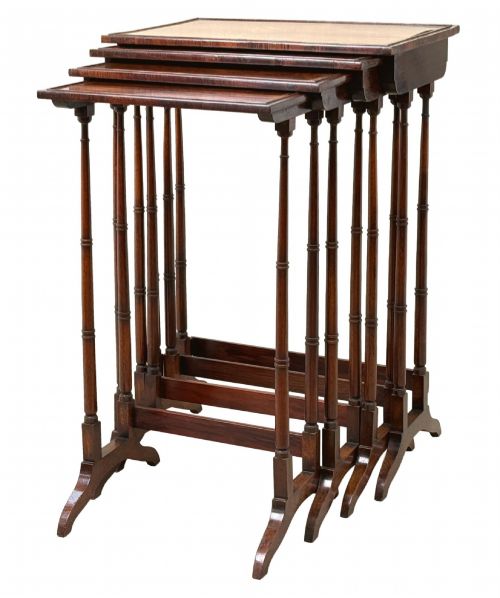
- A graduated set of four occasional tables designed to slide neatly beneath one another when not in use. These sets were popular in Regency and Victorian drawing rooms.
- Simulated bamboo
- Wood turned and painted to resemble natural cane, also known as faux bamboo. This technique was widely practiced during the nineteenth century.
- Gypsy table
- A light occasional table with three turned legs, frequently draped with a fabric top such as antique velvet. They became fashionable during the Victorian period.
- Drop-leaf table
- A table with hinged flaps on the sides that can be folded down or supported to increase surface area. They offer flexible placement in smaller spaces.
- Tray top
- A table surface featuring a raised edge or gallery to prevent items from sliding off. This form appears on various English side and occasional tables.
Bamboo Turned Table: Frequently Asked Questions
What is a bamboo turned table?
A bamboo turned table is a nineteenth-century or Edwardian piece featuring legs shaped on a lathe to mimic natural bamboo joints. These include side tables, bedside cabinets, and nests of four.
They combine decorative turned woodwork with functional surfaces like mahogany, rosewood, or velvet-topped inserts for daily use.
How do I use a quartetto nest?
A quartetto nest provides four graduated tables that store together in a compact stack. You pull them out individually when guests arrive for drinks or writing.
They work well beside seating areas where surface space needs to expand and contract easily throughout the day.
Are faux bamboo tables antique?
Faux bamboo tables seen here date from the nineteenth century, including Victorian and Edwardian periods around eighteen ninety. They utilise simulated wood turning on pine or hardwood frames.
These pieces reflect the nineteenth-century taste for exotic and botanical design motifs adapted to European furniture forms.
How do I care for velvet tabletops?
Velvet inserts on gypsy tables require gentle brushing with the grain to remove dust. Keep them away from direct sunlight to preserve the colour of the fabric.
Use a dry cloth for the surrounding wood turned frame and avoid liquid polishes on antique velvet surfaces.