
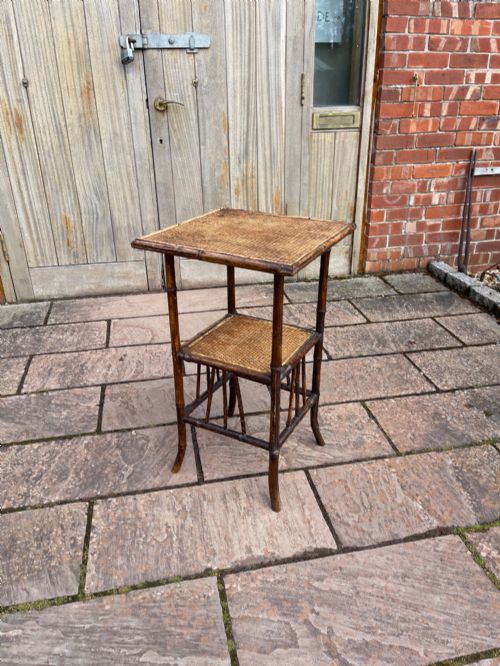


Bamboo Tier Table
A bamboo tier table brings lightweight utility and distinctive oriental charm to a room, offering practical surface space across multiple levels.
Bamboo Tier Table
When searching for a bamboo tier table, a buyer encounters pieces primarily from the Victorian and Edwardian periods, alongside examples from the late nineteenth and early twentieth centuries. These pieces function principally as occasional tables, side tables, and lamp stands, designed with two or three horizontal surfaces.
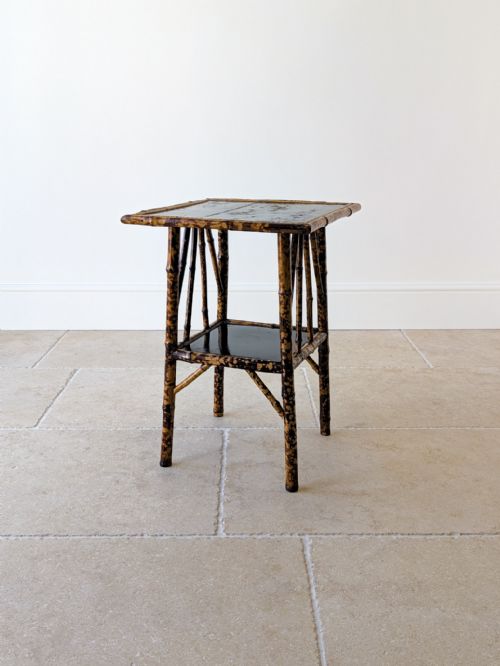
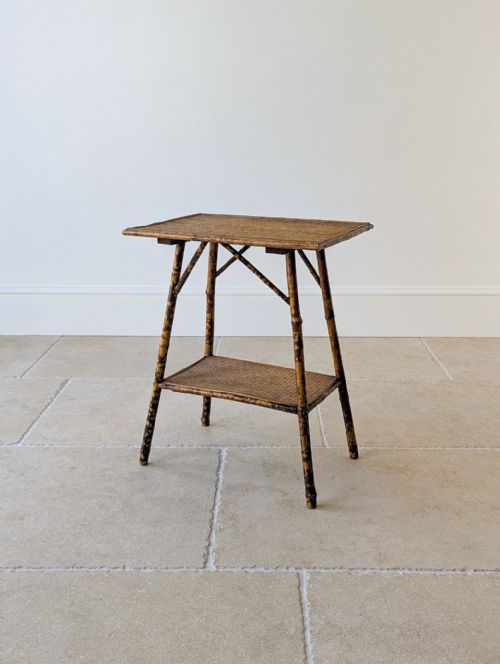
The version met most frequently on this page is the Victorian two-tier or three-tier occasional table constructed from natural or tiger bamboo. Such items often incorporate lacquered panels or painted oriental motifs reflecting the Aesthetic Movement and Anglo-Japanese tastes of the era.
How they were made
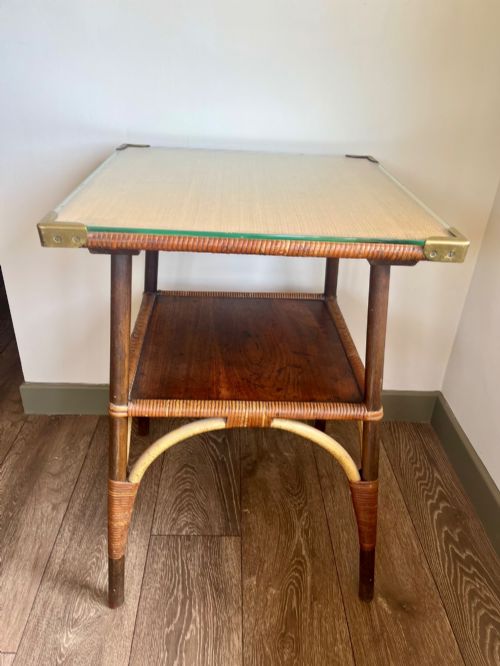
Construction relies upon lightweight bamboo stems joined to form sturdy frames for multiple shelves or tiers. Makers integrated materials such as rattan, wood, and leather for the surfaces, employing gesso, gold leaf, and paint to decorate panels.
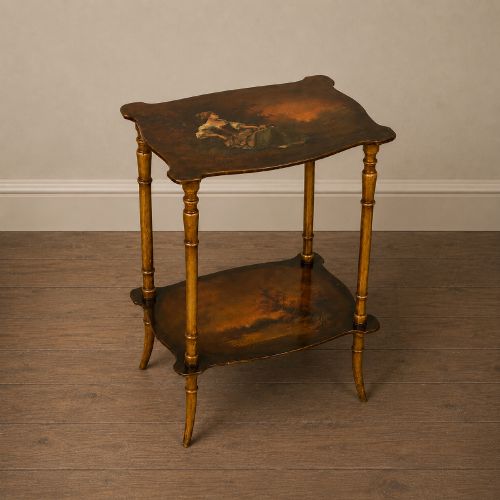
Lacquer and japanning techniques provide durable, glossy finishes on table tops and lower shelves, frequently depicting Chinoiserie scenes. Brass elements occasionally appear in structural joints or decorative mounts.
Materials recorded across the inventory include natural bamboo, lacquered wood, rattan, brass mounts, and gold leaf detailing.
What varies in quality
Quality separates through the integrity of the bamboo framing and the execution of surface decoration. Finer examples display precise joinery where stems meet, alongside richly detailed hand-painted lacquer panels or inlaid elements rather than plain surfaces.
The distinction lies in the depth of the decorative scheme, such as the use of gold leaf and gesso, and the preservation of original lacquered finishes across multiple tiers.
Liberty and Co·Dryad Leicester
The Bamboo Tier Table Glossary
- Tier
- A stacked level or shelf on a piece of furniture, providing additional surface space for display or use. Multi-tier tables typically feature two or three distinct platforms.
- Japanning
- A type of European finish that emulates East Asian lacquerware. It involves applying layers of varnish and heat-curing to create a hard, glossy surface.
- Aesthetic Movement
- A late nineteenth-century design current emphasising visual and decorative qualities over narrative or moral content. It drew heavily on Japanese and oriental motifs.
- Chinoiserie
- European artistic styles reflecting Chinese motifs and techniques, popular in furniture decoration through lacquered panels and painted scenes.
- Tiger bamboo
- A variety of bamboo featuring distinctive mottled or spotted markings on the stem. It was frequently utilised in nineteenth-century occasional furniture for its decorative pattern.
Bamboo Tier Table: Frequently Asked Questions
What is a bamboo tier table?
A bamboo tier table is a small occasional piece featuring two or more stacked surfaces supported by bamboo framing. These items served historically as lamp stands, side tables, or display units in nineteenth- and early twentieth-century interiors.
Today, they function well in living spaces as compact side tables that introduce texture and oriental design elements to a room without heavy visual weight.
How do I date a bamboo tier table?
Dating involves examining the construction methods, materials, and stylistic influences present in the piece. Many examples originate from the Victorian and Edwardian eras, displaying characteristics of the Aesthetic Movement or Anglo-Japanese design.
Makers frequently utilised lacquered panels, rattan, and japanned finishes during the late nineteenth century, while early twentieth-century pieces occasionally show Arts and Crafts influences or bear maker stamps.
Where should I place a bamboo tier table?
These tables suit smaller spaces, corners, or beside seating where extra surface area is useful without dominating the floor plan. Multiple tiers allow for placing a lamp on top while keeping books or decorative items on the lower shelves.
Direct sunlight and excessive moisture should be avoided to protect organic materials like bamboo, rattan, and traditional lacquer finishes.
Are bamboo tier tables sturdy?
Bamboo provides a surprisingly robust yet lightweight structural frame when properly constructed with secure joinery. The multi-tiered design inherently distributes weight across several horizontal planes supported by vertical bamboo stems.
Care should be taken not to overload the upper shelves, treating them as occasional tables rather than heavy-duty storage furniture.