



Bamboo Bookcase
A bamboo bookcase brings an airy, exotic architectural form into the room, offering sturdy shelves for your volumes while lightening the heavy feel of traditional timber.
Bamboo Bookcase
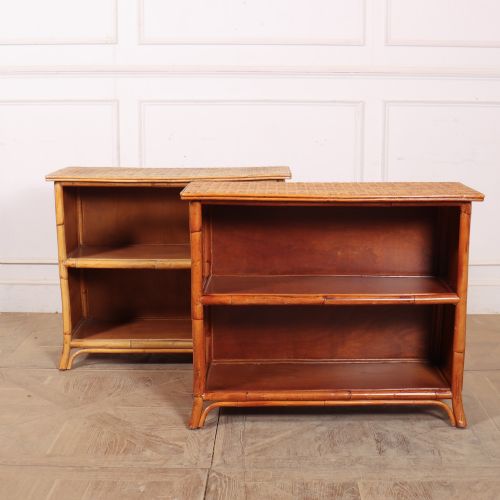
When you search for a bamboo bookcase, you encounter a range of lighter display furniture spanning the late nineteenth and early twentieth centuries. Pieces run from simple open shelf units and low bookcases to glazed display cabinets and library stands.
The materials reflect diverse origins, combining traditional bamboo with wood, glass, lacquer, painted finishes, rattan, cane, and embossed paper panels. Styles draw heavily upon Aesthetic Movement sensibilities, Victorian Chinoiserie, Chinese Export traditions, French Riviera aesthetics, Georgian Revival, and broader Chinoiserie influences.
You are most likely to meet pieces dated across the 1890s, 1900s, 1910s, and 1920s, alongside broader nineteenth-century examples and Edwardian library pieces. These items serve equally well as functional book storage or decorative display cabinets for collections.
How they were made
Construction relies fundamentally on natural bamboo stems paired with complementary timbers to create lightweight yet durable frames. Makers integrated cane, rattan, and wood panels to build structural rigidity and decorative backing into shelves and cabinets.
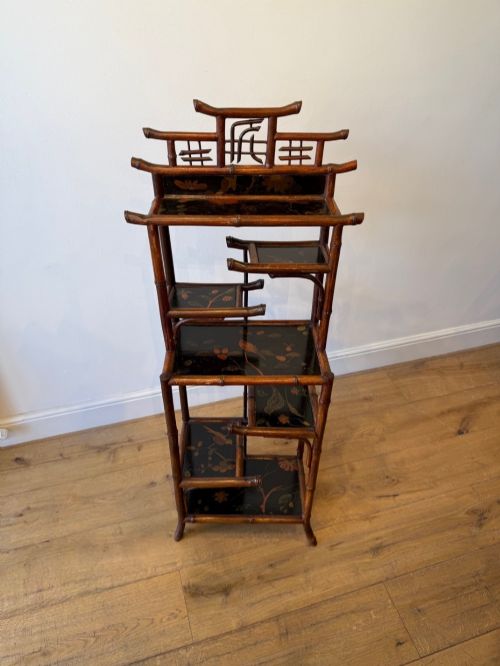
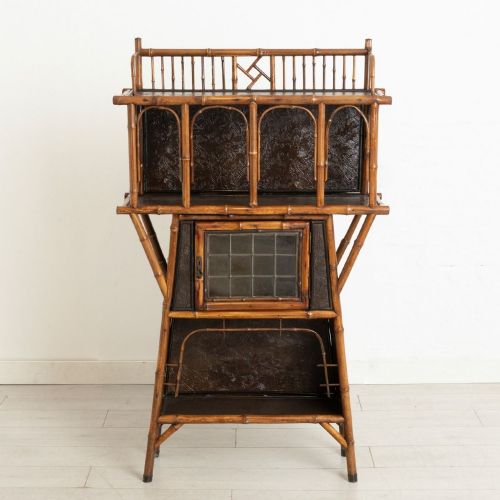
Surface treatments define many of the finer examples, incorporating dark lacquer, painted wood details, glass door panels, and delicate embossed paper inserts. These applied finishes reflect a fascination with Chinese Export and Chinoiserie decorative arts adapted for European interiors.
Bamboo Bookcase Retail Price Guide 2026
Typical asking prices for bamboo bookcase among the pieces listed under this phrase on Sellingantiques today, from the lower quarter to the upper quarter. They describe what is for sale here now, not the wider market.
Materials recorded across the selection include bamboo, wood, glass, lacquer, painted wood, rattan, cane, and embossed paper.
What varies in quality
Quality rests upon the structural integrity of the bamboo joints and the precision of the frame assembly. Superior examples maintain rigid alignment without excessive wobble, supporting weight reliably across every shelf.
Artistic execution in the surface decoration separates standard production from finer cabinetwork. Examples featuring skilled lacquering, hand-painted details, or incorporated glass and paper panels demonstrate greater workshop ambition.
Leonard Wyburd for Liberty and Co
The Bamboo Bookcase Glossary
- Bamboo
- A fast-growing woody grass utilised for structural framing and decorative surfaces in nineteenth and twentieth-century furniture. Its natural nodes provide distinctive visual rhythm and tactile texture.
- Chinoiserie
- European decorative style reflecting imaginative interpretations of Chinese artistic traditions. It frequently appears on cabinets and shelves through painted motifs, lacquer, and fretwork.
- Aesthetic Movement
- Late nineteenth-century design current prioritising visual beauty over strict historical revival. Furniture from this circle often embraces Japanese and Chinese structural influences.
- Lacquer
- A durable glossy finish applied in multiple layers to wood and bamboo surfaces. It provides deep colour and protection while enhancing decorative cabinet pieces.
- Rattan
- A pliable climbing palm used for weaving panels and detailing within furniture frames. It adds textural contrast against rigid bamboo poles.
Bamboo Bookcase: Frequently Asked Questions
What periods do these bookcases come from?
These items predominantly date from the late nineteenth century through to the 1930s. You will frequently encounter pieces originating from the 1890s, Edwardian era, and the 1920s.
Design influences across these decades draw upon Aesthetic Movement ideals and Chinoiserie traditions.
How were bamboo bookcases used historically?
They served as versatile furniture for studies, drawing rooms, and libraries to hold lightweight volumes and decorative objects. Glazed cabinets and open shelving units kept favourite texts and curiosities readily accessible.
Their lighter weight allowed owners to move them easily around the home compared to solid mahogany or oak furniture.
Are these pieces strong enough for daily use?
Natural bamboo frames are surprisingly resilient when constructed with traditional joinery methods. They easily support standard book collections and decorative items on each tier.
Care should be taken to distribute weight evenly and avoid placing excessively heavy folio volumes on narrow shelves.
How do I care for a bamboo bookcase?
Keep the wood and bamboo surfaces clean by dusting gently with a dry, soft cloth. Avoid harsh chemical cleaners or excessive moisture that might damage lacquer, cane, or paper elements.
Positioning the furniture away from direct sunlight and severe temperature fluctuations preserves the natural material.