

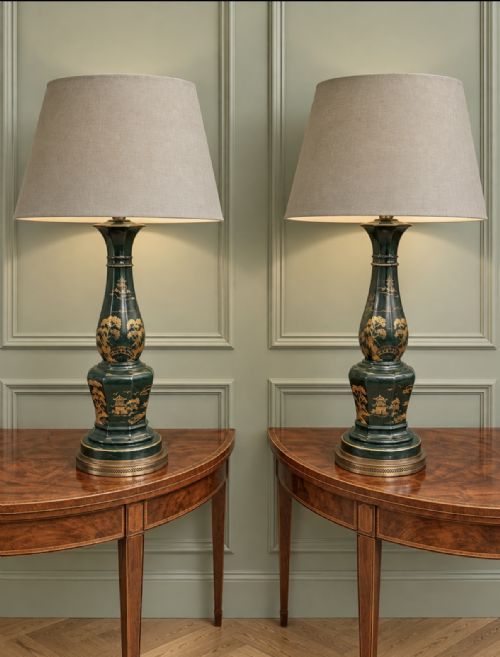


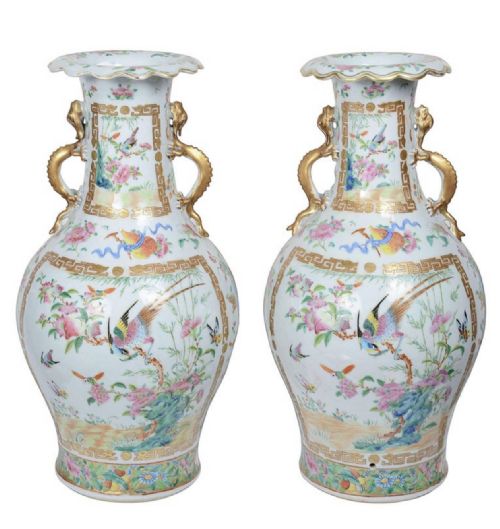


Baluster Vase Lamps
Baluster vase lamps are converted ceramic, bronze or enamel vessels that bring height and rich colour to a room.
Baluster Vase Lamps
Baluster vase lamps transform historic vessels into practical lighting, taking their curved profiles and swelling bodies from centuries of ceramic and metal design. The pieces available here span from the eighteenth century through the twentieth century, bringing together varied traditions from China, Japan, France, and Britain.
The form most frequently met relies on Chinese porcelain and Japanese bronze, often mounted on brass or fitted with fabric shades. Pairs appear regularly alongside single examples, featuring decorative schemes that range from monochrome celadon and powder blue to intricate famille verte and Canton enamels.
Makers adapted these forms across different periods, mounting eighteenth-century Delftware, nineteenth-century Paris porcelain, and Meiji period bronzes into functional lamps. Each piece retains the characteristic shape of the original vase, modulated by the wiring and hardware added during its conversion.
Materials and Techniques
Potters and metalworkers shaped these bodies from porcelain, bronze, enamel, and ceramic, utilising techniques refined over generations in Asian and European kilns and workshops. Artisans applied glazes and pigments such as famille rose, sang de boeuf, and powder blue directly to the clay before firing.
Mounts in ormolu and brass secure the vessels at the base and neck, framing the ceramic or metal body with cast metalwork. Fabric shades complete the construction, casting light downward onto the painted surfaces and gilded details.
Baluster Vase Lamps Retail Price Guide 2026
Typical asking prices for baluster vase lamps among the pieces listed under this phrase on Sellingantiques today, from the lower quarter to the upper quarter. They describe what is for sale here now, not the wider market.
Chinese export styles, Japanese bronze pieces, and French Chinoiserie mountings appear throughout the available inventory.
Assessing Quality
Quality rests in the crispness of the hand-painted details on the porcelain and the weight and chasing of the bronze or ormolu mounts. Finer examples display precise brushwork, rich and stable glaze colours, and mounts that fit the contours of the vessel without obscuring the main decorative panels.
The integrity of the original vase shapes dictates the visual balance of the finished piece, distinguishing balanced baluster profiles from heavier, awkward proportions. Material choices also divide the range, with fine Paris porcelain, Arita ware, and heavy Japanese bronze representing the higher tiers.
The Baluster Vase Lamps Glossary
- Baluster
- A vase form characterised by a swelling lower body that tapers towards the neck, resembling a traditional architectural baluster. This silhouette provides the structural foundation for the lamps in this collection.
- Famille Verte
- A Chinese porcelain palette dominated by green enamels, developed during the Qing dynasty. Artisans combined this dominant green with iron red, blue, and yellow to create detailed pictorial scenes.
- Ormolu
- Gilded bronze mounts applied to furniture and ceramics, popular in French and English decorative arts. These cast metal fittings add structural support and decorative framing to the vase bodies.
- Celadon
- A pale green glaze imitating jade, achieved through iron oxide in the reduction firing of high-fired ceramics. This subtle finish appears frequently on early vessels adapted for lighting.
- Satsuma
- Japanese earthenware pottery featuring a crackle glaze and elaborate enamel decoration, often highlighted in gold. These wares were widely exported and later adapted into table lamps.
Baluster Vase Lamps: Frequently Asked Questions
Are these original antique vases?
Most pieces started life as decorative vessels produced in the eighteenth or nineteenth centuries, before being converted into lamps at a later date. The conversion process typically involves drilling the base or fitting hardware to the neck to accommodate electrical wiring.
Collectors appreciate that many retain their historic glazes, hand-painted scenes, and original bronze or porcelain bodies underneath the modern fittings.
How do I choose between porcelain and bronze?
Porcelain lamps offer bright painted surfaces, colourful glazes, and intricate motifs from Chinese and European traditions. They introduce pattern and lightness into a room.
Bronze lamps provide a heavier, industrial presence with patinated metallic surfaces originating from Japanese workshops. They suit interiors that benefit from darker tones and cast metal textures.
Can these lamps be used with modern wiring?
The electrical components vary by piece, and many historic lamps require inspection or rewiring by a qualified electrician to meet current safety standards. This ensures the internal cord and bulb holder suit modern usage.
Retaining the historic body while updating the internal wiring allows the lamp to function safely within a contemporary home.
How do I clean a painted ceramic lamp?
Dust the porcelain surface gently with a soft, dry cloth to prevent dirt accumulation on the hand-painted glazes. Avoid abrasive cleaners or excess moisture that could damage delicate enamel work or metallic mounts.
Regular, gentle maintenance preserves the aged finish of the ceramic and the lustre of the ormolu or brass fittings.