

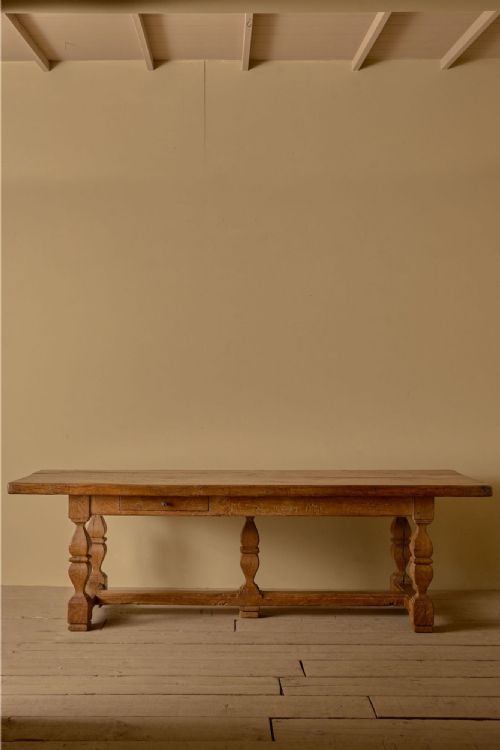
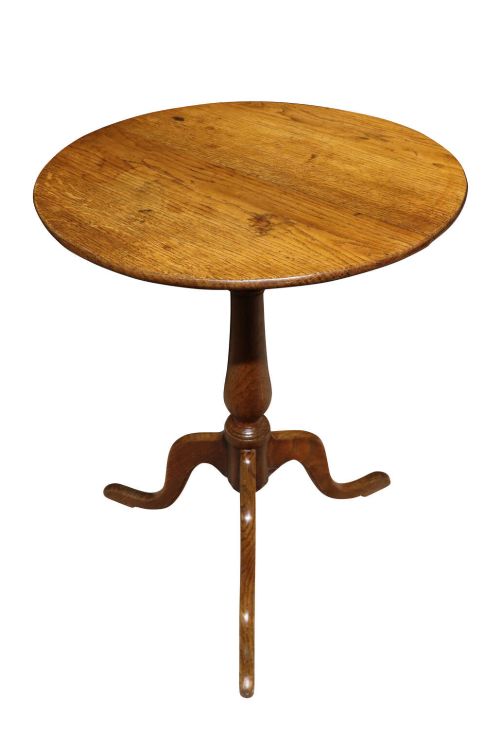
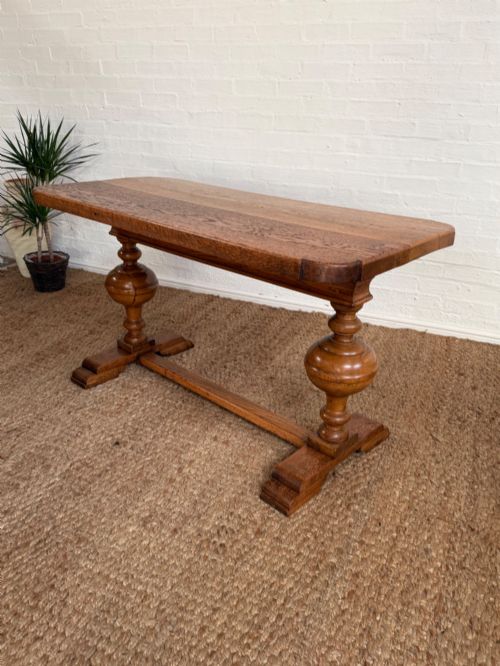
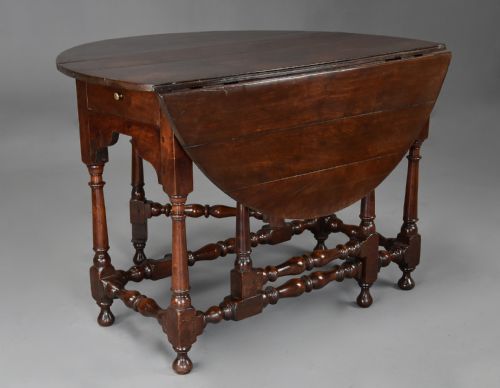



Baluster Leg Table
A baluster leg table brings sculptural turned supports and sturdy timber to a room, offering both practical surface area and historic character.
Baluster Leg Table
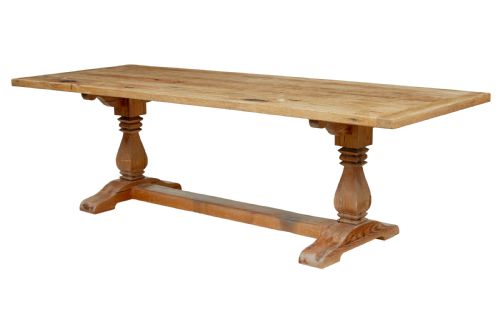
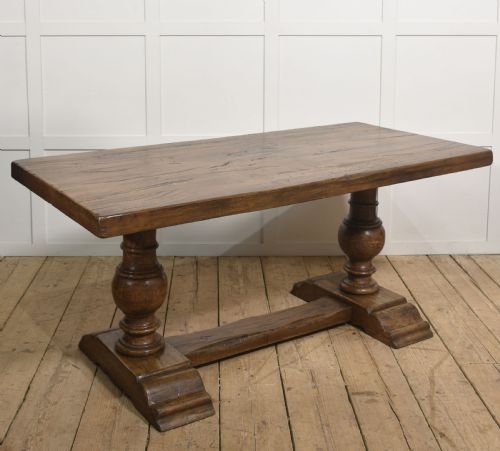
When you search for a baluster leg table, you encounter a robust piece of furniture supported by vase-shaped or column-turned uprights. These tables serve diverse roles across dining rooms, kitchens, and living spaces.
The versions most common on this page span several centuries, with oak examples from the seventeenth and nineteenth centuries appearing alongside walnut, pine, elm, and rosewood iterations.
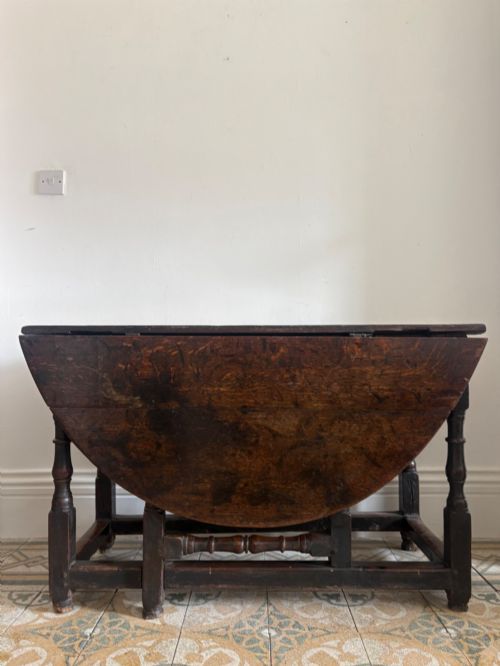
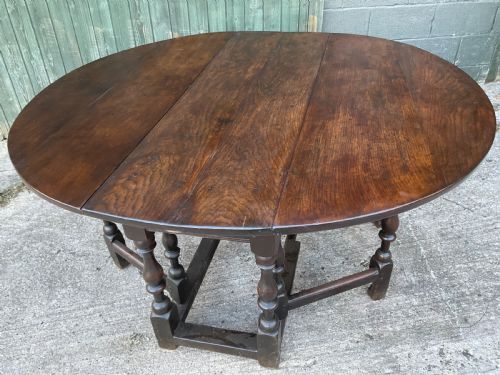
Forms range from large refectory and farmhouse dining tables to gateleg, centre, side, and occasional tables. Styles lean towards rustic farmhouse, Jacobean revival, French provincial, and Georgian traditions.
How they were made
Carpenters constructed these tables predominantly using solid timbers such as oak, walnut, elm, and pine, occasionally turning to rosewood for finer centre and library pieces. Planks formed broad tabletops, supported by heavy framework and distinctive turned baluster posts.
Joinery relied on traditional framing methods suited to heavy daily use, while finishes varied from scrubbed and bleached oak surfaces to polished walnut and patinated timber.
Baluster Leg Table Retail Price Guide 2026
Typical asking prices for baluster leg table among the pieces listed under this phrase on Sellingantiques today, from the lower quarter to the upper quarter. They describe what is for sale here now, not the wider market.
What varies in quality
The grade of timber and the depth of the natural patina distinguish simpler utilitarian pieces from finer examples. Selection of quarter-sawn oak or figured walnut elevates the visual weight of the timber.
Execution of the turning on the baluster legs dictates much of the character, ranging from crisp seventeenth-century profiles to later revival interpretations. The integrity of the plank top and the stability of the overall construction further define the standard.
The Baluster Leg Table Glossary
- Baluster leg
- A vertical support turned on a lathe into a vase or column shape, characteristic of seventeenth-century and revival furniture. This form provides substantial structural support beneath heavy tabletops.
- Refectory table
- A long, narrow dining table traditionally used in communal halls and monasteries. Surviving examples often feature heavy timber plank tops and robust underframing.
- Gateleg table
- A drop-leaf table with hinged flaps supported by swing-out legs that resemble a swinging gate. This design allows the table surface to expand or contract depending on space requirements.
- Patina
- The surface sheen and mellowing developed by wood over centuries of handling, exposure, and polishing. A desirable patina shows depth and warmth unique to aged timber.
- Draw-leaf table
- An extendable dining table with concealed leaves beneath the main top that pull out from either end. This mechanism lengthens the surface without removing the central top.
Baluster Leg Table: Frequently Asked Questions
How do I date an antique baluster leg table?
Dating relies on examining the timber species, construction methods, and the specific profile of the turned baluster legs. Seventeenth-century examples often display hand-turned oak with heavy plank tops, whereas later pieces might show Edwardian or nineteenth-century revival characteristics.
Hardware, drawer construction, and tool marks further help place a table within periods such as the Georgian era or the nineteen-twenties.
Where were these tables used?
Historically, large baluster leg tables served as refectory or farmhouse dining tables in communal spaces and kitchens. Smaller variants functioned as side tables, library writing desks, or occasional stands in country houses.
Today, they adapt easily to modern dining rooms and kitchens as primary gathering surfaces or large central prep tables.
Are baluster leg tables sturdy?
These tables derive their structural strength from heavy timber frames and thick solid wood tops. The chunky turned baluster legs distribute weight effectively across the floor.
Because many were built for heavy daily use in kitchens or dining halls, surviving examples generally maintain robust construction.