
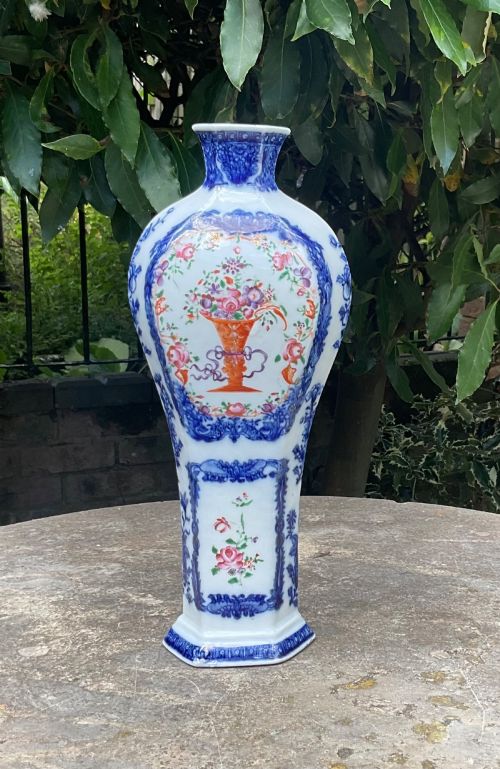
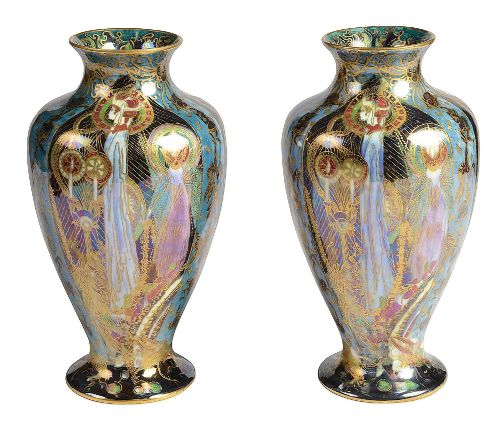
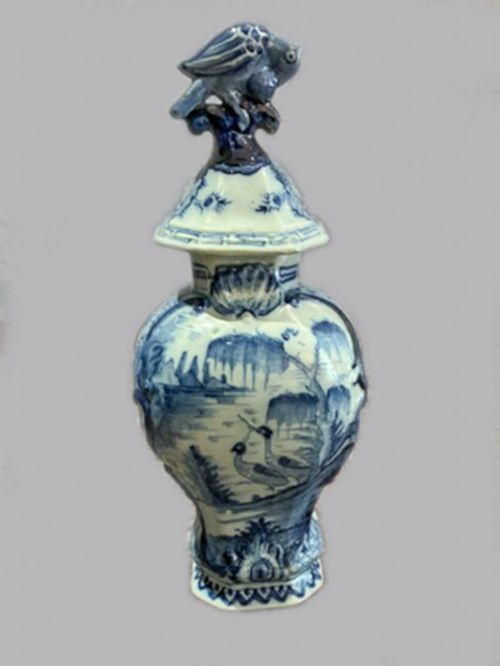
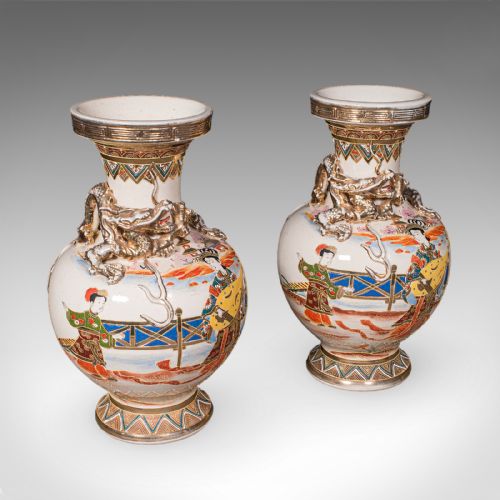

Baluster Ceramic Urn
A baluster ceramic urn carries the swelling silhouette of traditional pottery, offering substantial presence and hand-painted detail for domestic display.
Baluster Ceramic Urn
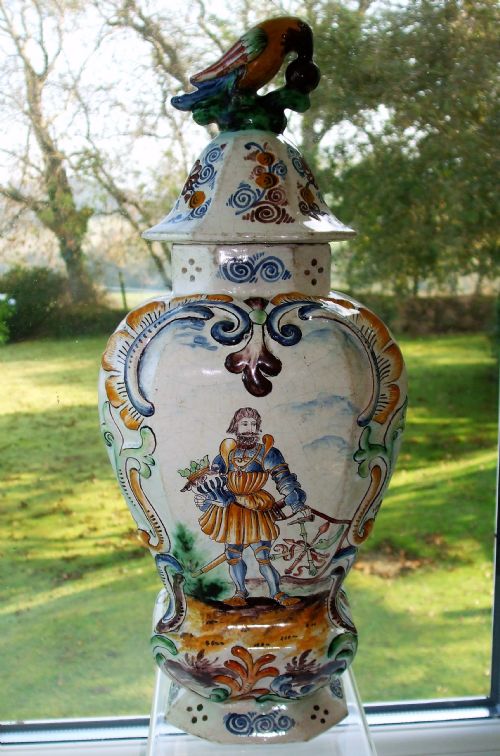
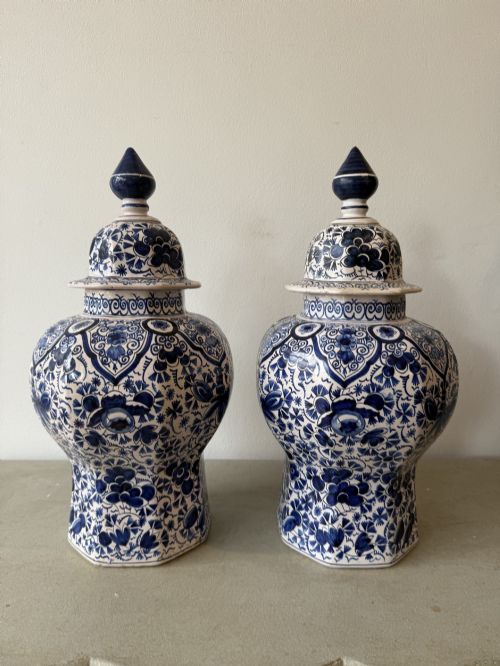
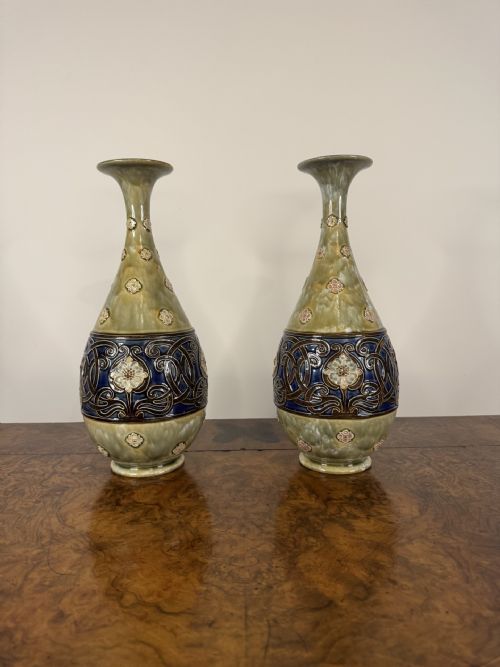
A baluster ceramic urn takes its distinct curved form from the architectural baluster, swelling gracefully near the base before tapering to a narrow neck. These vessels appear in varied guises across this page, spanning 17th-century Delftware to 20th-century English earthenware and oriental porcelain.
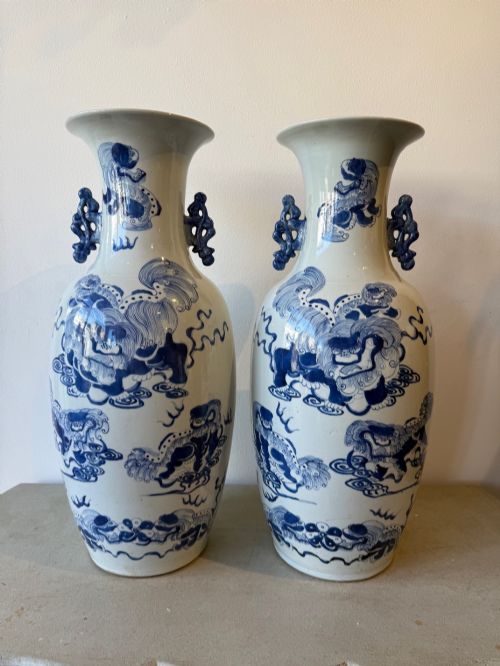
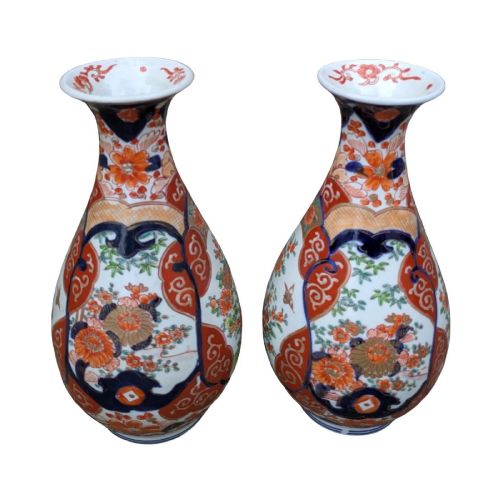
The most common examples on this platform include Japanese Imari and Satsuma wares alongside Chinese blue and white porcelain and Dutch Delft jars. Makers often produced these pieces as lidded garnitures or floor-standing display items for grand interiors.
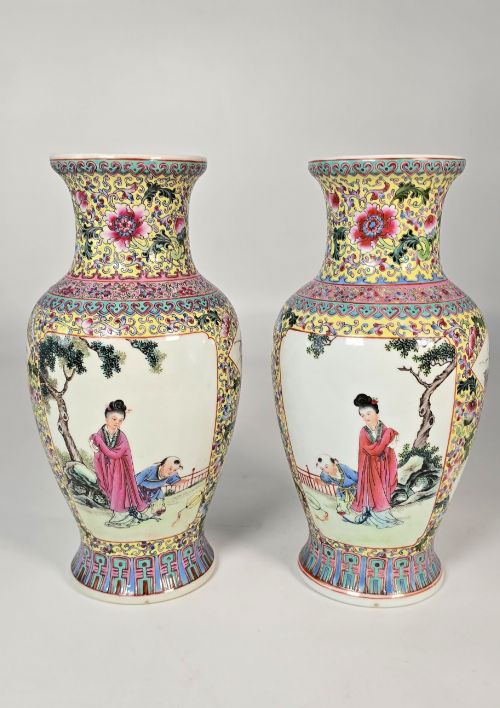
Origins stretch from European potteries in England and the Netherlands to East Asian kilns in China and Japan. Buyers encounter both single jars and matched pairs designed to sit symmetrically on mantelpieces or pedestals.
Materials and Making
Potters shaped these vessels from ceramic bodies including earthenware, stoneware, and fine porcelain, often applying tin-glaze or transparent lead glazes to seal the porous clay. Artisans then painted intricate designs by hand utilising cobalt blue, polychrome enamel palettes, and occasionally gold leaf.
Firing took place inside wood or coal-burning kilns where temperatures determined whether the clay matured into dense stoneware or vitrified porcelain. Many pieces required multiple firings to fix underglaze blue painting beneath subsequent enamel and gilt overglaze decoration.
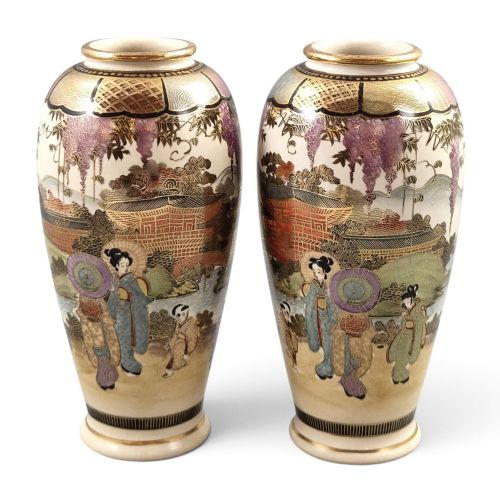
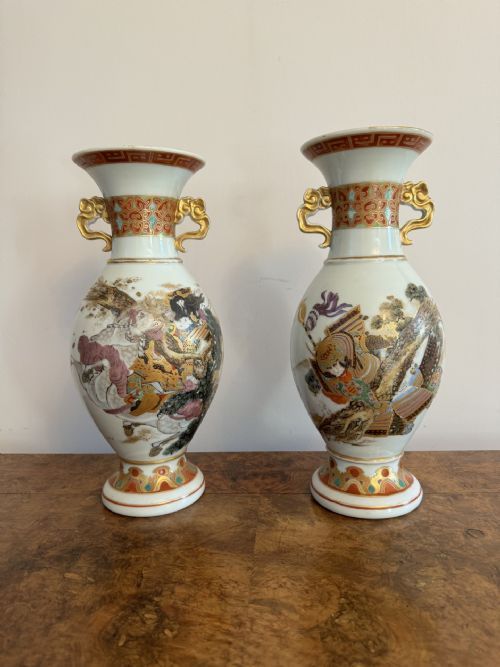
Several Satsuma vases patiently depict numerous historical figures sharing domestic spaces beneath cherry blossoms.
Evaluating Quality
Quality rests upon the crispness of the hand-painted brushwork and the precision of the potting, where thinner walls and balanced proportions distinguish superior output. Exemplary examples exhibit controlled glaze application without pooling or firing blemishes across the swelling body.
The prestige of the workshop or maker dictates standing, with signed pieces from known Japanese masters or established English potteries commanding greater attention. Rarity of form, such as intact matching covers or unusually large floor-standing dimensions, elevates individual examples above standard production.
Shozan·Daisy Makeig Jones·Louisa Wakely·Makuzu Kozan·Kinkozan·Royal Doulton·Wedgwood
The Baluster Ceramic Urn Glossary
- Baluster
- A vertical architectural form featuring a rounded, swelling lower portion that tapers upward toward a neck. This profile gives the urn its defining silhouette.
- Imari
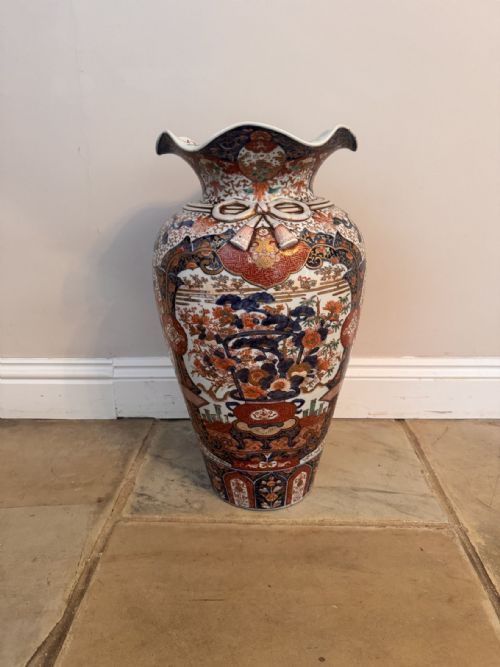
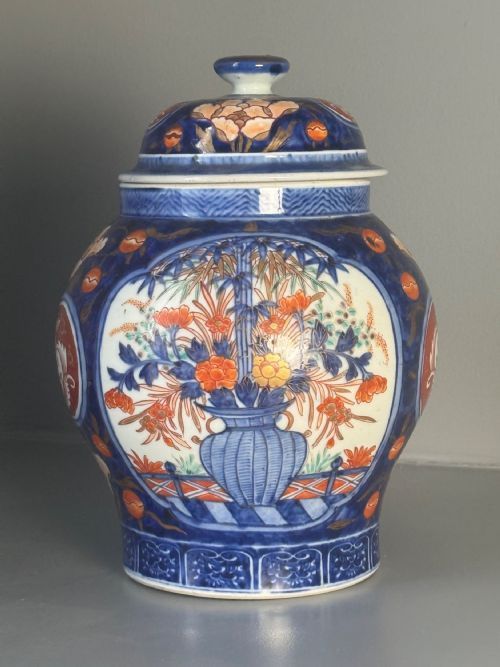
- A style of Japanese export porcelain decorated in underglaze blue, iron red, and gilt. The palette remains remarkably vivid across centuries of production.
- Tin-Glazed Earthenware
- Pottery covered with a white tin-oxide opacified glaze that provides a smooth canvas for painted decoration. Dutch Delftware relies on this technique.
- Garniture
- A set of three or more matching vases or jars designed to be displayed together on a mantelpiece or cabinet. These sets often alternate between open vases and lidded vessels.
Baluster Ceramic Urn: Frequently Asked Questions
What is a baluster urn used for?
These vessels served primarily as decorative ornaments within domestic interiors, often displayed as symmetrical pairs on mantelpieces or large floor-standing arrangements.
Many featured matching lids to contain contents, while others functioned purely as visual focal points for display in reception rooms.
Are Dutch Delft urns made of porcelain?
Dutch Delft pieces consist of tin-glazed earthenware rather than true East Asian porcelain, utilising a porous clay body beneath a white opaque glaze.
Potters painted traditional Chinoiserie scenes and botanical designs directly onto the unfired glaze before a final kiln firing.
How are lidded vases categorised?
Lidded examples often form part of larger matched sets known as garnitures, which were arranged in balanced groupings across prominent furniture surfaces.
The presence of an original, matching cover significantly defines the integrity and historical completeness of the piece.