
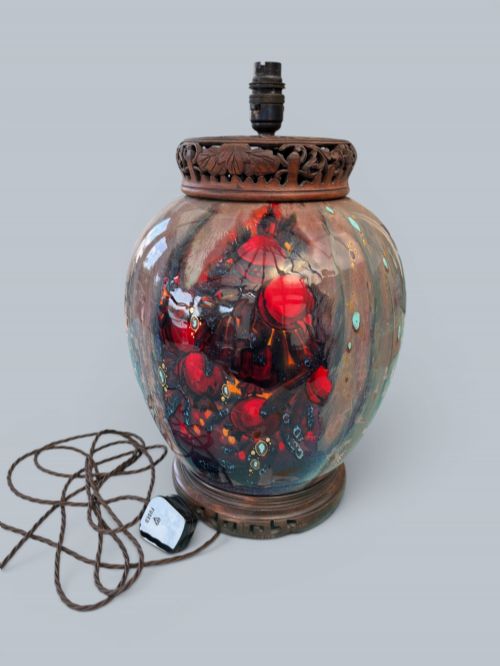


Baluster Ceramic Table Lamp
A baluster ceramic table lamp brings sculptural weight and rich hand-painted detail to a room, turning antique vases into practical lighting.
Baluster Ceramic Table Lamp
A baluster ceramic table lamp takes a classical vase form, characterised by a rounded lower body that tapers towards a narrow neck, and converts it into a light fitting. When you search for a baluster ceramic table lamp, you encounter pieces shaped from porcelain and earthenware, often standing on brass or gilt metal bases.
The selections span several centuries, drawing heavily on Chinese export wares alongside 19th-century European interpretations. You will find Canton, Famille Verte, and Rose Medallion alongside Paris porcelain and Moorcroft art pottery, reflecting both Eastern manufacturing and Western adaptation.
Many examples utilise converted vases, transforming antique vessels into functional household objects. The silhouettes range from octagonal profiles to smooth, curved bodies painted with floral bands, figures, and symbolic motifs.
How they were made
Makers shaped these bodies from ceramic, earthenware, and porcelain, applying detailed enamel painting by hand before firing. Artisans incorporated brass, gilt metal, and wood mounts to secure the electrical components and provide a stable footing for the tall ceramic body.
The surface decoration often relies on multi-coloured enamels, including green, yellow, and celadon grounds, applied to the raw clay or porcelain. Fabric shades complete the construction, casting a warm light downward over the hand-painted glazes.
Some vases spent a century holding dried flowers before an electrician gave them a second career as a reading light.
What varies in quality
The refinement of the hand-painted enamel work separates standard production from superior pieces, particularly in the precision of floral bands and figurative scenes. Finely detailed brushwork on porcelain or earthenware indicates a higher standard of craftsmanship.
The integration of the metal mounts, such as brass and gilt metal, influences the overall composition and durability of the lamp. Quality is also evident in the weight and balance of the ceramic body, ensuring the lamp sits securely on its base.
Moorcroft
The Baluster Ceramic Table Lamp Glossary
- Baluster
- A vertical architectural form with a swelled base that tapers upward, which defines the curved silhouette of these lamp bodies. This shape provides stability and visual weight to the piece.
- Famille Verte
- A Chinese porcelain palette dominated by green enamels, introduced during the Qing dynasty. It appears alongside other colour grounds on many 19th-century examples.
- Celadon
- A pale green glaze mimicking jade, developed in East Asia and applied to various ceramic vessels. It creates a subtle, translucent surface texture.
- Earthenware
- Porous pottery fired at lower temperatures than porcelain, requiring a glaze to become impermeable. It forms the base material for certain art pottery pieces.
Baluster Ceramic Table Lamp: Frequently Asked Questions
Are these lamps converted from old vases?
Many examples are indeed created by converting antique vases into functional lighting. Artisans drill the ceramic base or fit specialised mounts to accommodate wiring without harming the structural integrity of the vessel.
This practice has a long history, allowing decorative porcelain and earthenware to find a practical place in modern interiors while retaining their original artistry.
How do I clean a ceramic lamp?
Dust the ceramic body gently with a soft, dry cloth to remove everyday particles. Avoid harsh chemical cleaners that might damage hand-painted enamel or gilt metal mounts.
Take care around older electrical fittings and fabric shades, keeping moisture away from the wired components entirely.
Where should I place this lamp?
These lamps suit side tables, sideboards, and desks where their vertical silhouette can be fully appreciated. Their colourful glazes and patterned surfaces add a focal point to both traditional and eclectic rooms.
Ensure the surface is stable and level, as the combination of ceramic and metal mounts can create a top-heavy structure.
How can I tell the age of the ceramic?
Dating relies on examining the characteristics of the glaze, the style of the hand-painted motifs, and the construction of the base mounts. Variations in the porcelain body and enamel colours often point to specific periods like the 19th century or earlier.
Reference marks on the base, where present, can also offer clues to the origin and production era of the piece.