
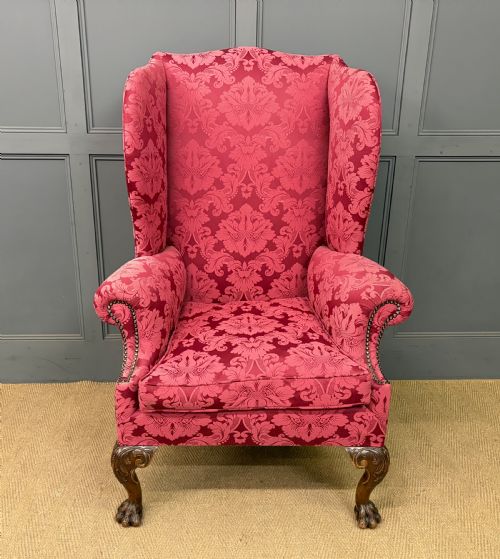
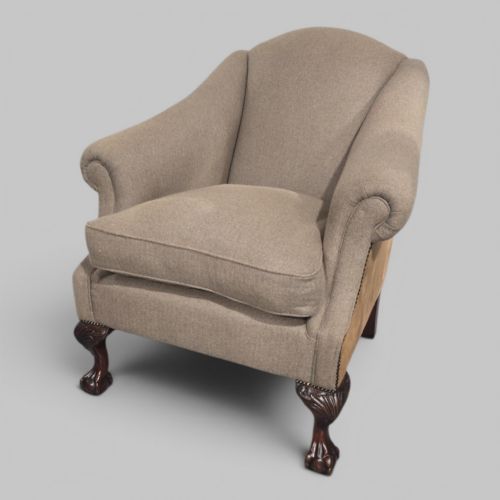


Ball and Claw Wing Chair
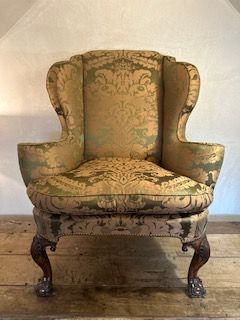
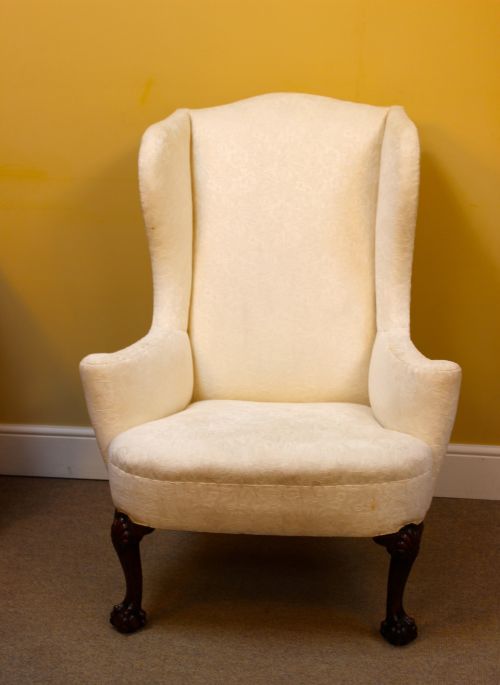
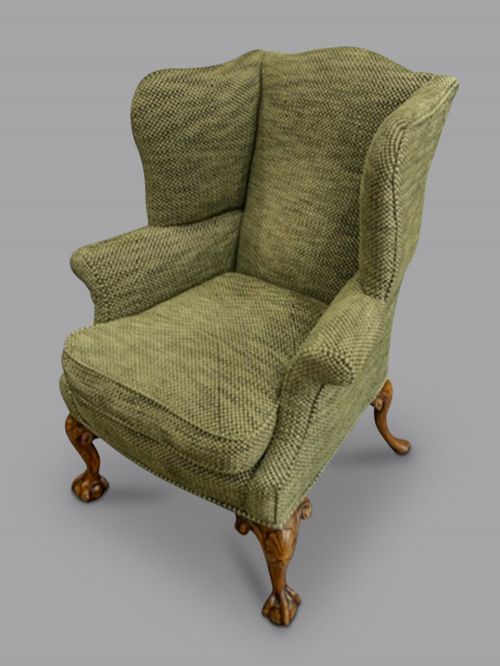
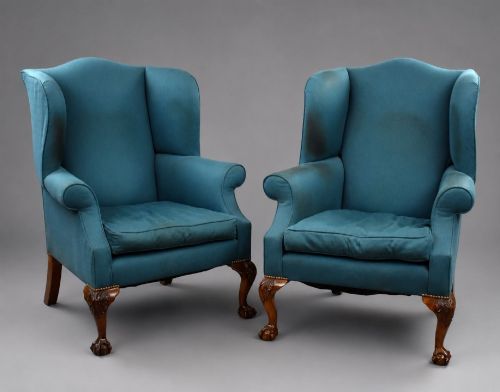
A ball and claw wing chair brings commanding presence and deep comfort to a room, grounding high upholstered backs with carved talons.
Ball and Claw Wing Chair
A ball and claw wing chair is an upholstered fireside armchair designed to shield the sitter from draughts, supported on prominent carved feet. The search phrase covers examples spanning from original 18th century pieces through to Victorian revivals and later interpretations up to the 1920s.
The versions most commonly met on this page combine mahogany or walnut frames with upholstered bodies finished in fabric, velvet, textile, or leather. Stylistic references draw heavily upon Georgian, George II, and Chippendale traditions, alongside Queen Anne and Victorian revival movements.
Makers built these armchairs as substantial seating for libraries, drawing rooms, and studies. The distinctive foot rests firmly beneath heavy wooden frames designed to anchor large upholstered wings and high backs.
Distinctions in Quality
Quality rests in the crispness of the foot carving and the proportion of the wooden frame beneath the upholstery. Finer examples display deeply undercut talons and robust mahogany or walnut frames with balanced wing profiles.
Upholstery execution and the integrity of the underlying timber structure dictate the standard of the piece. Lesser examples often feature softer wood or shallow, uninspired carving on the feet.
Listings on this site span from 18th century originals through Victorian interpretations to 1920s revivals, constructed in mahogany, walnut, and leather.
The Ball and Claw Wing Chair Glossary
- Ball and claw
- A furniture foot carved to resemble a bird's talon grasping a spherical ball. This motif appeared widely on 18th century seating and later revival pieces.
- Wingback
- An upholstered chair featuring protective side panels attached to the arms and rising to the back. These extensions historically blocked cold draughts around the head of the sitter.
- Chippendale style
- A decorative vocabulary drawing from the mid 18th century designs of Thomas Chippendale. It frequently incorporates carved mahogany woodwork and substantial proportions.
- Barrel back
- An armchair design where the curved back rail flows continuously into the arms in a semicircular enclosure. This form provides a snug and enclosed seating position.
- Calico stage
- The intermediate state of an upholstered chair covered only in plain cotton scrim before final top fabrics are applied. This allows structural inspection of the internal work.
Ball and Claw Wing Chair: Frequently Asked Questions
What is a ball and claw wing chair?
A ball and claw wing chair is a traditional upholstered armchair featuring protective side wings and prominent carved feet shaped like talons grasping a sphere.
These chairs combine timber frames of mahogany or walnut with textile, leather, or velvet upholstery designed for fireside use.
How do I date a wing chair?
Dating relies on examining the timber species, the style of the foot carving, and the construction methods used within the frame. Original 18th century examples differ in timber preparation and joinery from Victorian or early 20th century revivals.
Secondary indicators include the presence of traditional stuffing materials and the specific proportions of the wing panels.
Where were these chairs used?
These chairs stood primarily in principal rooms such as libraries, drawing rooms, and formal parlours where draughts required blocked seating. The high wings kept heat from the fireplace close to the occupant.
Their substantial scale made them commanding additions to domestic interiors.
Are these chairs comfortable for daily use?
The deep upholstery and high back provide robust support suitable for everyday reading and relaxing by the fire. Many antique examples retain traditional spring or hair stuffing.
Modern buyers often utilise them as statement armchairs in living spaces.