





Baguette Cut Shoulders
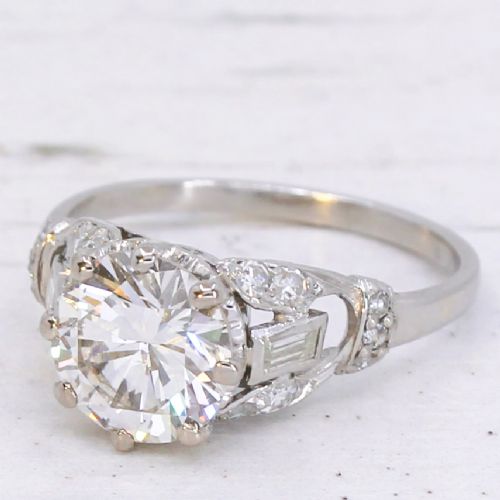
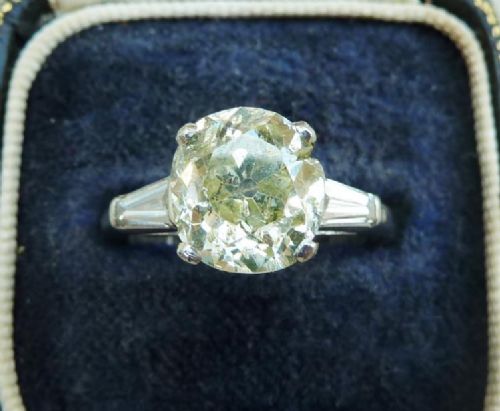
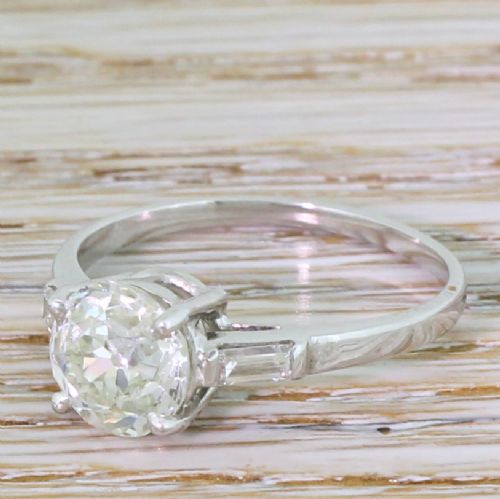
Baguette cut shoulders frame a central stone with architectural precision, offering the clean geometric lines that define mid-century and Art Deco ring design.
Baguette Cut Shoulders
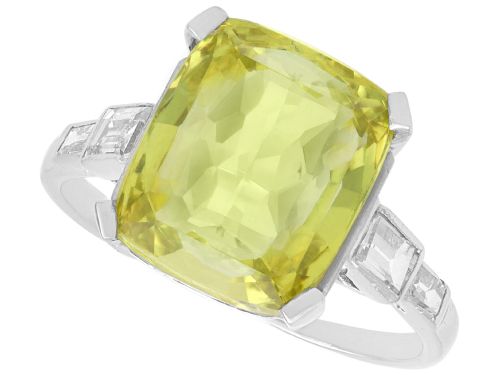
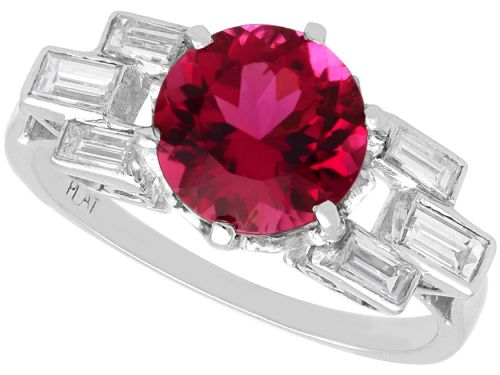
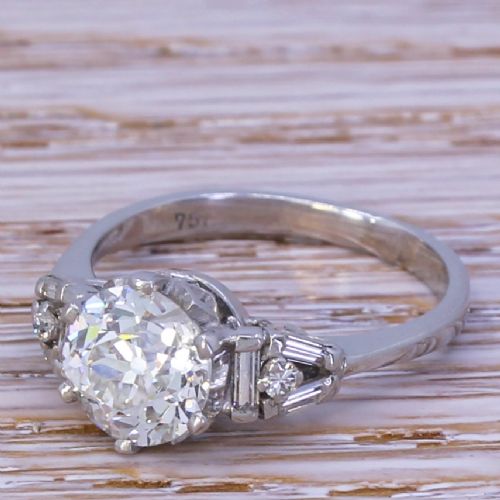
Baguette cut shoulders denote rings where the principal gem is flanked on each side by step-cut rectangular stones, creating a tapering or stepped silhouette along the band. These pieces emerge predominantly from the Art Deco and mid-century periods, spanning the decades from the 1920s to the 1960s.
The objects seen here are rings and engagement rings, frequently pairing central diamonds, chrysoberyl, pink tourmaline, ruby, or aquamarine with accent stones. Platinum and white or yellow gold serve as the primary metals to support these linear stone settings.
A buyer examining these designs will most commonly encounter platinum rings from the 1920s and 1930s featuring diamond centerpieces. The aesthetic relies on restraint and geometry, utilising the long facets of the shoulder stones to draw the eye toward the main gem.
How they were made
The construction of these rings relies heavily on platinum and gold worked into secure settings that hold step-cut and brilliant-cut stones side by side. Master jewellers set baguette diamonds into the shoulders using channel or claw settings to maintain a flush, continuous line along the band.
Central stones in these pieces display various cutting techniques, including old cut, transitional cut, brilliant cut, and oval cuts, which are then contrasted against the linear geometry of the shoulder stones. This combination of curving or brilliant central facets with the straight edges of the baguettes requires precise metalwork.
Baguette Cut Shoulders Retail Price Guide 2026
Typical asking prices for baguette cut shoulders among the pieces listed under this phrase on Sellingantiques today, from the lower quarter to the upper quarter. They describe what is for sale here now, not the wider market.
Step-cut baguettes were originally named after the French word for a long loaf of bread, bringing a subtle bakery reference to fine platinum jewellery.
What varies in quality
The standard of the metalwork and the precision of the stone setting dictate the refinement of each piece. Tightly integrated shoulder stones that sit flush without excess metal display a higher degree of craftsmanship.
The clarity and cut of both the central gem and the flanking baguettes determine the visual depth of the ring. Superior examples balance the brilliance of the centre stone with the cool, glassy flash characteristic of step-cut shoulder stones.
The Baguette Cut Shoulders Glossary
- Baguette cut
- A step-cut rectangular diamond or gemstone shape with straight parallel sides, commonly utilised for side stones and shoulder accents.
- Shoulders
- The upper portions of a ring band that rise up to support or frame the central setting.
- Platinum
- A dense, durable white precious metal favoured in twentieth-century jewellery for its strength in fine settings.
- Old cut
- An early diamond cutting style characterised by a smaller table, higher crown, and large culet, producing a softer candlelight sparkle.
- Art Deco
- A design style dominant in the 1920s and 1930s that emphasises geometric symmetry, clean lines, and stylised motifs.
Baguette Cut Shoulders: Frequently Asked Questions
What are baguette cut shoulders?
Baguette cut shoulders refer to the decorative side stones flanking the main gem of a ring, cut into narrow rectangles with step facets.
This specific configuration creates a clean transition from the central stone down to the band, typical of twentieth-century design.
Which periods do these rings come from?
The listings encompass pieces created across several decades, spanning the Art Deco and mid-century periods from the 1920s through to the 1960s.
Art Deco examples from the twenties and thirties appear frequently, alongside later mid-century iterations.
What metals are used in these rings?
Platinum is the predominant metal found in these pieces, particularly among the Art Deco examples. White gold and yellow gold also appear as settings for the cluster and solitaire designs.
These metals provide the structural strength needed to hold step-cut shoulder stones securely.
How do I care for a vintage ring?
Routine maintenance involves gentle cleaning with warm soapy water and a soft brush to remove oils from the step-cut facets. Periodic inspection by a jeweller ensures the settings holding the baguette shoulders remain tight.
Avoiding harsh impacts protects the sharp corners of step-cut stones from chipping.