

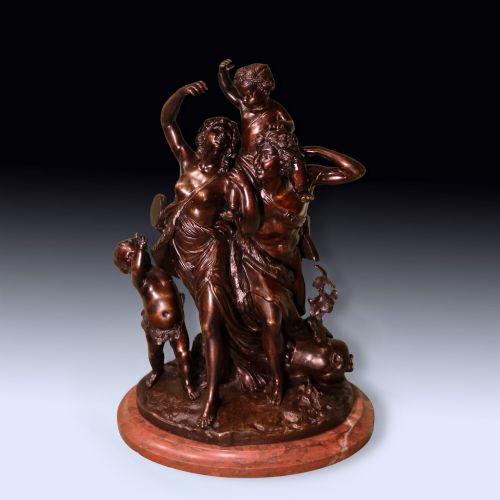


Bacchanalian Sculpture
Bacchanalian sculpture brings the revelry of classical mythology into your room through figures of Bacchus, putti, and dancing maidens.
Bacchanalian Sculpture
Bacchanalian sculpture captures the spirited revels of classical mythology, centring on Bacchus, Silenus, putti, and dancing maidens harvesting grapes. When searching for bacchanalian sculpture, collectors find nineteenth-century interpretations that draw heavily on classical antiquity and the French Rococo revival.
The objects take several distinct forms across the listings, ranging from bronze figure groups and decorative urns to hard-paste porcelain figures and gilt wall masks. French makers working in the nineteenth century dominate these pieces, frequently referencing the models of Clodion and the Grand Tour tradition.
Bronze forms the primary medium for these sculptural groups, often paired with marble bases or finished with patination. Porcelain from Meissen also appears, depicting figures such as the drunken Silenus in enamel and hard-paste ceramic.
Materials and methods
Foundries cast these nineteenth-century bronzes using traditional techniques, applying patination to achieve varied surface tones and dark finishes. Sculptors and manufacturers also utilised hard-paste porcelain with enamel painting to render colourful figure groups like the drunken Silenus.
Marble serves as a dense foundational material for bronze figure groups, providing weight and a classical display surface. Gilt plaster and paint further enhance specific decorative elements such as wall masks.
Bacchanalian Sculpture Retail Price Guide 2026
Typical asking prices for bacchanalian sculpture among the pieces listed under this phrase on Sellingantiques today, from the lower quarter to the upper quarter. They describe what is for sale here now, not the wider market.
Putti are remarkably busy with grapes, whether attempting to eat them, spill them, or balance them on marble plinths.
Assessing quality in the pieces
The refinement of the chasing and finishing on bronze surfaces distinguishes finer figures from standard production work. Sharp detail in the depiction of hair, drapery, and grape clusters indicates superior craftsmanship.
The integration of the sculpture with its marble base and the nuance of the patination contribute significantly to the visual presence of a piece. Signed works or those directly following known models by makers like Clodion carry particular sculptural distinction.
Auguste Cain·Clodion·Meissen Porcelain
The Bacchanalian Sculpture Glossary
- Putti
- Plump, wingless infant figures often depicted playing with grapes or joining in revels. They appear frequently in nineteenth-century bronze groups.
- Patinated bronze
- Metal sculpture treated with chemical solutions to produce a specific surface colour and tone. This finish protects the metal and defines the modelling.
- Hard-paste porcelain
- A durable ceramic paste fired at high temperatures, used for detailed figure groups. Meissen utilised this material for classical subjects.
- Grand Tour
- Cultural travel undertaken by nineteenth-century Europeans who collected small-scale bronze reductions of classical antiquities. These souvenirs replicate famous sculptural monuments.
Bacchanalian Sculpture: Frequently Asked Questions
What is a bacchanalian sculpture?
These sculptures depict scenes of classical revelry associated with Bacchus, featuring figures like putti, dancing maidens, and Silenus. They draw inspiration from ancient mythology and eighteenth-century French models.
Most examples on this site date from the nineteenth century and utilise cast bronze or hard-paste porcelain.
How were bronze putti groups displayed?
Nineteenth-century bronze groups featuring putti and grapes typically stood on mantelpieces, side tables, or cabinets. Many include integrated marble bases to give them stability and presence.
Their substantial weight requires a sturdy surface designed to support heavy metal objects.
What connects these pieces to Clodion?
Clodion was an eighteenth-century sculptor known for lively terracotta and bronze groups of nymphs, satyrs, and putti. Nineteenth-century founders frequently cast bronze groups after his popular models.
Such pieces capture the same spirited movement and mythological themes as the original works.
How do I care for bronze sculpture?
Bronze requires minimal maintenance beyond gentle dusting with a soft, dry cloth to prevent the accumulation of grit. Avoid using polishes or chemical cleaners that might strip the patination.
Keep the pieces in stable indoor conditions away from excessive moisture.