




Autumn River Painting
An autumn river painting captures seasonal foliage along waterways, offering warmth and quiet atmosphere for any interior.
Autumn River Painting
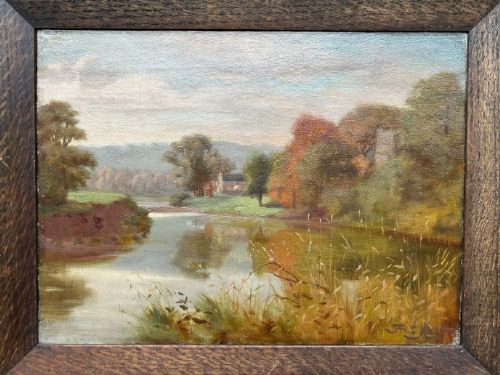
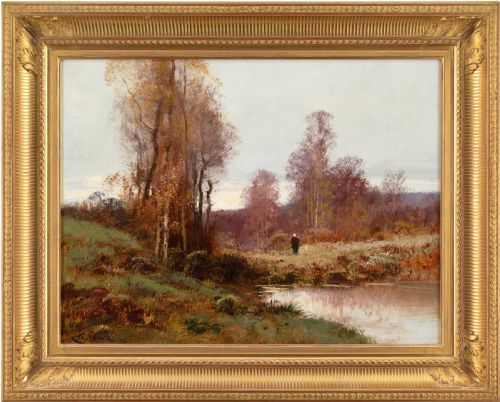
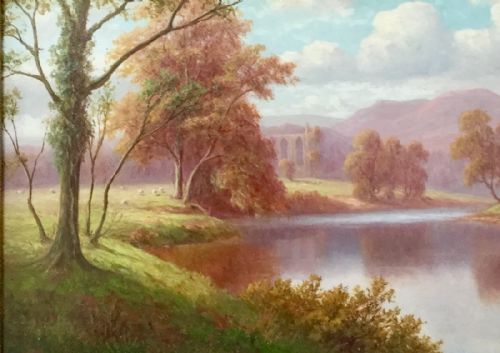
An autumn river painting depicts seasonal waterways and woodlands, appearing primarily across Victorian, Edwardian and mid twentieth century periods. These works capture riversides, woodland streams and pastoral banks during the colder months.
Makers recorded in the evidence range from British Impressionists to regional realists working in oil and watercolour. Canvases, wood panels and paper form the primary supports for these landscape scenes.
Formats span from intimate watercolours to large framed oils in gilded wood. Subjects focus on Yorkshire rivers, Scottish waterways and English pastoral views.
Materials and technique
Artists painted primarily in oil paint on canvas or wood panel, alongside watercolour and pastel on paper. Pigments layer thickly to render the russets and golds of seasonal foliage.
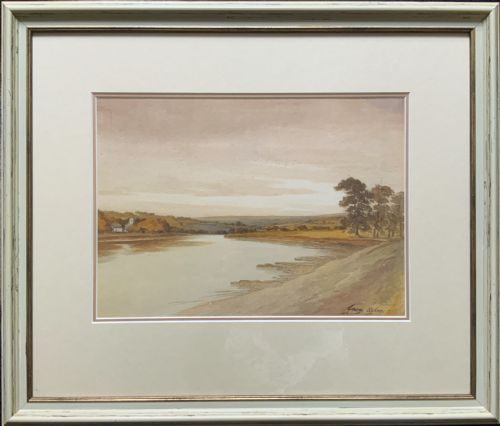
Gilded wood frames enclose many of the oils, protecting the painted surface and adding weight to the presentation. Watercolour works utilise paper supports mounted beneath glass.
Materials span oil on canvas, wood panel, watercolour, and pastel on paper, housed within gilded wood frames.
Distinctions in quality
The division between works rests upon brushwork confidence and atmospheric depth rather than mere condition. Stronger compositions handle light on water and woodland with distinct tonal control.
Signatures by listed practitioners or well documented regional schools elevate individual pieces above anonymous works. The framing choice and original canvas integrity also contribute to overall standing.
Frederick Marriott·Charles Clair·Arthur Herbert Rigg·Owen Bowen·William Mellor·Walter Follen Bishop·Berthe des Clayes·Robert Lesley Howey·Ernest Higgins Rigg·George Sykes·Ernest Moore·Augustus William Ennes·Everett W. Mellor·Frank Walton·David Mead·Peter Wishart
The Autumn River Painting Glossary
- Oil on Canvas
- Pigment bound in drying oil applied to stretched woven fabric. This medium allows for rich texture and deep colour saturation.
- Watercolour
- Pigments suspended in a water soluble vehicle applied to paper. It produces transparent washes and delicate light effects.
- Gilded Wood
- Timber moulded into frames and coated with a thin layer of gold leaf or gilt finish. This traditional framing enhances the depth of landscape paintings.
- Wood Panel
- A rigid flat wooden support used instead of canvas. Painters often utilised these panels for smaller landscapes during the nineteenth century.
Autumn River Painting: Frequently Asked Questions
How do I date an autumn river painting?
Dating relies on stylistic evidence, stretcher construction, and signatures tied to active exhibition periods.
Frame styles and written inscriptions on the reverse often provide further chronological markers.
Are these paintings executed on canvas or panel?
The evidence shows works created on stretched canvas, wood panels, and paper supports.
Oils appear frequently on canvas and wood, while watercolours and pastels utilise paper under glass.
Which regions do these river scenes depict?
Landscapes frequently portray Yorkshire rivers, Scottish waterways, and English pastoral scenes.
Specific locations like the River Wear and Yorkshire dales appear in titled works.
How should I care for an antique oil painting?
Keep paintings away from direct sunlight and dramatic humidity shifts to protect the canvas and paint layers.
Dust gently with a soft dry brush and avoid liquid cleaners on the pigment or gilt frame.