






Aubusson Woven Textile
Aubusson woven textile pieces bring historical French artistry into a room through rich wool and silk wall hangings.
Aubusson Woven Textile
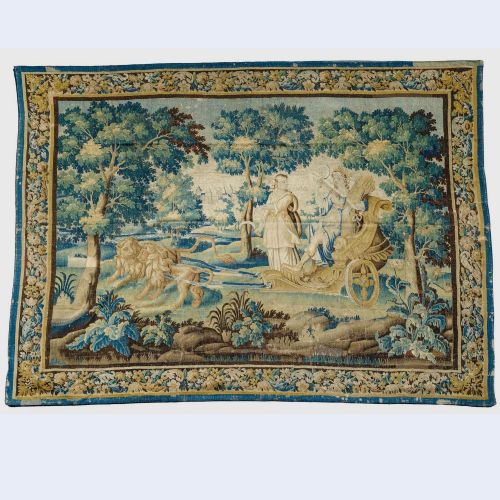
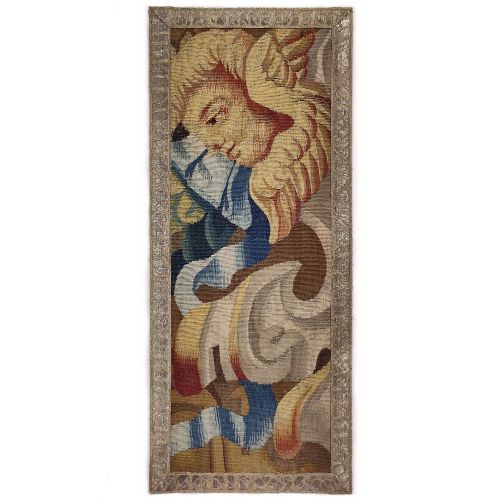
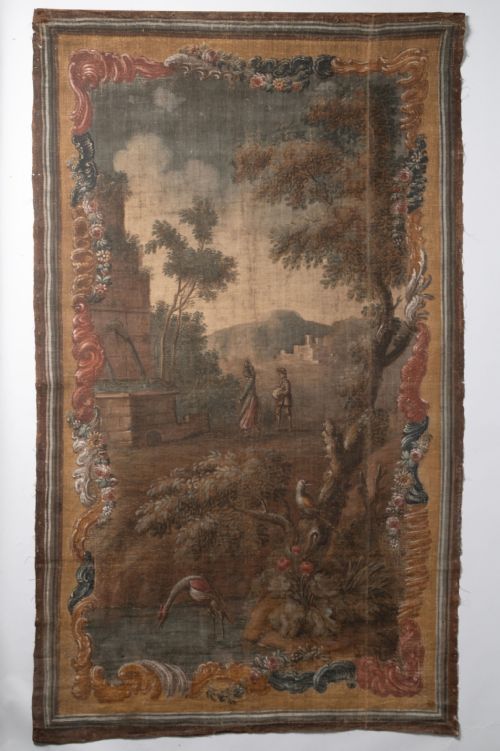
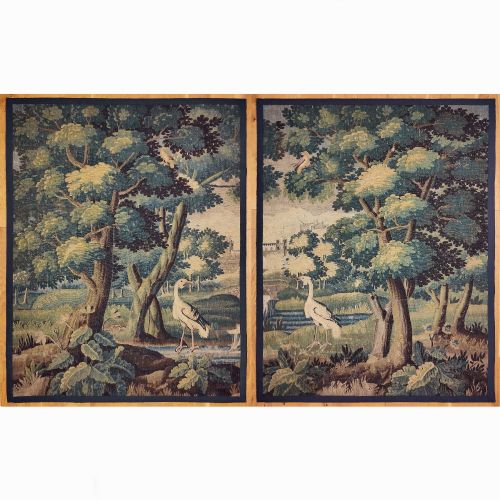
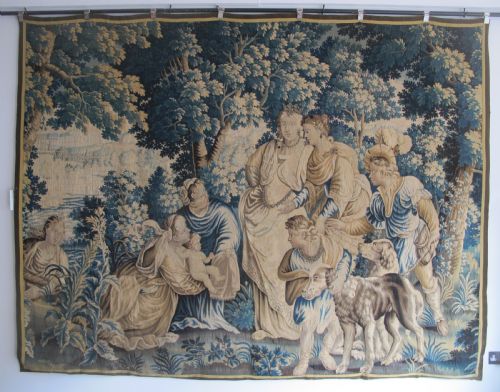
An aubusson woven textile represents traditional French tapestry work originating from the town of Aubusson, spanning centuries of craftsmanship. These works encompass wall tapestries, wall hangings, and framed panels that frequently display verdure, pastoral, or biblical scenes.
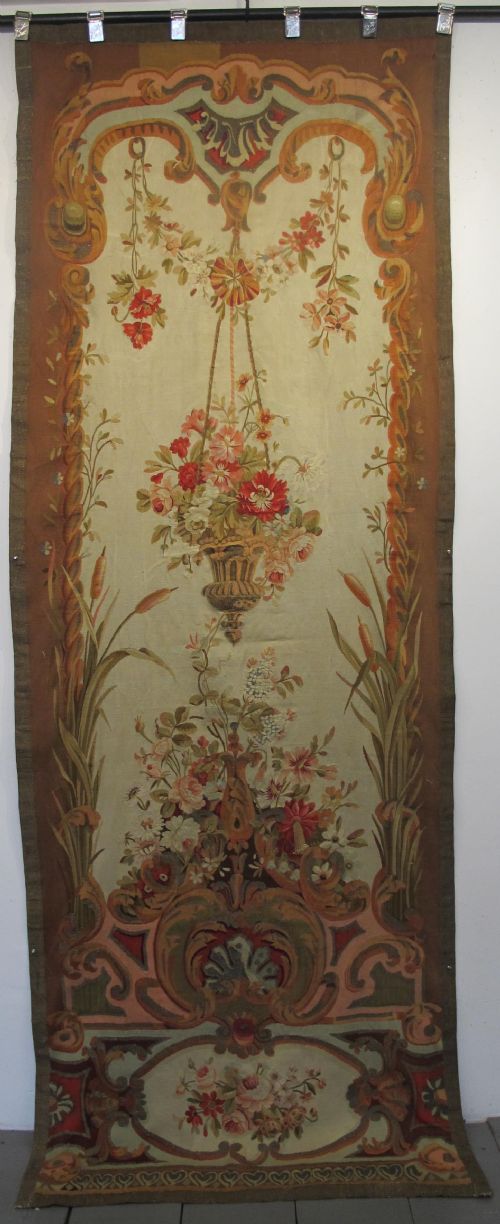
Buyers encountering this page will primarily find pieces from the 17th century, 18th century, and 19th century, alongside later interpretations from the early decades of the 20th century. Forms range from large wall art to narrow entre-fenêtre panels designed to fit between windows.
How they were made
Makers utilised natural fibres including wool, silk, and cotton to build intricate pictorial surfaces through traditional weaving techniques. Metal threads occasionally appear within the weave to add subtle highlights to the composition.
Completed textiles often receive structural support from timber frames, wood, or walnut mounts, while brass elements sometimes appear in the framing and display hardware.
Aubusson Woven Textile Retail Price Guide 2026
Typical asking prices for aubusson woven textile among the pieces listed under this phrase on Sellingantiques today, from the lower quarter to the upper quarter. They describe what is for sale here now, not the wider market.
Listings span from the late 17th century through the 18th and 19th centuries, extending into early 20th-century revivals using wool, silk, and walnut.
What varies in quality
The sophistication of the pictorial design and the depth of the narrative scene separate standard examples from finer works. Verdure pieces with layered foliage demonstrate greater complexity than simpler pastoral compositions.
Material selection dictates longevity and visual richness, with the finest textiles combining wool and silk to create tonal variation. Original framing, such as period walnut surrounds, enhances the integrity of the piece.
The Aubusson Woven Textile Glossary
- Verdure
- A tapestry featuring a stylized landscape design dominated by foliage, trees, and often birds or animals. These lush forest scenes were immensely popular in French weaving traditions.
- Entre-fenetre
- A tall, narrow tapestry specifically proportioned to hang on the wall space between two windows. Such panels make efficient use of architectural gaps in period rooms.
- Pastoral
- A scene depicting rural life, shepherds, and idyllic country settings in a romanticised style. These subjects reflect a cultural fondness for rustic serenity.
- Warp
- The vertical threads held under tension on a loom that form the structural foundation of the textile. Weft threads are passed through these structural lines to build the picture.
Aubusson Woven Textile: Frequently Asked Questions
How do I hang a heavy textile?
Large wall hangings require even weight distribution across a sturdy wooden batten or mounted rod to prevent distortion of the weave.
Fixing the textile to a supporting backing fabric before hanging further relieves strain on the historic fibres.
Where were these textiles produced?
Production centres around the historic town of Aubusson and the surrounding region in central France, famous for its weaving guilds.
Master weavers in these workshops produced both verdure landscapes and figurative wall art for grand interiors.
What is an entre-fenetre panel?
An entre-fenetre is a vertical wall tapestry designed to fit precisely into the narrow wall space between adjacent windows.
These elongated panels maintained decorative continuity across the walls of formal French rooms.
How do I identify a 17th-century piece?
Seventeenth-century examples frequently feature dense verdure foliage with muted earthy tones and classical or biblical narratives.
Examining the specific types of wool and the complexity of the weave helps distinguish these early works from later 19th-century revivals.