





Asian Wedding Armoire
An asian wedding armoire brings a commanding presence and vibrant red lacquer to a room, offering both generous storage and centuries of symbolic craftsmanship.
Asian Wedding Armoire
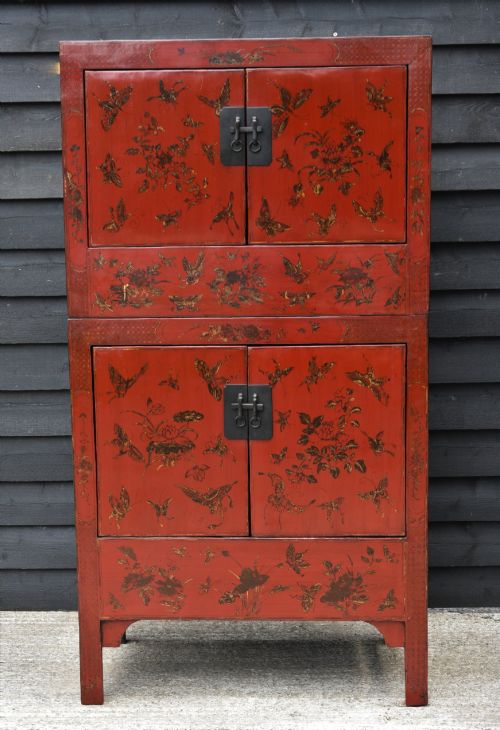
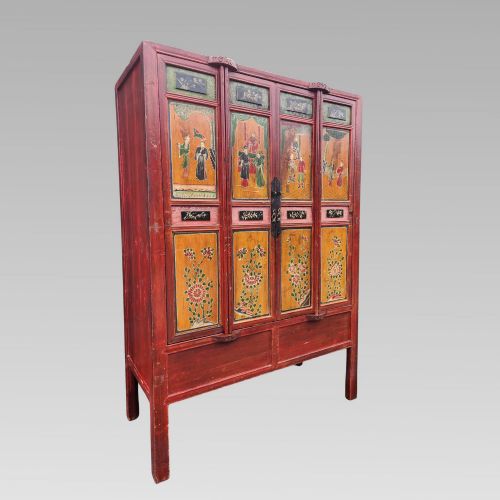
When you search for an asian wedding armoire, you encounter substantial cabinets and cupboards originating from China, often dating from the nineteenth century through the early twentieth century. These pieces encompass traditional forms associated with marriage and domestic storage, manifesting primarily as striking red lacquered cabinets, black lacquer variations, and provincial wooden cupboards.
The versions most frequently met on this page showcase vibrant red lacquer surfaces, sometimes enhanced with gold leaf, alongside distinctive brass or iron hardware. Stylistic influences span from Qing Dynasty aesthetics and Chinoiserie to Shanxi Province regional designs, uniting large-scale storage with vivid coloration.
Makers historically constructed these marriage cabinets to hold domestic linens and garments, integrating them into marital traditions and dowries. Surviving examples demonstrate the enduring utility of these large wooden and lacquered storage pieces within contemporary interiors.
How they were made
The construction of these armoires relies on traditional woodworking techniques applied to elm and other hardwoods, forming heavy structural carcasses designed to endure generations of use. Artisans then coated these wooden foundations with multiple layers of lacquer, a painstaking process that created a smooth, durable base for subsequent decoration.
Surface ornamentation involved applying gold leaf accents directly onto the lacquer or carving intricate details into hardwood surfaces. Metalwork components, specifically brass and iron hinges, plates, and lock boxes, were secured to the doors to provide both functional reinforcement and decorative contrast.
Asian Wedding Armoire Retail Price Guide 2026
Typical asking prices for asian wedding armoire among the pieces listed under this phrase on Sellingantiques today, from the lower quarter to the upper quarter. They describe what is for sale here now, not the wider market.
Current listings feature pieces predominantly from the nineteenth and early twentieth centuries, constructed from elm, lacquered wood, and brass.
What varies in quality
The distinction between standard provincial pieces and finer examples rests upon the preservation of the original lacquer surface and the delicacy of the applied gold leaf. Cabinets retaining their primary red or black pigment layers alongside unpolished metal hardware demonstrate superior historical integrity.
Structural heft and timber selection also differentiate the range, with denser hardwoods like elm providing greater long-term stability than utility woods. Furthermore, the complexity of the door carvings and the crispness of the brass fittings separate everyday storage cupboards from monumental marriage cabinets.
The Asian Wedding Armoire Glossary
- Lacquer
- A durable resin finish applied in successive coats to wood surfaces, providing a deep gloss and protecting the timber beneath. Historic examples frequently utilise natural tree saps pigmented with cinnabar to achieve their characteristic red hue.
- Chinoiserie
- European artistic interpretation and imitation of Chinese and East Asian artistic traditions, particularly prevalent in decorative lacquerwork and furniture ornamentation. This style reflects Western fascination with Eastern craftsmanship during earlier centuries.
- Elm
- A resilient hardwood utilised extensively in traditional Chinese furniture making for its interlocking grain and resistance to splitting. It forms the structural core of many heavy provincial cabinets and storage cupboards.
- Gold Leaf
- Gold beaten into extremely thin sheets and applied to lacquered or carved wooden surfaces to highlight specific decorative motifs. It provides a luminous contrast against red and black lacquer backgrounds.
- Qing Dynasty
- The final imperial dynasty of China, spanning from the seventeenth to the early twentieth century, which defined the prevailing artistic styles and furniture forms seen in many antique cabinets.
Asian Wedding Armoire: Frequently Asked Questions
What is an asian wedding armoire used for?
These large cabinets served historically to store marriage dowries, textiles, and garments for newly wedded couples in traditional Chinese households. Today, collectors utilise them as substantial statement wardrobes, linen cupboards, or living room storage.
The deep internal shelving and generous proportions accommodate modern clothing and household items while maintaining a strong decorative presence in a room.
How do I date an antique cabinet?
Dating relies primarily on examining the construction methods, the condition of the lacquer, and the style of the brass or iron hardware. Nineteenth-century pieces often display hand-forged metalwork and deep patination on the wood surfaces.
Comparing regional characteristics, such as the distinct provincial furniture styles of Shanxi, helps narrow the timeframe alongside any documented provenance.
Are these cabinets made of solid wood?
Traditional Chinese cabinets of this type utilise heavy solid woods, most commonly elm or other regional hardwoods, for the structural framework and panels. This dense timber provides the necessary strength to support the thick lacquer layers and heavy metal hardware.
Secondary woods might occasionally appear in internal shelving, but the primary exterior construction remains solid hardwood.
How do I care for a lacquered armoire?
Maintenance requires keeping the piece away from direct sunlight and maintaining stable humidity levels to protect the delicate lacquer and wood substrate. Dusting should be done gently with a soft, dry cloth without harsh chemical polishes.
Avoiding extreme temperature fluctuations ensures the lacquer surface and applied gold leaf remain stable and secure over time.