



Asian Wardrobe
An asian wardrobe brings bold colour and substantial storage into a room, offering striking red or black lacquer finishes and robust timber frames.
Asian Wardrobe
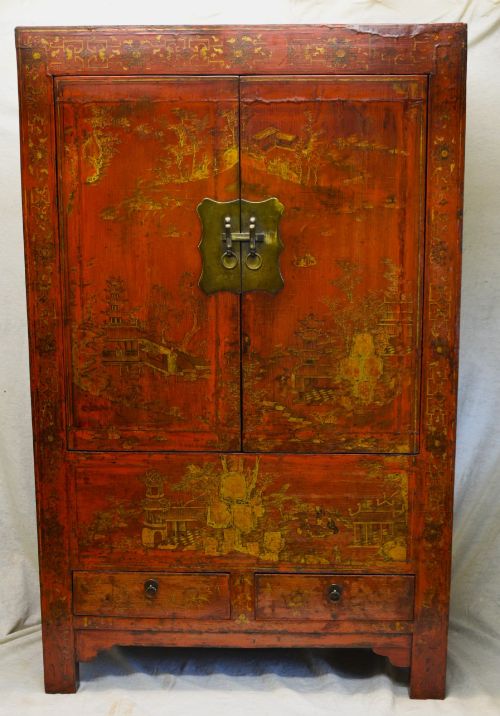
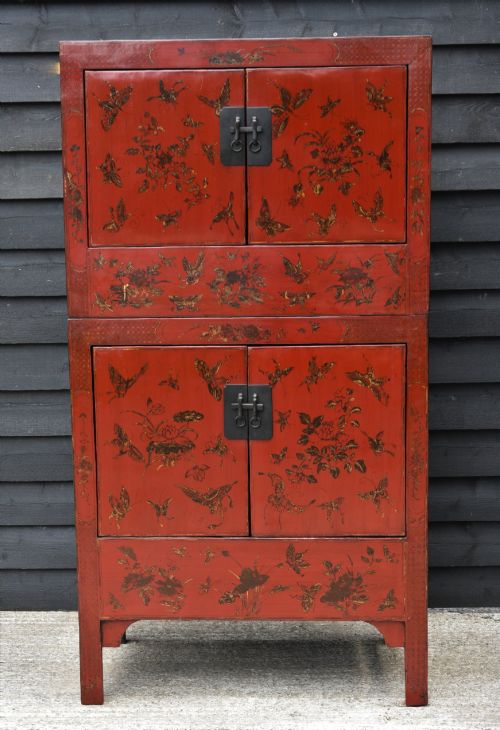
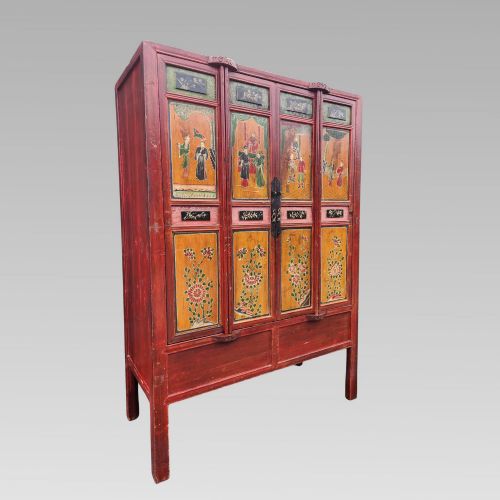
When you search for an asian wardrobe, you are looking at large storage furniture originating from China and broader Asian traditions, spanning the nineteenth century and early twentieth century. These pieces encompass wedding cabinets, marriage cabinets, and compound cabinet cupboards designed to hold garments and household goods.
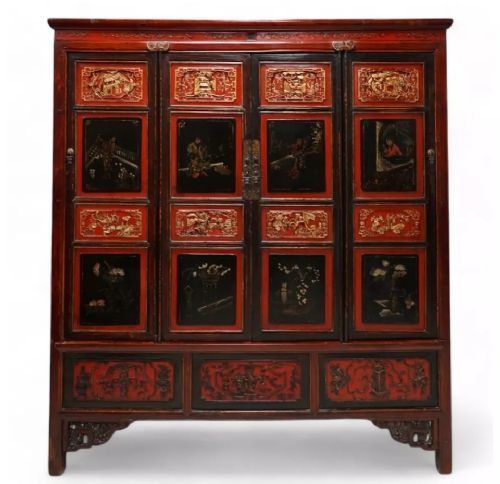
The versions you are most likely to meet on this page are substantial red lacquered wedding cabinets from the nineteenth century, often constructed from elm or hardwood. Alongside these, you will find black lacquered compound cabinets and teak cupboards featuring traditional Chinese provincial or Qing Dynasty styles.
These storage pieces combine architectural presence with practical utility, serving as focal points in contemporary interiors. Their generous proportions and distinctive finishes reflect centuries of woodworking heritage adapted for domestic use.
How they were made
Cabinet makers utilised durable regional timbers such as elm, teak, hardwood, and zitan to build the structural frames of these wardrobes. These dense woods provided the stability needed for large storage cupboards and compound cabinets.
Surfaces received multiple coats of red or black lacquer, creating deep, glossy finishes that protected the timber. Artisans incorporated brass and iron fittings, including hinges and locking plates, alongside detailed hand-carved dragon motifs.
Asian Wardrobe Retail Price Guide 2026
Typical asking prices for asian wardrobe among the pieces listed under this phrase on Sellingantiques today, from the lower quarter to the upper quarter. They describe what is for sale here now, not the wider market.
Materials recorded across current inventory include brass, iron, elm, teak, hardwood, and traditional lacquer.
What varies in quality
The depth and preservation of the lacquer finish distinguish standard examples from superior pieces, particularly where centuries of use have affected the surface. Richness in the red or black pigment layers shows the care applied during initial production.
The complexity of carved details, such as dragon reliefs and structural joinery in hardwoods like zitan or elm, marks the distinction between provincial utility items and high-status marriage cabinets.
The Asian Wardrobe Glossary
- Compound cabinet
- A tall storage unit made in two stacked sections, where a smaller upper cupboard rests upon a larger base.
- Marriage cabinet
- A traditional Chinese wardrobe traditionally given as a wedding gift, characterised by two doors opening to reveal internal shelving.
- Lacquer
- A durable resin finish applied in multiple layers to wood, providing a smooth, protective surface often in red or black.
- Zitan
- A dense, heavy Asian hardwood prized for its dark colour and fine grain, used in high-status cabinetry.
- Chinoiserie
- European decorative style reflecting Chinese artistic motifs, distinct from authentic nineteenth-century Chinese provincial furniture.
Asian Wardrobe: Frequently Asked Questions
What is an asian wardrobe used for?
These pieces serve as substantial storage cupboards for clothing, linens, and household items. Their deep interiors and internal shelving accommodate modern wardrobe needs while maintaining traditional aesthetics.
Placed in living spaces or bedrooms, they act as dominant visual anchors that conceal everyday clutter behind striking lacquered doors.
How do I date a Chinese cabinet?
Dating relies on examining the timber species, construction joinery, and the wear patterns on the lacquer surface. Nineteenth-century examples often display hand- forged iron or brass hardware alongside dense elm or hardwood frames.
Stylistic markers such as Qing Dynasty proportions or specific provincial carving techniques further help establish the era of manufacture.
Are red lacquer cabinets authentic?
Authentic nineteenth-century red lacquer cabinets feature natural tree sap finishes built up in multiple layers over timber substrates. Over decades, these surfaces develop a characteristic craquelure and softening of colour.
Examining the interior construction and the interaction between the wood and the lacquer helps verify the age of the finish.
How do I style an antique cupboard?
Allow the piece to stand against a neutral wall to highlight the vibrant red or black lacquer and detailed brass hardware. Using it as a standalone storage feature in a modern hallway or bedroom lets the architectural form shine.
Pair the cabinet with simple contemporary furnishings to balance the heavy timber presence and ornate carvings.