


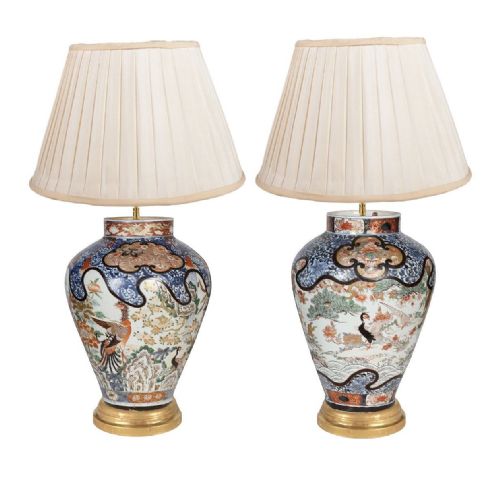


Asian Porcelain Lamp Base
An asian porcelain lamp base brings centuries of craftsmanship into a room, offering a rich anchor for decorative lighting.
Asian Porcelain Lamp Base
An asian porcelain lamp base transforms historic vessels into functional lighting, featuring forms originally thrown as vases or jars. These pieces emerge predominantly from Chinese and Japanese kilns across the seventeenth, eighteenth, and nineteenth centuries.
Buyers frequently encounter nineteenth century examples, alongside earlier eighteenth century pieces bearing traditional glazes and hand-painted motifs. The conversion process often incorporates mounted metal fittings, pairing centuries-old ceramic bodies with later electrical wiring.
Materials and construction
Potters shaped these bodies from fine porcelain and earthenware, applying celadon glazes or intricate overglaze enamels before high-temperature firing. Artisans frequently mounted the finished ceramic vessels in brass, gilt bronze, or carved wood to stabilize the form.
Makers adapted traditional baluster and twin-handled vases into lamps by drilling the base or securing metal hardware through the neck and foot. Many surviving examples retain textile shades made from silk or fabric that complement the decorative palette of the ceramic body.
Listings feature porcelain, brass, fabric, wood, earthenware, silk, and gilt bronze across pieces dated from the seventeenth to the twentieth century.
Distinctions in quality
The standard of painting on the porcelain body dictates much of the visual weight, separating hurried decorative output from precise hand-rendered detail. Finer pieces display crisp cobalt blues, controlled celadon glazes, and well-balanced proportions that respect the original vessel design.
The integration of mounts and hardware reveals the care taken during conversion, with superior examples utilising fitted brass or bronze components that respect the antique ceramic without causing structural stress.
The Asian Porcelain Lamp Base Glossary
- Celadon glaze
- A pale green or grey-green ceramic glaze originating in East Asia, prized for its resemblance to jade. This subtle surface finish highlights the carved or moulded relief underneath.
- Famille rose
- A palette of opaque enamel colours introduced in Chinese ceramics, dominated by pink or rose tones. Artisans used these delicate pigments to render floral and figural scenes.
- Imari
- A style of Japanese porcelain decorated in underglaze blue, iron red, and gold, produced in Arita for export. These vibrant pieces arrived in Europe in large quantities during the early modern period.
- Satsuma
- Earthenware pottery originating from the Satsuma province in Japan, typically featuring a crackle ivory glaze and elaborate polychrome decoration. Many nineteenth-century export pieces utilised this distinct aesthetic.
- Baluster
- A vertical architectural form with a swelling lower portion, frequently adapted for the silhouette of ceramic vases and lamp bases. This classic shape provides stability and visual balance.
Asian Porcelain Lamp Base: Frequently Asked Questions
How do I wire an antique vase lamp?
Conversion usually involves professional rewiring using brass hardware that threads through existing apertures or fitted mounts, avoiding damage to the ceramic body.
Qualified electricians should handle internal cord placement and ensure the lamp meets current safety standards while preserving the historic structure.
Are these lamps stable on tables?
The weight of dense porcelain combined with weighted brass or wooden mounts generally provides a secure base for everyday domestic placement.
Larger monumental forms require sturdy surfaces and careful placement away from household traffic to prevent tipping.
How do I clean an antique porcelain lamp?
Dust the ceramic body gently with a dry, soft cloth, avoiding harsh chemical cleaners that might damage overglaze enamels or historic mounts.
Fabric and silk shades should be brushed lightly or vacuumed with a low-suction attachment designed for textiles.
How can I tell the period of the porcelain?
Dating relies on stylistic clues such as glaze characteristics, pigment colours, and the specific potting techniques seen in Qing Dynasty or Meiji period pieces.
Comparative analysis of brushwork and kiln marks helps establish whether a vessel originates from the eighteenth or nineteenth century.