




Asian Lacquered Trunk
An asian lacquered trunk brings rich texture and enduring storage to a room through centuries of traditional craftsmanship.
Asian Lacquered Trunk
An asian lacquered trunk encompasses a variety of storage chests and blanket boxes originating from distinct regional traditions. Buyers examining this selection encounter pieces spanning the nineteenth century through the early decades of the twentieth century.
Makers utilised sturdy timbers such as camphor wood and general wood foundations, finishing surfaces with lacquer, pigment, and gilt. Styles draw heavily upon Japanese Meiji, Chinese Export, Chinese Regional, and Anglo-Indian design traditions.
How they were made
Craftsmen built the underlying structure using solid timber, frequently selecting camphor wood for its aromatic and insect-repelling properties, or standard wood reinforced with iron and brass hardware. Pig skin occasionally served as an outer covering on robust shipping trunks designed for long journeys.
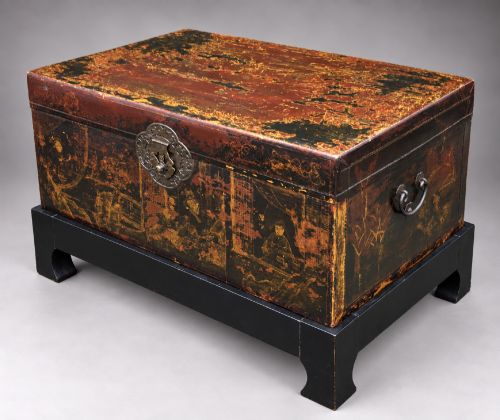
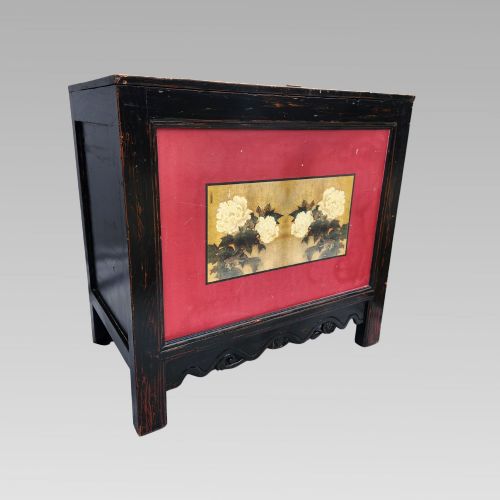
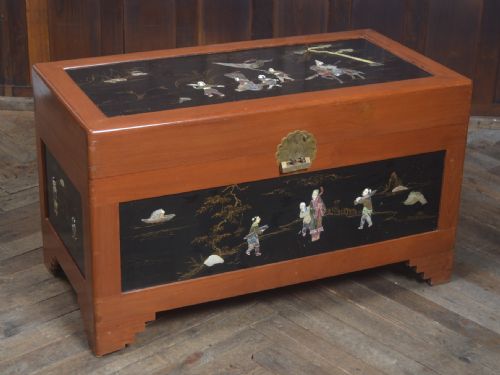
Surfaces received successive coats of lacquer, sometimes enhanced with intricate floral chinoiserie motifs, painted pigments, and gilt highlights. Black and red lacquer finishes predominate across these nineteenth and early twentieth-century examples.
Construction methods relied on traditional joinery techniques suited to large storage chests, coffers, and tansu drawer configurations. Metal mounts in iron and brass provided structural reinforcement at vulnerable corners and edges.
Some robust trunks utilised pig skin as an outer covering, ensuring heavy luggage survived long international shipping routes intact.
What varies in quality
The integrity of the lacquer finish heavily influences the overall character of a piece, distinguishing examples with preserved pictorial detail from those with heavy surface wear. The subtlety of the hand-painted chinoiserie and the crispness of the gilt work display the original artisan's skill.
Hardware execution plays a major role in distinguishing regional variations, where hand-forged iron or brass mounts demonstrate superior metalwork. The choice of primary timber, such as fragrant camphor wood versus general utility wood, alters the substance of the trunk.
Structural complexity, such as the inclusion of multiple internal drawers in a tansu format or a fitted wooden stand, separates standard blanket boxes from more elaborate cabinet pieces.
The Asian Lacquered Trunk Glossary
- Lacquer
- A durable resin finish applied in multiple layers to seal and decorate wood surfaces. This technique creates a smooth, glossy coating that protects the timber beneath while offering a canvas for gilt and pigment.
- Tansu
- A traditional Japanese mobile storage cabinet or chest built for domestic utility. These pieces often feature multiple internal drawers and specialised compartments constructed from sturdy timbers.
- Chinoiserie
- European interpretations and adaptations of Chinese artistic traditions, particularly popular in decorative painting and lacquerwork. This style emphasises whimsical landscapes, floral patterns, and figures.
- Camphor Wood
- An aromatic timber prized for its insect-resistant qualities and distinct natural scent. It frequently forms the internal structure of traditional storage trunks and blanket boxes.
- Gilt
- Gold leaf or powdered gold applied to a surface to create decorative highlights. Artisans utilised this technique to accentuate carved details and painted lacquer scenes.
Asian Lacquered Trunk: Frequently Asked Questions
What is an asian lacquered trunk?
An asian lacquered trunk is a traditional storage chest or blanket box finished with protective resin coatings, often featuring painted or gilt decoration. These pieces originate from various regions including China, Japan, and India.
They serve as both functional furniture and decorative statements, utilising durable timbers like camphor wood and sturdy metal hardware.
How were these trunks used historically?
Historically, these trunks served primarily for storing garments, textiles, and valuable household possessions safely away from pests and moisture. Sturdy shipping trunks also transported goods across long distances.
In domestic settings, pieces like Japanese tansu chests organised daily items while functioning as prominent interior furnishings.
How do I care for a lacquered surface?
Lacquered surfaces require gentle maintenance to preserve the finish over time. Dusting with a soft, dry cloth prevents particulate buildup without scratching the delicate resin.
Keep these trunks away from direct sunlight and extreme humidity fluctuations to maintain the stability of the underlying wood and lacquer layers.
How can I tell different regional styles apart?
Regional styles reveal themselves through distinct decorative motifs and structural hardware choices. Japanese pieces often incorporate functional drawer arrangements like tansu, while Chinese and Anglo-Indian examples frequently display elaborate floral chinoiserie or specific pigment palettes.