



Asian Lacquer Screen
An asian lacquer screen brings architectural depth and rich surface texture to a room, functioning as both a divider and a striking decorative focal point.
Asian Lacquer Screen
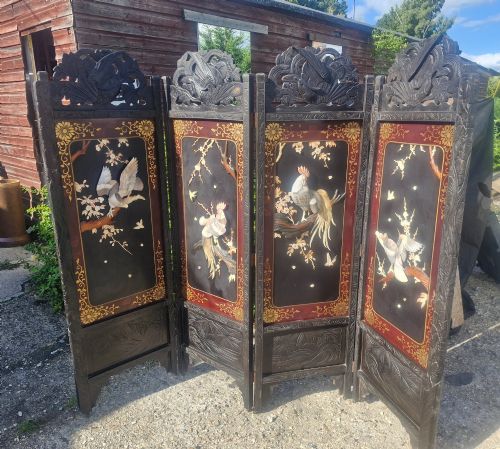
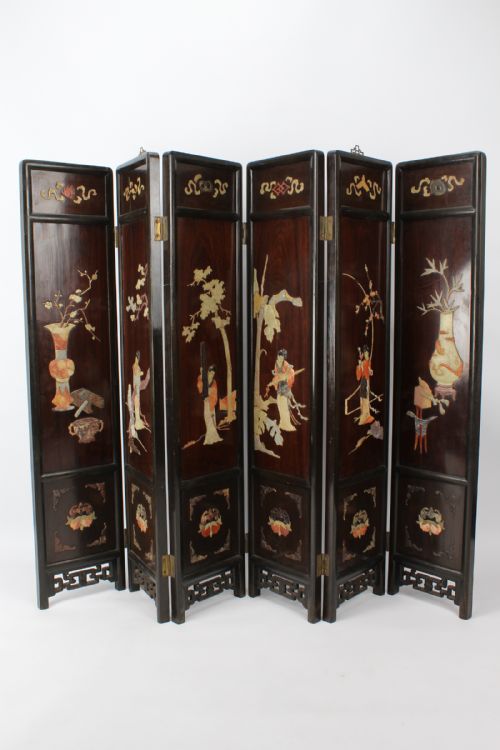
When you search for an asian lacquer screen, you encounter a variety of forms ranging from grand multi-fold room dividers to intimate table screens and fire screens. The selection spans the nineteenth century through the mid-twentieth century, capturing diverse regional traditions including Chinese and Japanese craftsmanship.
The most common formats on this page are folding panels designed for domestic interiors, alongside smaller wall plaques and decorative panels. Styles vary from traditional Qing dynasty influence and Meiji period aesthetics to later Chinoiserie and Chinese Chippendale interpretations.
Materials and construction
These pieces rely on a wooden core finished with multiple layers of lacquer, forming a smooth surface that receives carving and painted decoration. Artisans built up relief work through applied materials such as bone, hardstone, mother-of-pearl, and abalone inlay.
Structural elements frequently incorporate brass fittings and hardwood frames to support heavy folding panels. Surface enrichment often includes detailed hand-painting alongside deep carving techniques that reveal contrasting sub-layers.
Asian Lacquer Screen Retail Price Guide 2026
Typical asking prices for asian lacquer screen among the pieces listed under this phrase on Sellingantiques today, from the lower quarter to the upper quarter. They describe what is for sale here now, not the wider market.
Listings feature periods spanning from the nineteenth century through the 1950s, using wood, lacquer, bone, and mother-of-pearl.
Assessing quality
Quality rests in the depth of the carving and the precision of the inlay work, where materials like mother-of-pearl and bone sit flush within the lacquer ground. Superior examples display intricate pictorial details depicting birds, foliage, and figures with careful shading and clean linework.
The stability of the wooden hinges and the integrity of the lacquer surface distinguish finer works from decorative later interpretations. Thicker application of lacquer and balanced composition across multiple folds indicate superior workshop production.
The Asian Lacquer Screen Glossary
- Coromandel
- A type of Chinese incised lacquer where the design is cut into the surface, filled with colour, and sealed. This technique creates a distinctive flat yet layered pictorial effect across large panels.
- Shibayama
- A Japanese decorative technique utilising inlaid precious materials such as ivory, mother-of-pearl, and tortoiseshell to form raised motifs. The method produces highly detailed pictorial scenes on small decorative objects.
- Chinoiserie
- A European artistic style reflecting Chinese aesthetic traditions, popular in furniture and decorative arts. It reinterprets Asian motifs through Western design frameworks.
- Meiji Period
- A Japanese historical era associated with significant craft production intended for both domestic and export markets. Works from this period often feature precise metalwork, lacquer, and carved details.
- Hardstone
- Mineral stones such as jade, agate, or soapstone carved and mounted onto panels to create relief decoration. These elements introduce varied natural colour and texture to the lacquered ground.
Asian Lacquer Screen: Frequently Asked Questions
How do I place an asian lacquer screen in a modern room?
A folding panel functions effectively against a neutral wall to anchor a seating area or soften an empty corner.
Smaller table screens or wall plaques suit console tables and shelves where surface detail can be appreciated at close range.
What is the difference between a room divider and a table screen?
Room dividers consist of multiple folding panels designed to stand upright on the floor for partitioning space.
Table screens are much smaller decorative objects supported by a stand, intended for display on furniture.
How should I clean a lacquered surface?
Dust the surface regularly with a soft, dry cloth to prevent particle accumulation.
Avoid liquid cleaners, abrasive cloths, and direct sunlight, which can damage the delicate lacquer finish.
How can I tell the difference between Chinese and Japanese pieces?
Chinese examples often feature deep incised Coromandel lacquer or applied hardstone and bone in architectural compositions.
Japanese pieces frequently display delicate Shibayama inlay, painted motifs, or intricate bone carving associated with the Meiji period.