



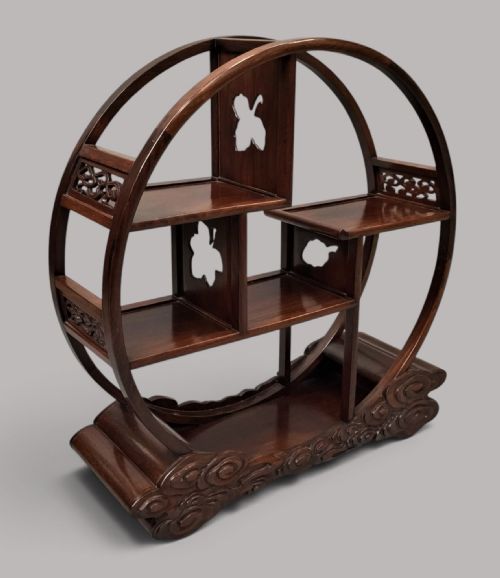

Asian Curios Shelf
These asian curios shelf examples are decorative display pieces designed to showcase small treasures, offering intricate woodwork and traditional craftsmanship for the home.
Asian Curios Shelf
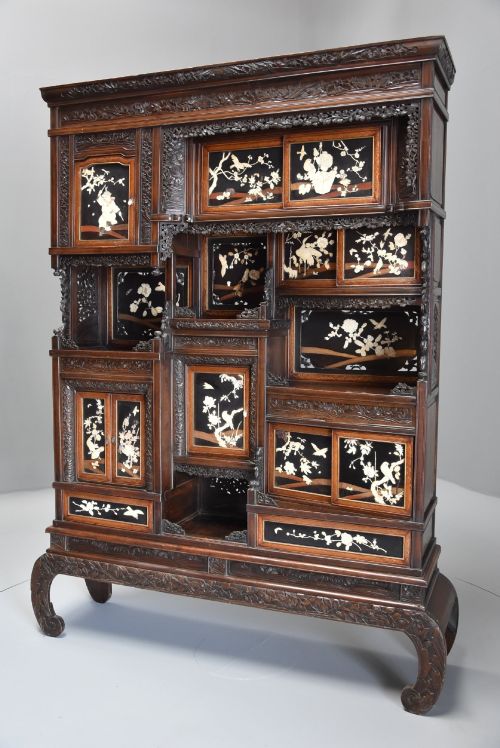
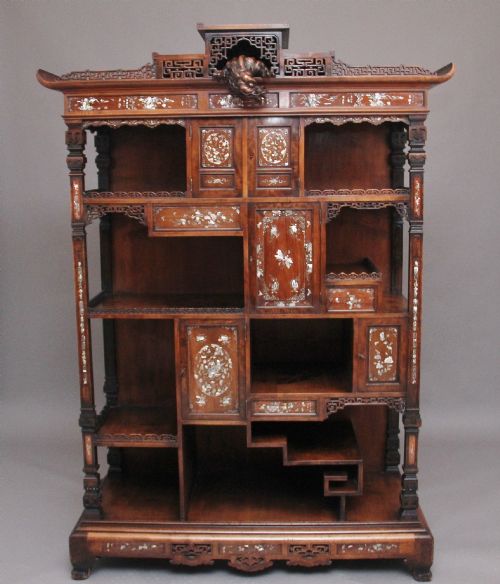
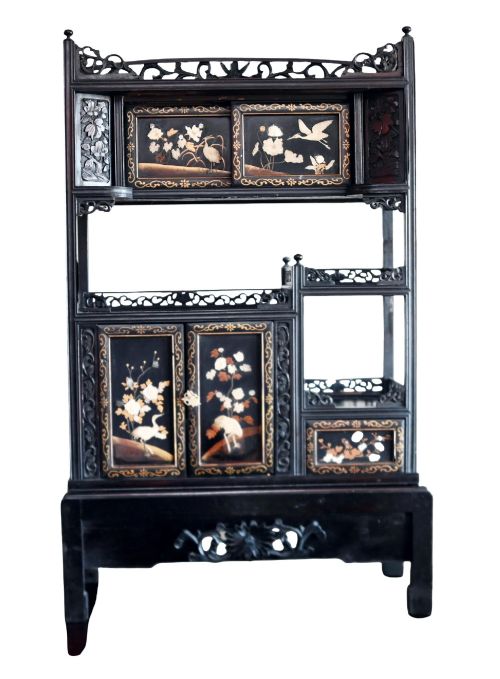
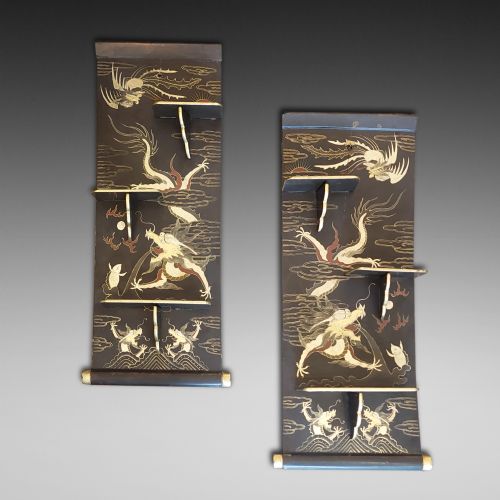
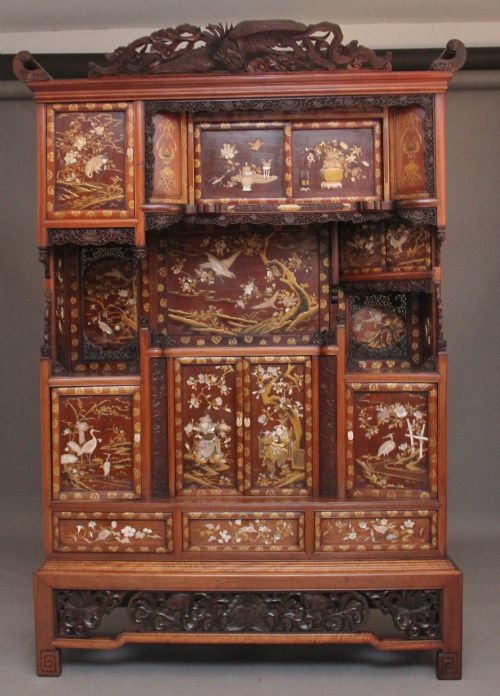
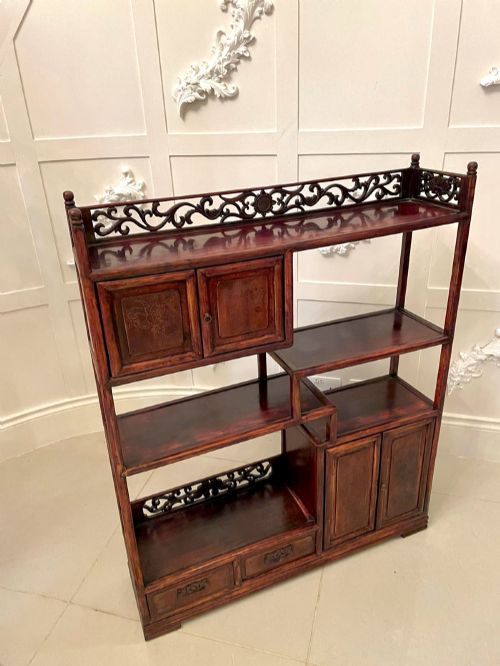
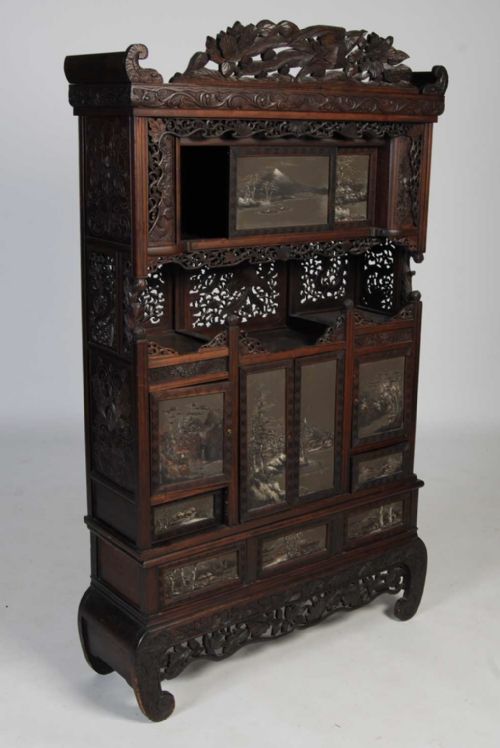
An asian curios shelf groups together wall-mounted hanging shelves, floor-standing display cabinets, and Japanese shodona units intended to hold collections of small objects.
The pieces on this page span the nineteenth century through the early twentieth century, drawing on Chinese Qing, Republic, and Japanese Meiji aesthetics.
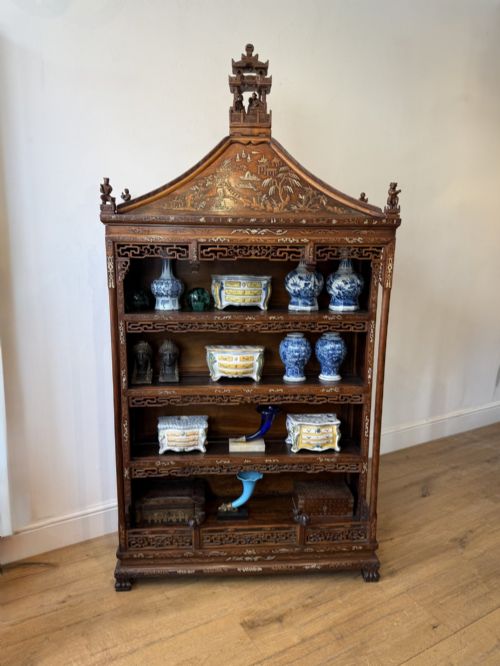
Forms vary from compact wall shelves to substantial cabinet bookcases and display stands designed for domestic display.
Materials and construction
Maker workshops utilised dense hardwoods, rosewood, hongmu, and lacquered wood as the primary structural foundations for these cabinets and stands.
Surface decoration frequently incorporates inlaid mother-of-pearl and bone elements, alongside carved wood details and painted finishes.
Asian Curios Shelf Retail Price Guide 2026
Typical asking prices for asian curios shelf among the pieces listed under this phrase on Sellingantiques today, from the lower quarter to the upper quarter. They describe what is for sale here now, not the wider market.
Some cabinets feature tiny secret compartments hidden behind sliding panels, originally built for concealing miniature jade treasures.
Assessing quality
Quality rests on the depth and crispness of the wood carving, the precision of joinery in complex shelving arrangements, and the security of inlaid mother-of-pearl or bone panels.
Finer examples display harmonious proportions across asymmetrical display tiers and retain original lacquered or polished surfaces without crude repairs.
The Asian Curios Shelf Glossary
- Shodona
- A Japanese multi-tiered cabinet or display shelf featuring asymmetrical compartments for exhibiting ornaments. These pieces typically date from the Meiji period.
- Hongmu
- A dense tropical hardwood prized in Chinese furniture making for its deep reddish-brown tone and heavy weight. It takes a fine carved finish.
- Qing Dynasty
- The imperial dynasty of China spanning from sixteen forty-four to nineteen twelve, known for elaborate decorative arts and refined cabinetry.
- Meiji Period
- The era in Japanese history lasting from eighteen sixty-eight to nineteen twelve, marked by increased export of decorative arts to Europe.
- Chinoiserie
- European artistic style reflecting Chinese motifs and decorative techniques, often applied to furniture and lacquerwork.
Asian Curios Shelf: Frequently Asked Questions
What is a shodona?
A shodona is a Japanese display cabinet featuring multiple asymmetrical tiers and small cupboards designed for exhibiting decorative objects. These cabinets originated in Japan during the Meiji period and found a receptive market in Europe.
They serve as focal points in a room for displaying small collections, ceramics, or bronzes. Their complex arrangement of shelves offers varied framing for different items.
How do I date these shelves?
Dating relies on stylistic markers such as Qing dynasty motifs, Meiji period characteristics, or early twentieth-century Chinese export designs. Materials like hongmu and lacquered wood also provide clues to the period of manufacture.
Construction methods and the presence of specific decorative inlays like mother-of-pearl help narrow down the decade of production. Comparative examination of similar pieces aids verification.
Where should I place a display cabinet?
These cabinets suit reception rooms, studies, or hallways where their intricate shelving and carved details can be appreciated. Wall-hanging versions need secure fixings to support the weight of hardwood and displayed items.
Keep them away from direct sunlight and severe temperature fluctuations to protect delicate lacquer finishes and inlaid mother-of-pearl. Adequate lighting helps reveal the fine woodwork.
What did people store in these cabinets?
Owners used these shelves to display small ornamental objects, scholar rocks, jade carvings, and imported ceramics. The varied compartments accommodated items of differing heights and shapes.
Curiosity cabinets functioned as miniature museums for collectors to display their acquisitions to visitors. The design prioritised visibility and aesthetic arrangement over concealed storage.