



Asian Chest of Drawers
These pieces of asian chest of drawers bring sculptural timber and meticulous storage craftsmanship straight from nineteenth-century workshops into modern rooms.
Asian Chest of Drawers
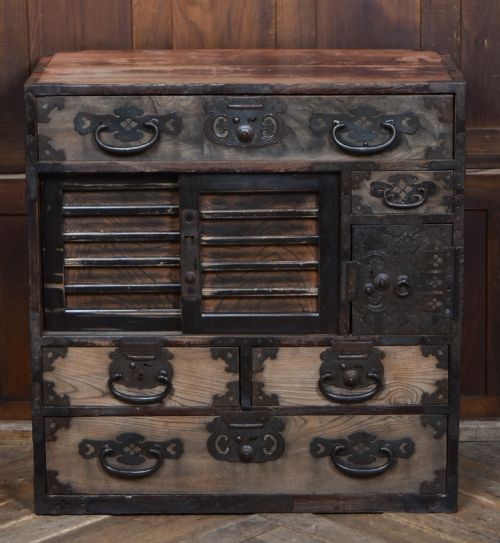
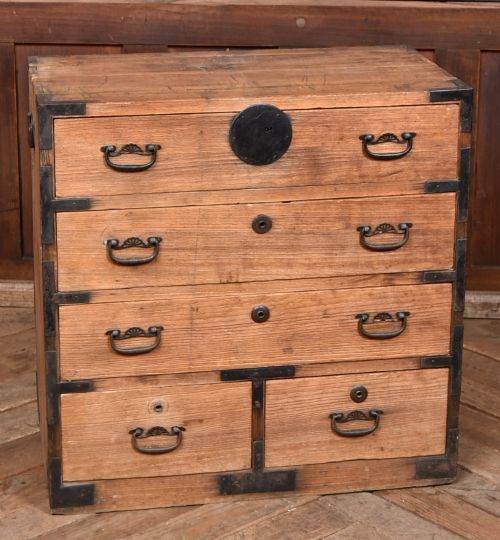
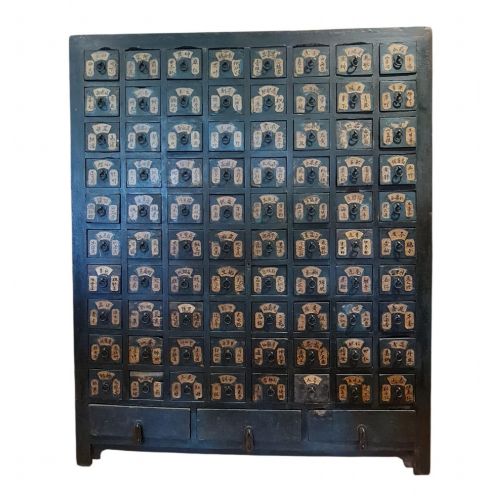
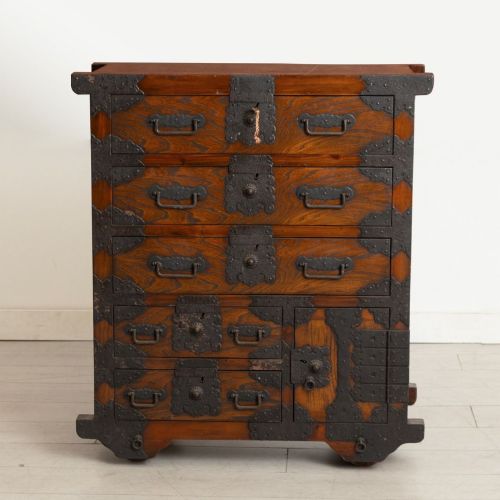
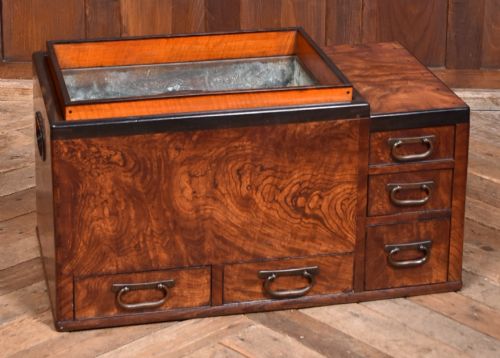
When someone searches for an asian chest of drawers, they encounter a diverse assembly of utilitarian storage furniture originating from Japan, China, and Korea. The selection spans compact table cabinets, multi-drawer apothecary chests, and substantial step tansu or elm storage units.
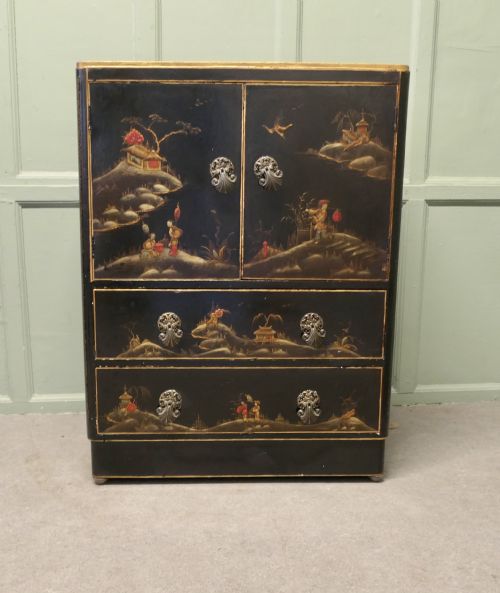
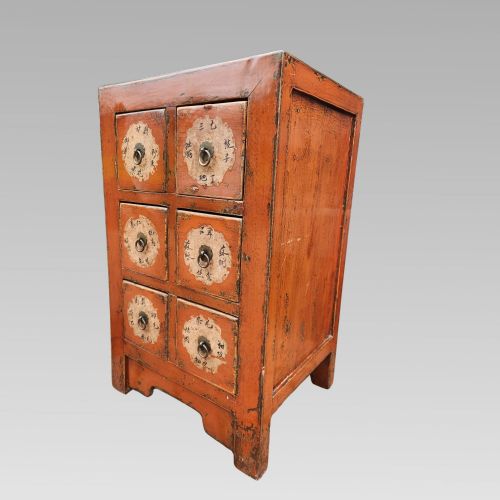
The version most commonly met on this page is the nineteenth-century Japanese tansu chest, alongside Chinese elm apothecary cabinets and lacquered sideboards. These pieces evolved from domestic storage needs, regional mercantile traditions, and traditional apothecary practices across East Asia.
Dated examples stretch from the eighteenth century through the Victorian era and into the early decades of the twentieth century, including the Taisho period. Their forms range from simple provincial timber boxes to wheel-mounted cabinets and elaborate black lacquer pieces.
How they were made
The makers relied primarily on native timbers such as elm, cedar, and zelkova, often pairing dense woods with durable iron or brass hardware. Structural joinery allowed these multi-drawer storage pieces to bear heavy loads without requiring modern adhesives.
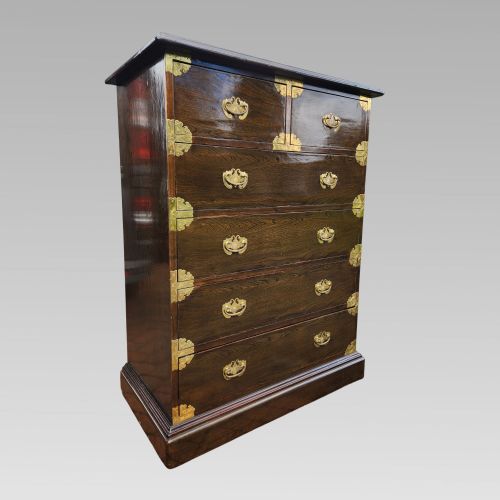
Surface treatments included rich black or red lacquer, applied to sealed wood to create deep, reflective sheens on table cabinets and cupboards. Metal straps, lock plates, and corner brackets were forged from iron and brass to reinforce high-stress joints and drawers.
Listings feature eighteenth-century, nineteenth-century, and early twentieth-century pieces, spanning Victorian, Meiji, Taisho, and Qing periods in elm, cedar, and lacquer.
What varies in quality
The distinction between ordinary utility items and superior examples rests upon timber selection and the retention of original surface finishes. Pieces constructed from figured elm or cedar with intact lacquer and patinated metal mountings command greater appreciation.
Construction integrity also dictates worth, particularly the survival of original sliding mechanisms, internal partitions, and wheels or mounting brackets. The crispness of hand-forged brass and iron hardware further separates standard provincial pieces from finely appointed cabinets.
The Asian Chest of Drawers Glossary
- Tansu
- Traditional Japanese mobile storage cabinetry built for domestic or mercantile use. These chests often feature numerous small drawers and robust iron hardware.
- Apothecary chest
- A multi-drawer cabinet traditionally utilised by herbalists and practitioners of traditional medicine to sort medicinal ingredients. They contain dozens of small labelled drawers.
- Zelkova
- A durable hardwood native to East Asia possessing a pronounced grain pattern. Cabinet makers valued it for its strength and decorative surface appeal.
- Lacquer
- A durable resin finish applied in multiple layers to timber substrates. It creates a smooth, glossy protective coating often seen in black or red tones.
- Bandaji
- A traditional Korean storage chest constructed with prominent metal strapwork and hinges. These chests served primarily for blanket and clothing storage.
Asian Chest of Drawers: Frequently Asked Questions
What is a tansu chest?
A tansu is a traditional Japanese mobile storage cabinet designed for domestic use. These pieces range from simple kitchen units to elaborate step chests.
They incorporate numerous drawers and robust iron or brass hardware to withstand daily movement and use.
How do I identify Chinese apothecary chests?
Chinese apothecary chests are characterised by an abundance of small drawers arranged in orderly rows. Practitioners utilised these compartments to organise medicinal herbs and ingredients.
They often feature elm construction and retain traces of traditional labeling on the drawer fronts.
Where were these chests used?
These cabinets served functional roles within homes, merchants' shops, and apothecary dispensaries across Japan, China, and Korea. Their forms reflected the specific regional storage requirements of each culture.
Smaller variants sat upon tables for personal storage, while larger tansu and cupboards stood directly on floors.
How should I care for lacquer surfaces?
Lacquer finishes require gentle treatment to preserve their historic sheen and prevent drying. Keep pieces away from direct sunlight and extreme temperature fluctuations.
Dust them regularly with a soft, dry cloth rather than applying chemical polishes or modern cleaning agents.
What distinguishes Taisho period pieces?
The Taisho period spans from 1912 to 1926, bridging Meiji traditions with early twentieth-century design. Chests from this era often combine traditional elm or cedar construction with slightly simplified hardware.
They represent a transitional phase in Japanese cabinetry before mass production methods took hold.