






Asian Carved Chair
An asian carved chair brings dense timber and intricate relief into a room, offering robust seating shaped by Qing Dynasty and Victorian traditions.
Asian Carved Chair
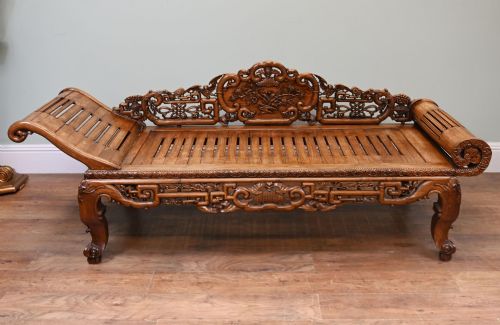
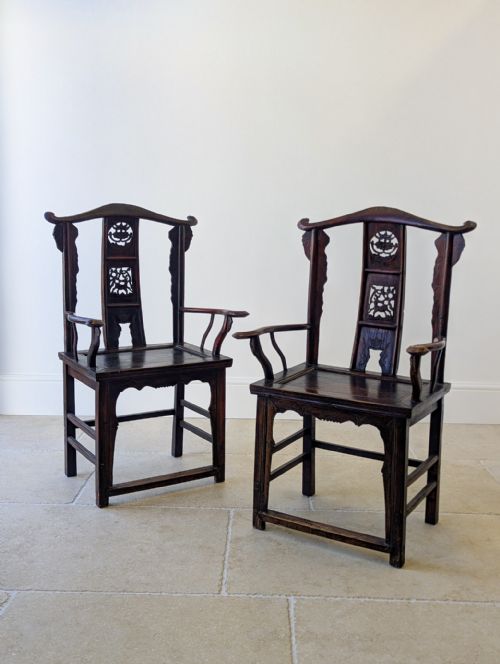
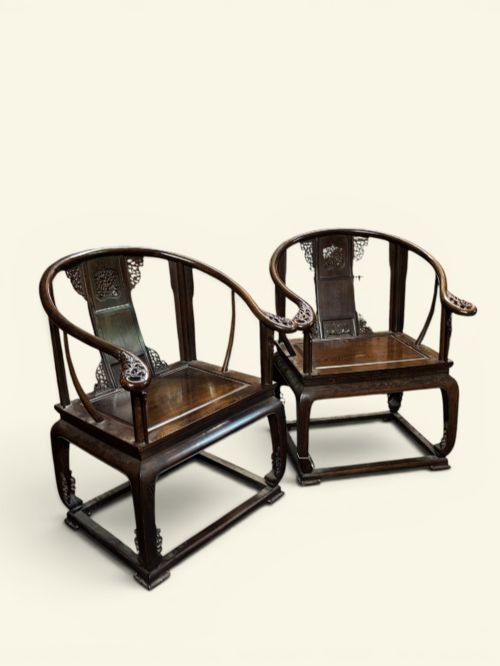
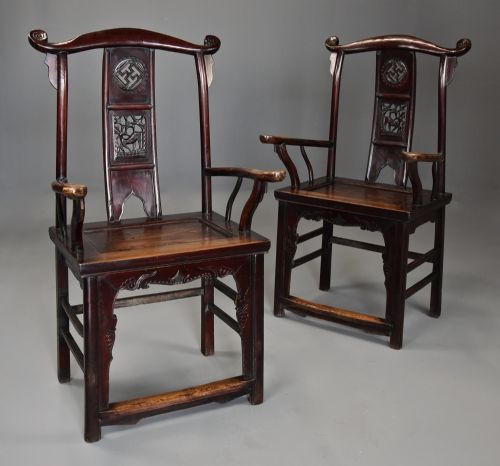
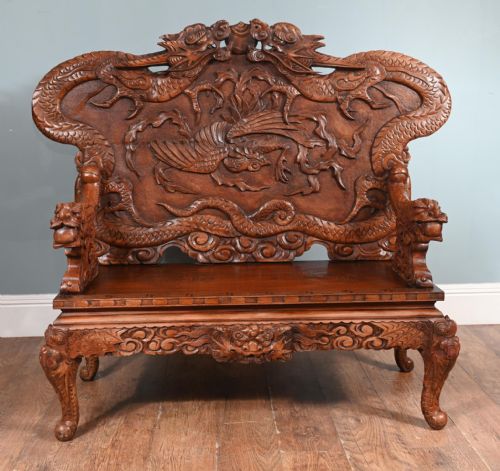
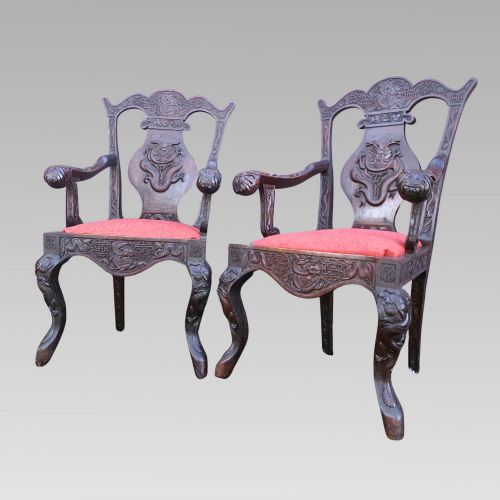
When you search for an asian carved chair, you enter a field dominated by 19th-century seating originating from China and Burma. The forms range from simple elm scholar's chairs to elaborate horseshoe-back throne chairs and substantial hardwood benches.
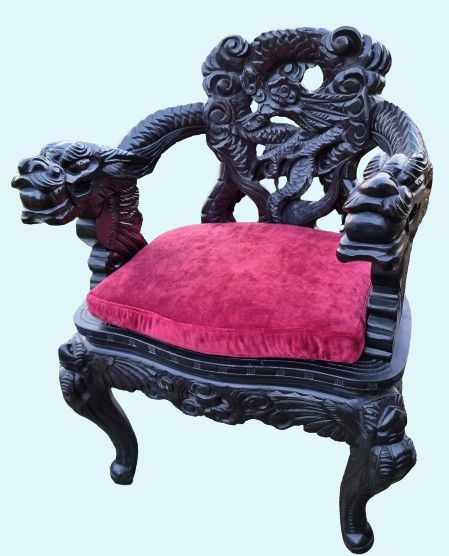
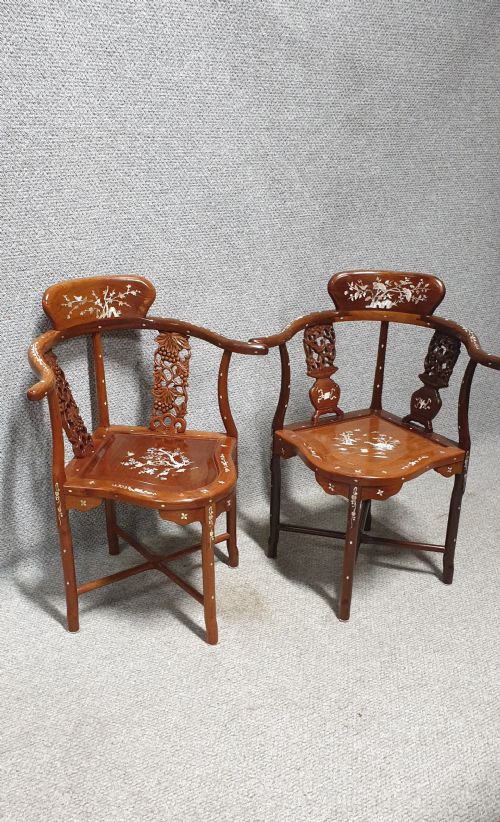
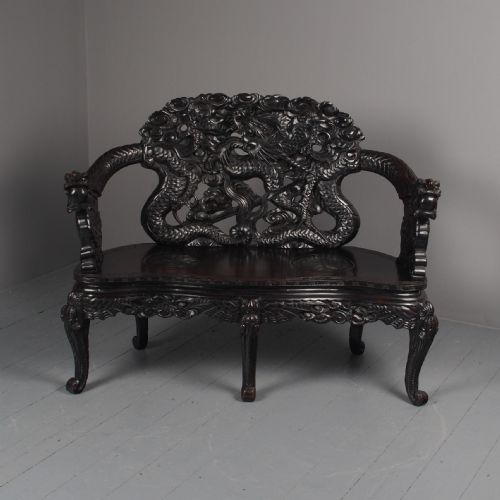
The pieces appearing here include yoke-back armchairs, folding seats, and paired hall furniture created for domestic interiors and temple spaces. Elm and dense hardwoods form the backbone of these surviving examples, often bearing intricate dragon carvings or lacquer finishes.
Materials and Construction
Cabinetmakers utilised heavy timbers such as rosewood, teak, hongmu, and blonde elm, selecting each for its grain and structural strength. Joinery relied on traditional interlocking methods rather than metal fixings, allowing rigid frames to support deep relief carving.
Surfaces were finished with natural oils to develop a rich patina, or coated in red and cinnabar lacquer. Artisans carved directly into the solid wood or applied lacquer over carved wooden bases to build dimensional scenes of daily life and mythical beasts.
Asian Carved Chair Retail Price Guide 2026
Typical asking prices for asian carved chair among the pieces listed under this phrase on Sellingantiques today, from the lower quarter to the upper quarter. They describe what is for sale here now, not the wider market.
Current listings feature seating spanning the 18th century, Victorian era, and early 20th century, constructed from elm, rosewood, teak, and lacquered wood.
Evaluating Craftsmanship
The distinction between standard pieces and exceptional ones rests upon the crispness of the hand-carved details and the depth of the timber's natural patina. Chairs that retain their original red lacquer finishes or show undisturbed grain on dense hardwoods command greater interest from collectors.
Structural integrity of the traditional joinery and the balance of proportion between the crest rail, arms, and seat also dictate the standing of a piece. Finer examples display harmonious symmetry in complex yoke-backs and horseshoe curves without secondary alterations.
The Asian Carved Chair Glossary
- Hongmu
- A dense, dark tropical hardwood prized by Chinese cabinetmakers for its heavy weight and capacity for sharp carving detail. This material forms the structure of many high-status throne chairs.
- Yoke-back
- A chair design featuring a curved top rail resembling an ox yoke, often paired with an S-shaped splat. These pieces were traditionally associated with scholars and officials.
- Horseshoe-back
- A continuous semicircular arm and crest rail that sweeps down to the seat in a single fluid line. This form requires advanced joinery to achieve its curved profile.
- Cinnabar lacquer
- A vermilion-coloured coating built up in multiple layers on a wooden base before being carved with intricate motifs. It provides a durable and colourful finish.
- Patina
- The surface sheen and softening of colour developed through decades of handling, polishing, and natural ageing. A good patina indicates genuine age and regular use.
Asian Carved Chair: Frequently Asked Questions
How do I identify hongmu furniture?
Hongmu translates as red wood and describes a category of dense, heavy tropical hardwoods used in Qing Dynasty seating. The timber has a naturally dark tone and a tight grain.
Items made from this material feel remarkably heavy for their size and take a high, lustrous polish without needing thick surface varnishes.
Where were horseshoe-back chairs used?
Horseshoe-back armchairs served as prominent seating within traditional interiors, often positioned in reception rooms or halls. Their sweeping semicircular rails offered comfortable arm placement.
Examples from the nineteenth century frequently incorporate carved dragons or floral motifs along the central splat and apron to denote status.
How should I care for lacquered wood?
Lacquered surfaces require stable indoor humidity away from direct sunlight and heat sources to prevent the finish from drying out or cracking. Dusting with a soft, dry cloth is sufficient for routine maintenance.
Avoid chemical polishes or abrasive cleaners, as these can permanently damage the delicate layers of traditional lacquer and painted details.