

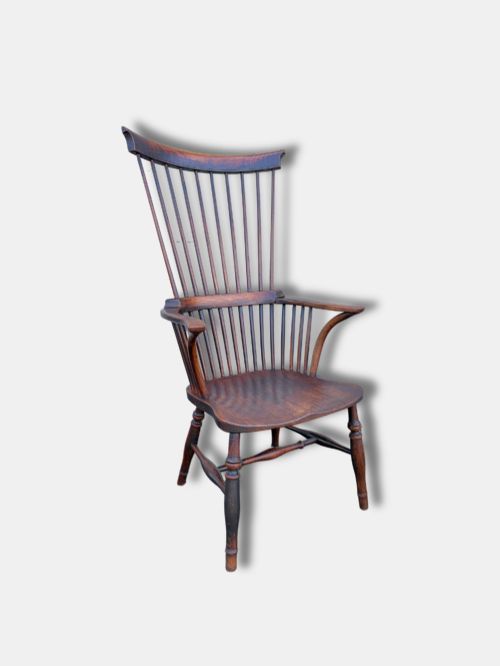
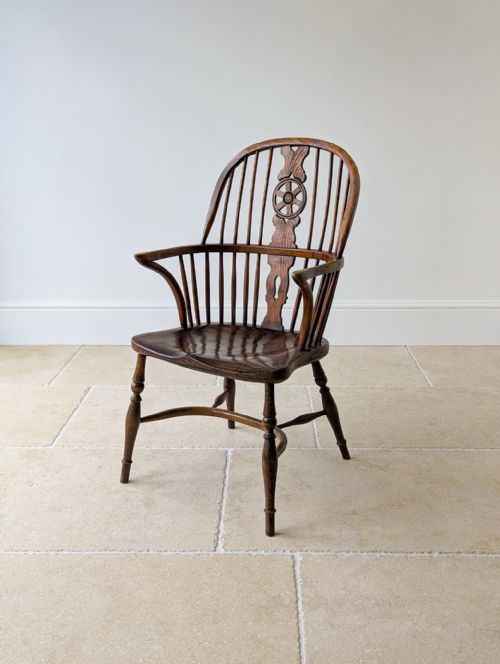
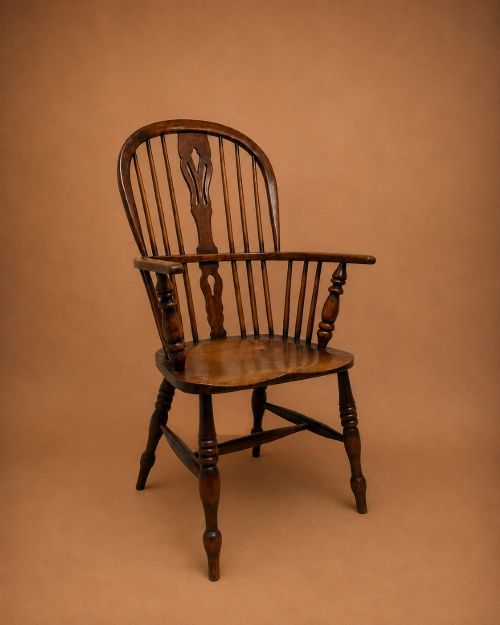
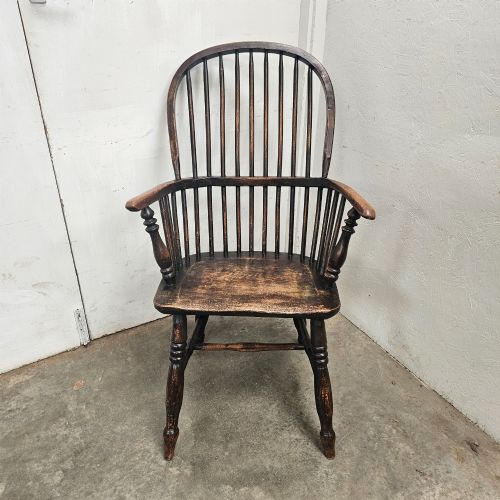
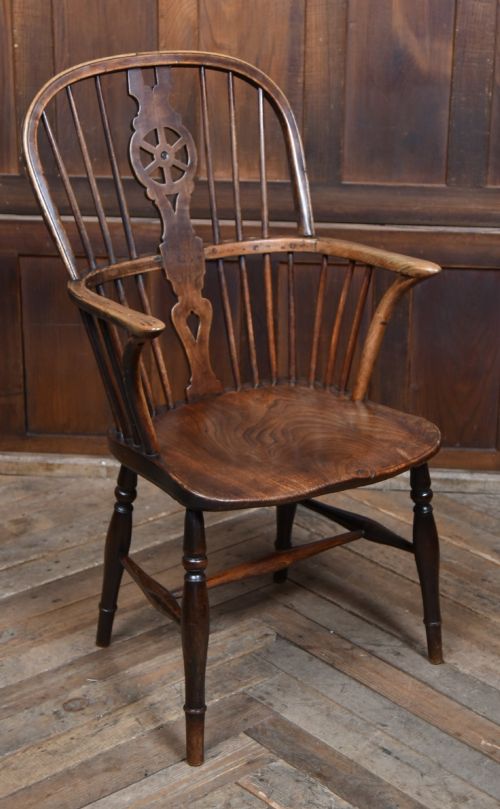
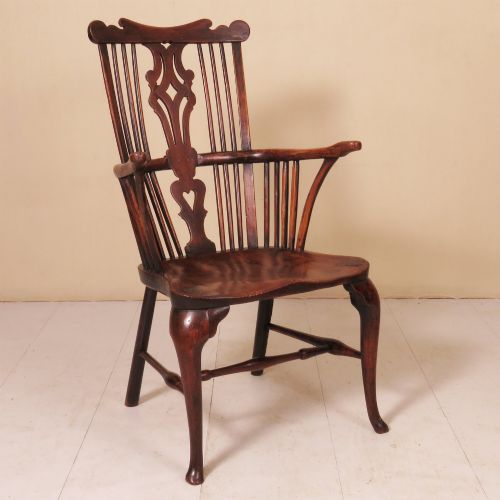
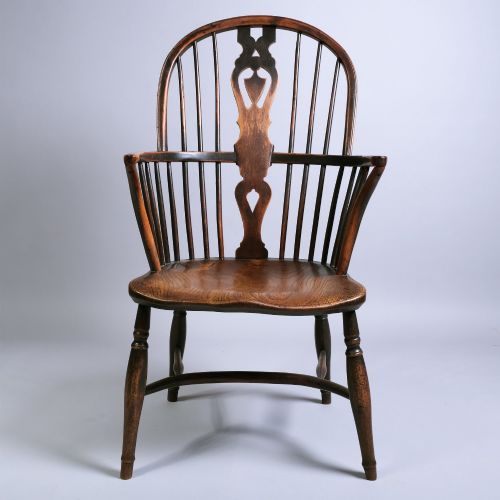
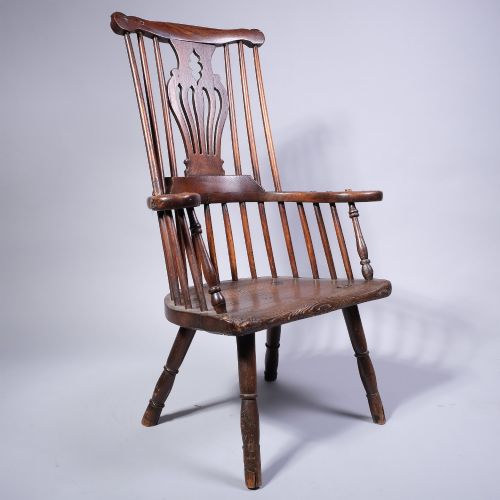
Ash Wood Country Chair
An ash wood country chair brings rustic utility and enduring regional character directly into a modern interior.
Ash Wood Country Chair
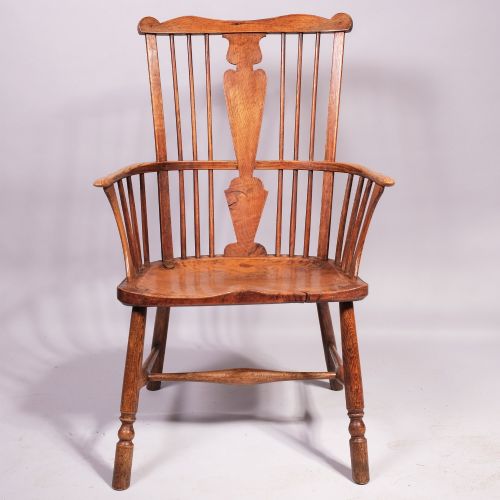
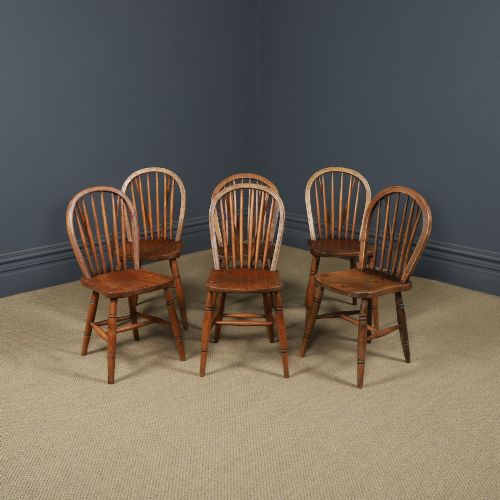
The most frequent examples encountered on this page date from the nineteenth century, though earlier eighteenth-century survivors appear regularly. Makers utilised local hardwoods to construct armchairs, side chairs, carvers, and high chairs. These domestic items evolved from utilitarian workshop traditions into recognised expressions of rural craftsmanship.
How they were made
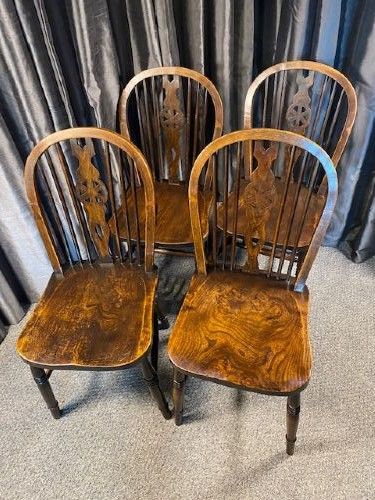
Traditional makers paired flexible ash for framing and spindles with resilient elm for solid, saddled seats. Additional timbers like beech, alder, oak, and fruitwood supplemented the construction depending on regional availability. Workshops employed green woodworking techniques, steam-bending components to achieve curved combs, hoops, and crest rails.
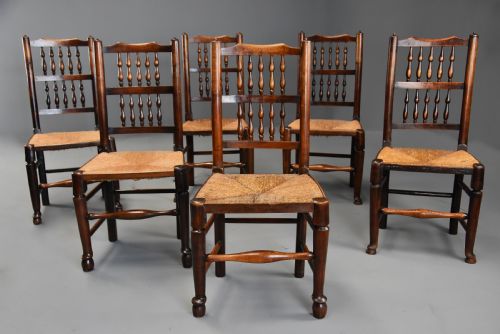
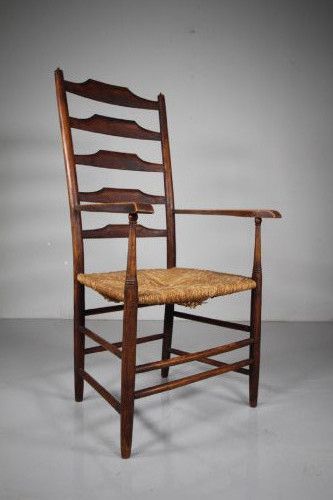
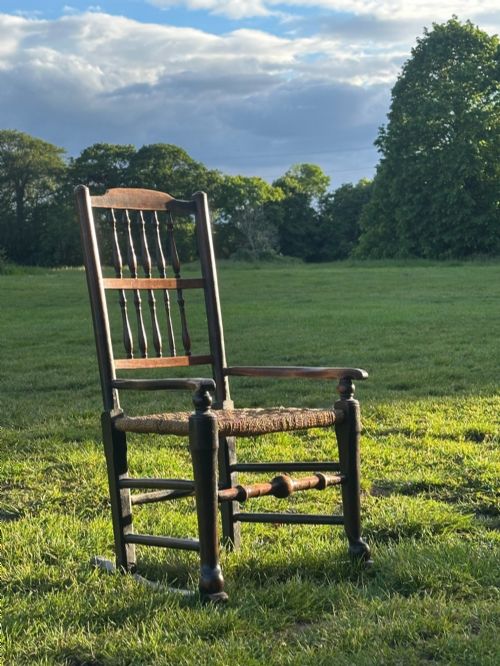
Joinery relied on pegged mortise and tenon joints alongside turned components shaped on pole lathes. Seats were frequently hollowed with adzes to improve comfort before being fitted with turned legs and undercarriages. Rush or plaited straw provided flexible seating bases on ladderback and spindle variants.
Listings demonstrate combinations of ash with elm, oak, beech, and alder across eighteenth and nineteenth-century forms.
What varies in quality
The distinction between standard utility seating and exceptional examples lies in timber selection and the retention of original surface patination. Chairs featuring figured woods like yew or burr elm alongside contrasting ash framing represent higher tiers of craftsmanship. Construction depth, such as well-balanced proportions and complex turning details on spindles and legs, elevates an individual piece.
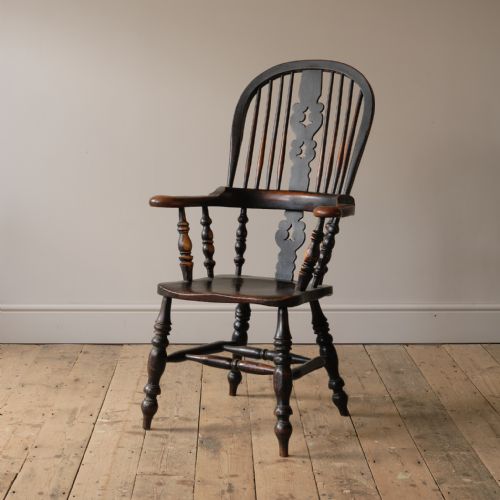
Originality of components defines the standing of surviving items, where replacements or extensive structural repairs alter historical integrity. The depth of the seat carving and the grace of steam-bent Windsor bows demonstrate the maker's skill. Pieces retaining early organic finishes and signs of genuine domestic use command greater appreciation.
Philip Clissett·Duncan McKellar of Fenwick
The Ash Wood Country Chair Glossary
- Windsor chair
- A chair built with a heavy wooden seat into which the legs and back spindles are separately inserted. This structural method creates a resilient hybrid form often associated with regional English craftsmanship.
- Comb back
- A Windsor chair variation featuring a high rectangular or shaped backrest topped with a horizontal headpiece resembling a hair comb. This style developed during the eighteenth century.
- Rush seat
- A seating surface woven from dried marsh rushes wound around a wooden frame. It offers a flexible and durable platform traditionally used on ladderback chairs.
- Saddle seat
- A solid wooden seat carved into a scooped, ergonomic contour resembling a riding saddle. Elm was frequently chosen for this component due to its resistance to splitting.
- Spindle back
- A chair back constructed from numerous slender turned wooden rods fitted between a top rail and the seat. This lighter framework characterises many regional kitchen and dining chairs.
Ash Wood Country Chair: Frequently Asked Questions
How do I identify a Windsor chair?
A Windsor chair is distinguished by its solid wooden seat that directly anchors the legs and back components. Instead of a continuous frame, individual spindles or sticks are tenoned straight into the seat base.
Most examples feature a bow or comb backrest steam-bent from ash or fruitwood. This construction method provides notable structural strength while keeping the upper section relatively light.
Where were these chairs made?
Country chairs were produced by local joiners and bodgers across rural Britain and parts of Europe. Specific regions developed distinct stylistic traits, such as high-comb backs or particular turning patterns on the legs.
Workshops utilised whatever native timber grew nearby, resulting in variations between southern English pieces and those from northern counties or Wales.
How do I care for a rush seat?
Rush seats require a stable indoor environment with moderate humidity to prevent the dried marsh grass from becoming brittle. Regular gentle dusting keeps the woven strands free from abrasive particles.
Avoid placing these chairs in direct sunlight or near heat sources which can dry out the natural fibres. Spills should be blotted immediately with a dry cloth rather than soaked with water.
Are these chairs suitable for daily dining?
Many country chairs were originally built for heavy domestic use around farmhouse tables and remain fully functional today. Their robust ash and elm construction handles regular sitting when structurally sound.
Checking that joints remain tight ensures the chair safely supports everyday movement. Pairing them with a wooden dining table introduces historic texture to contemporary rooms.