



Ash Smokers Bow
Ash smokers bow armchairs are sturdy, low-backed country seats built for comfort, and you want one for its solid timber construction and practical proportions.
Ash Smokers Bow
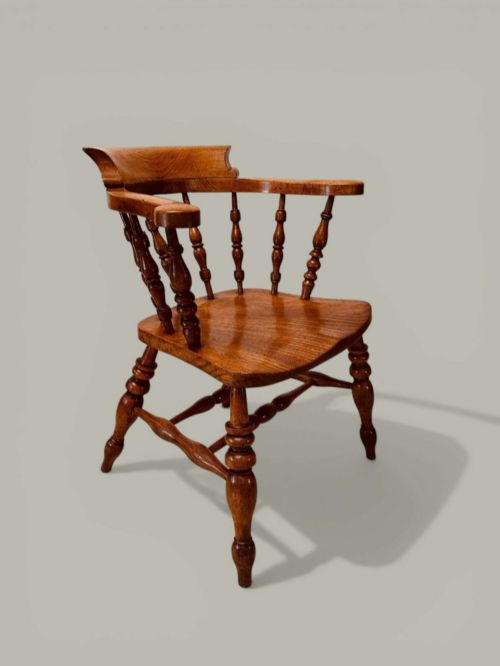
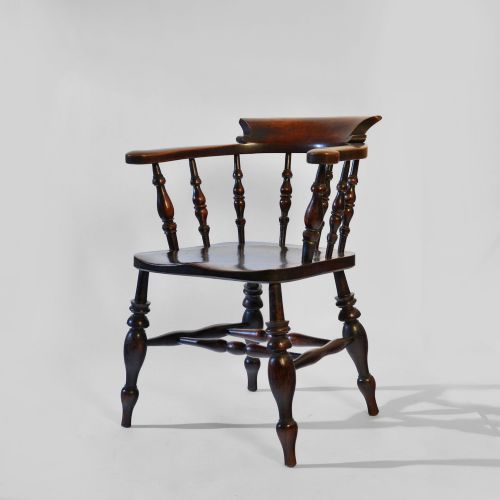
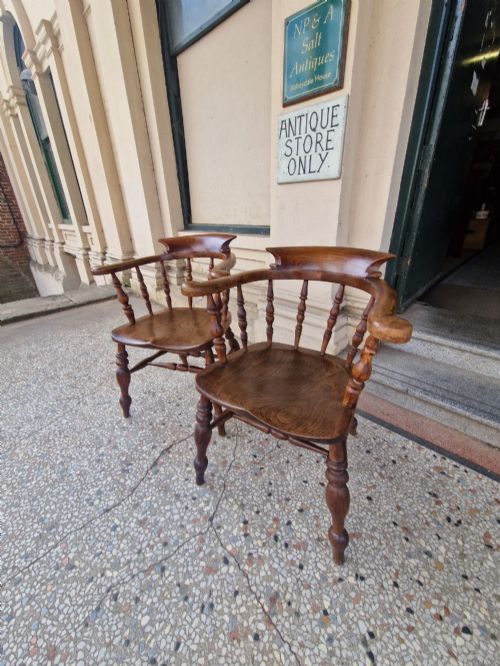
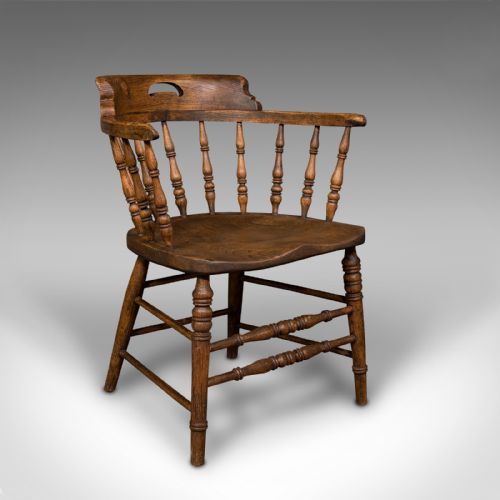
Ash smokers bow armchairs are robust vernacular seats designed for everyday use, appearing primarily in Victorian country styles. These pieces function as low-back Windsor variants, often known locally as captain's chairs or elbow chairs. You will most frequently encounter them as single armchairs or matched pairs originating from the nineteenth century.
The form combines a continuous bentwood arm bow supported by spindles above a moulded saddle seat. Turned legs and understated stretchers provide a stable foundation suited to both farmhouse and study settings. The aesthetic remains resolutely functional, reflecting the practical demands of nineteenth-century domestic and public interiors.
How they were made
Construction relies on a combination of native timbers, predominantly ash for the framing and bent bows, paired with elm for the solid sculpted seats. Turners shaped the spindles and legs on lathes, while steam-bending allowed craftsmen to form the continuous arm bow from a single piece of ash. Additional wood species such as beech and alder appear in structural or secondary components.
Traditional joinery methods, including wedged tenons and through-joints, secure the uprights directly into the heavy wooden seat slabs. This method of building ensures the framework absorbs daily stress without loosening. Makers relied on straightforward woodcraft rather than ornate decoration to achieve structural longevity.
Ash Smokers Bow Retail Price Guide 2026
Typical asking prices for ash smokers bow among the pieces listed under this phrase on Sellingantiques today, from the lower quarter to the upper quarter. They describe what is for sale here now, not the wider market.
Many a nineteenth-century smoker's bow carries the deep, polished elbow-grooves left by generations of resting squires and scholars.
What varies in quality
Proportion and the integrity of the original timber define the upper tier of these chairs. Better examples retain their original turning marks and have not suffered from heavy sanding or replacement components. The harmony between the bentwood bow and the supporting spindles separates utilitarian seating from finer vernacular cabinetwork.
The Ash Smokers Bow Glossary
- Smoker's bow
- A low-backed Windsor armchair featuring a continuous bentwood arm rail supported by turned spindles. This form became popular in nineteenth-century parlours and inns.
- Saddle seat
- A wooden seat base carved into a concave shape to mimic the contours of a saddle. This technique provides comfort without requiring upholstery.
- Comb back
- A chair design where the vertical spindles extend above the top rail to form a small crest resembling a comb. It offers additional upper back support.
- Windsor chair
- A chair built with a heavy solid wooden seat into which the legs and back spindles are separately bored and wedged. These pieces rely on stick-furniture construction techniques.
Ash Smokers Bow: Frequently Asked Questions
What is an ash smokers bow?
An ash smokers bow is a traditional nineteenth-century armchair featuring a low, steam-bent wooden back rail and a sculpted seat. These sturdy seats were widely used in farmhouses and public houses for everyday lounging.
They combine the construction principles of Windsor chairs with a lower profile designed to fit easily under tables or beside firesides.
How do I care for my chair?
Keep your ash and elm chair away from direct heat sources and sudden temperature shifts to prevent the timber from splitting. Regular applications of microcrystalline wax help nourish the dry wood and maintain a natural sheen.
Avoid using modern silicone-based polishes, which can build up on the surface and dull the grain over time.
Are these chairs comfortable to sit in?
The deeply hollowed wooden seats and curved back rails offer surprisingly ergonomic support for upright sitting. While they lack soft upholstery, their design distributes weight evenly across the solid timber.
Many owners add a small loose cushion for extended seating periods without altering the chair's historic appearance.
How can I date a Victorian piece?
Dating relies on observing tool marks, timber selection, and the specific turning patterns used on the legs and spindles. Nineteenth-century examples often display subtle hand-planing marks on the underside of the elm seat.
Comparing the wear patterns and the method of wedging the leg tenons through the seat also provides clues to the era of manufacture.