


Arts and Crafts Wall Art
These arts and crafts wall art pieces bring honest handwork and metal craft into domestic rooms, combining utility with distinct period design.
Arts and Crafts Wall Art
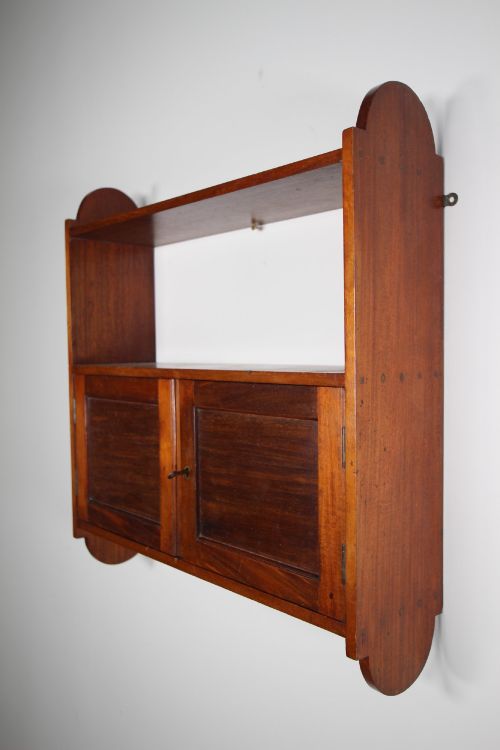
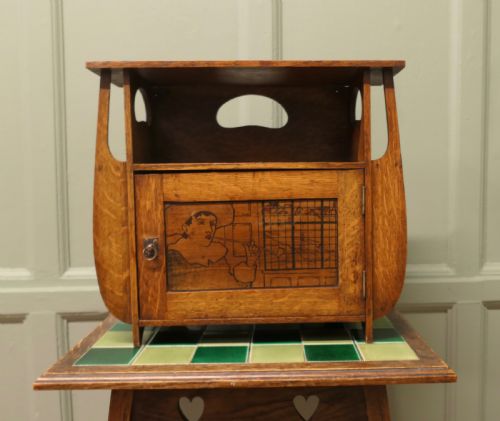
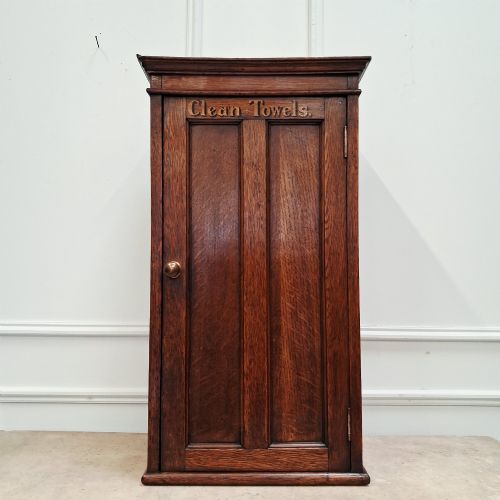
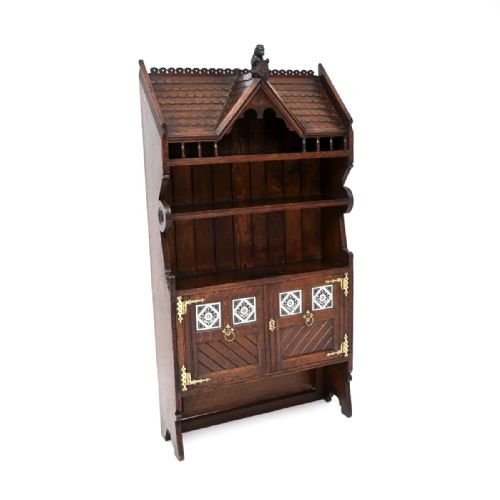
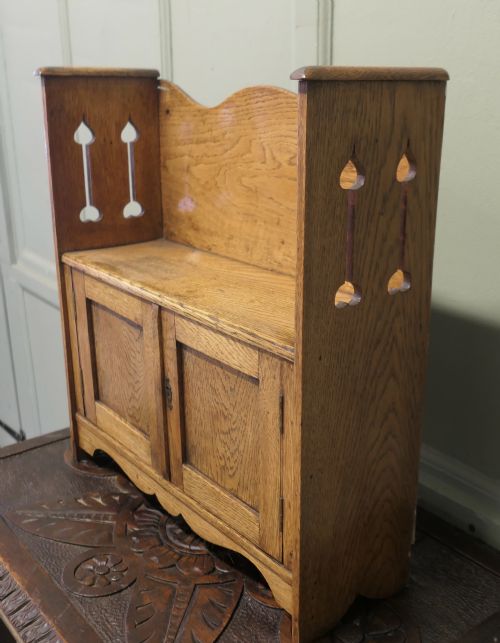
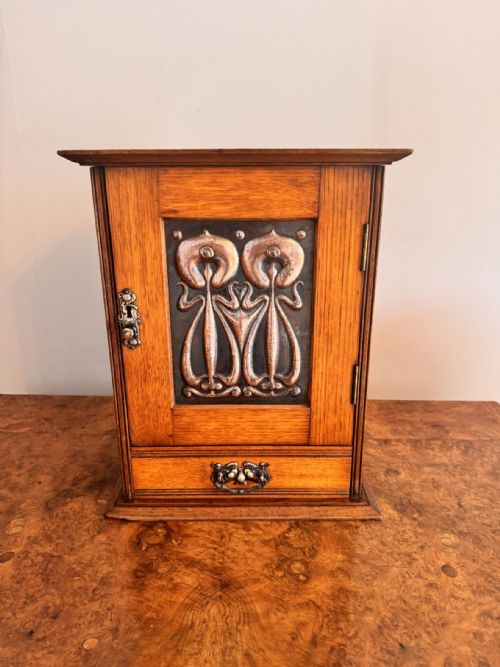
When hunting for arts and crafts wall art, buyers encounter items created to furnish domestic interiors with functional objects that display visible handwork. The selection spans utilitarian forms designed for hanging, such as oak wall cabinets, small cupboards, and shelving units with integrated magazine racks.
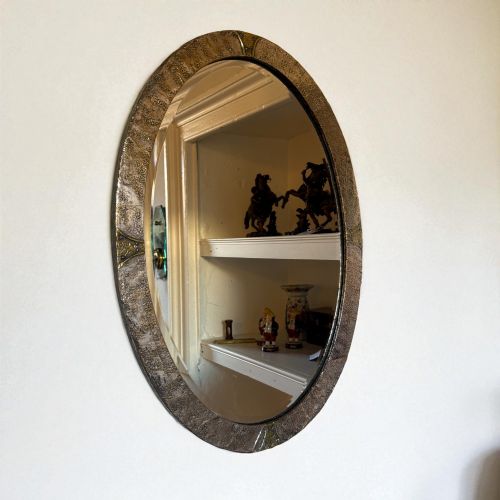
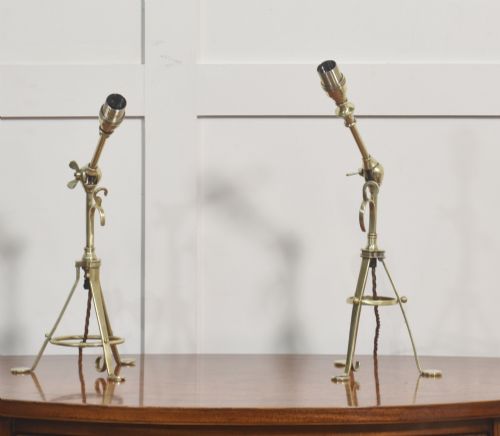
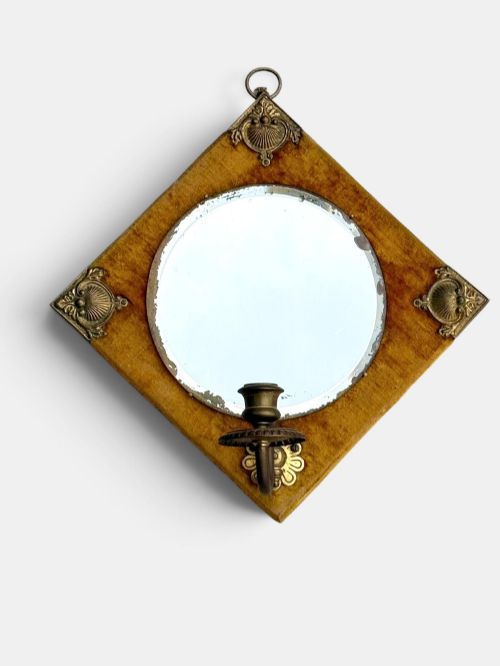
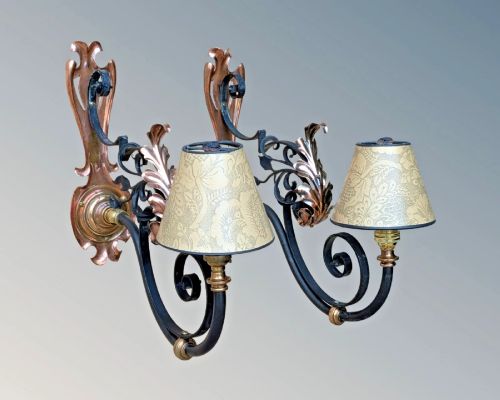
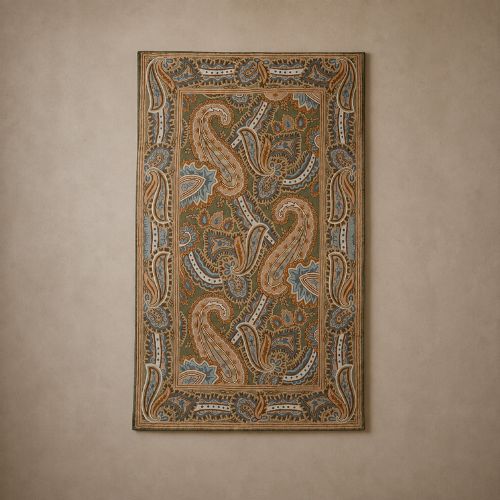
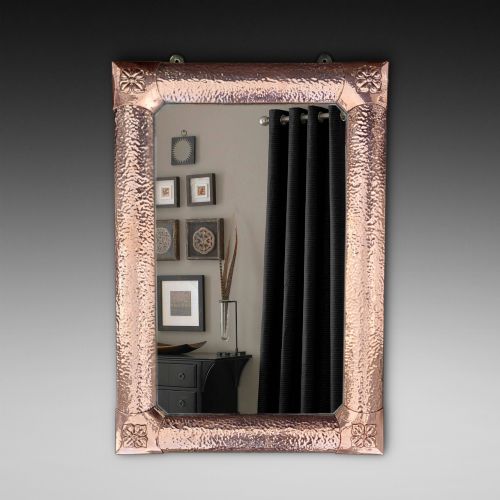
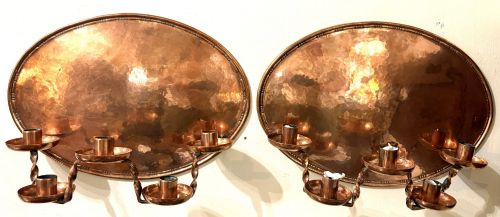
Mirrors form a substantial portion of the available material, featuring frames beaten from copper or brass, sometimes accented with Celtic knot motifs or mounted on velvet. Lighting pieces, including wrought iron sconces and adjustable brass wall lights, sit alongside ceramic wall pockets, framed tiles, and textile panel wall hangings.
The period scope covers items originating from the late nineteenth century through to the 1930s, encompassing Edwardian examples alongside Victorian pieces. Styles overlap with the Aesthetic Movement and Art Nouveau, while materials lean heavily towards golden oak, walnut, copper, and brass.
Materials and Construction
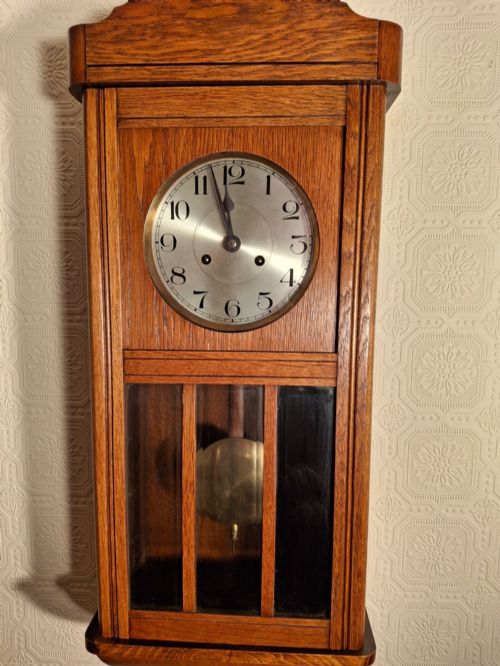
Woodwork relies on solid timbers like oak and walnut, shaped into hanging cupboards, key cabinets, and clock cases using traditional joinery methods. Carving, pokerwork, and simple panel construction dominate the wooden pieces, emphasising the natural grain of the material.
Metalwork relies on copper and brass sheets beaten by hand, producing textured surfaces with visible hammer marks that define the aesthetic of mirrors, sconces, and plaque frames. Wrought iron provides structural support for lighting fixtures and wall lights, often paired with softer metals for contrast.
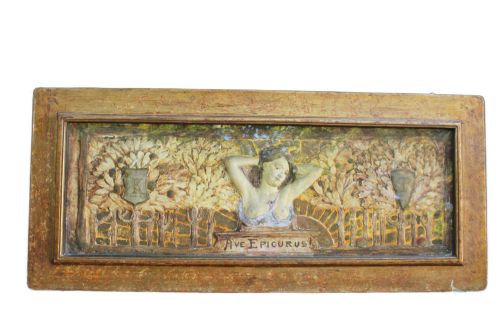
Surface decoration extends to polychrome plaster reliefs, ceramic tiles depicting animal subjects, and embroidered textile panels executed in crewelwork. Glass appears primarily in mirror plates and clock dials, housed securely within metal or wooden surrounds.
Arts and Crafts Wall Art Retail Price Guide 2026
Typical asking prices for arts and crafts wall art among the pieces listed under this phrase on Sellingantiques today, from the lower quarter to the upper quarter. They describe what is for sale here now, not the wider market.
A dragon and dolphin mirror watches over the collection, proving that Edwardian makers possessed a wonderfully theatrical imagination.
Assessing Quality
Quality rests upon the crispness of the hand-beating on copper and brass elements, where deeply worked surfaces and well-defined motifs demonstrate superior artisan skill. Stamped or cast metal lacks the individual character found in pieces shaped entirely by hand.
In wooden items, the depth of carved detail and the integrity of the timber selection distinguish standard production from finer examples attributed to known workshops or designers. Well-chosen oak and walnut with sympathetic patination elevate the status of a hanging cabinet or wall shelf.
The integration of decorative elements, such as applied ceramic tiles, enamel accents, or specialised clock movements, determines the overall sophistication of the piece. Balanced proportions and thoughtful placement of metal mounts separate simpler items from more ambitious decorative works.
John Moyr Smith·W.A.S. Benson·Liberty and Co·Lauder Pottery Barnstaple·Sherwin and Cotton·Arthur Simpson·Heals
The Arts and Crafts Wall Art Glossary
- Pokerwork
- The technique of decorating wood by burning designs into the surface with heated metal points. This method creates dark, contrasting lines often seen on period wall cupboards.
- Crewelwork
- A type of embroidery using wool yarn to create textured designs on fabric grounds. Large textile panels utilise this stitchery for pictorial wall hangings.
- Overmantel
- A large mirror or decorative framework designed to hang on the wall directly above a fireplace mantelpiece. These often incorporate Moorish styling or extensive woodwork.
- Wall Pocket
- A small ceramic or metal vessel hung flat against a wall to hold flowers or small items. Barnstaple potteries produced notable examples of these functional wall pieces.
- Repoussé
- A metalworking technique where the artisan hammers the design from the reverse side to form a raised relief on the front. This process creates the characteristic texture of arts and crafts mirror frames.
Arts and Crafts Wall Art: Frequently Asked Questions
How do I hang heavy copper mirrors?
Heavy copper and brass mirrors require secure fixings anchored directly into wall studs or masonry using appropriate wall plugs. Ensure the hanging wire or integrated brackets match the substantial weight of the wooden backing boards.
Distribute the load evenly across two fixing points rather than a single central hook to maintain stability and protect the frame over time.
Where should I place wall cabinets?
Small wall cabinets and key cupboards suit entrance hallways, kitchens, or studies where counter space is limited and secure storage is useful. Hang them at eye level to appreciate the joinery, carved details, or metal hinges.
Keep wooden cabinets away from direct heat sources and damp areas to preserve the integrity of the oak or walnut timbers and prevent warping.
How do I clean hammered copper?
Dust hammered copper frames gently with a soft, dry cloth to remove surface particles without disturbing the patination. Avoid harsh chemical polishes that strip away the aged character accumulated over decades.
Preserve the original finish by applying a microcrystalline wax sparingly if the metal requires protection against atmospheric moisture.
Can I convert old wall lights?
Period wall lights and sconces designed for gas or early electricity need professional rewiring to meet current safety standards. A qualified electrician can adapt internal fittings while retaining the original brass or wrought iron exterior.
Check that the mounting brackets remain structurally sound before installing electrified fixtures onto plaster or wood panel walls.
How do I identify Edwardian pieces?
Edwardian items dating from around nineteen hundred often combine traditional oak structures with lighter decorative motifs like beaten copper mounts or floral inlays. Construction techniques show a transition between heavy Victorian proportions and more streamlined arts and crafts aesthetics.
Examine the backboards, fixings, and screws for period manufacturing traits that help distinguish items made before the First World War.