


Arts and Crafts Silver Spoon
These arts and crafts silver spoon examples bring tactile weight and honest metalwork to the table.
Arts and Crafts Silver Spoon
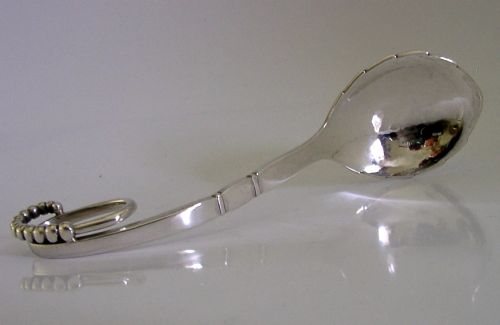
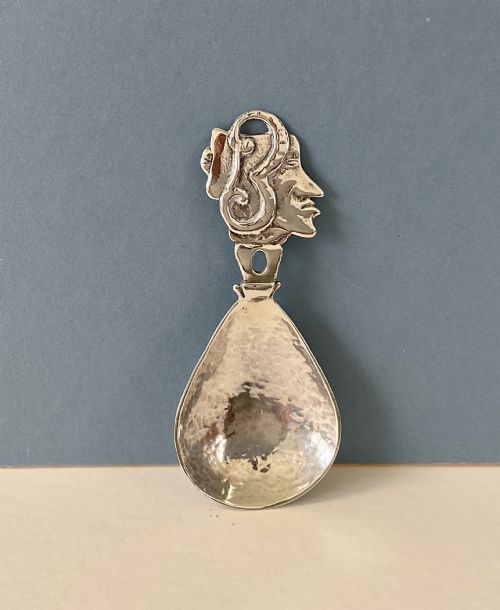
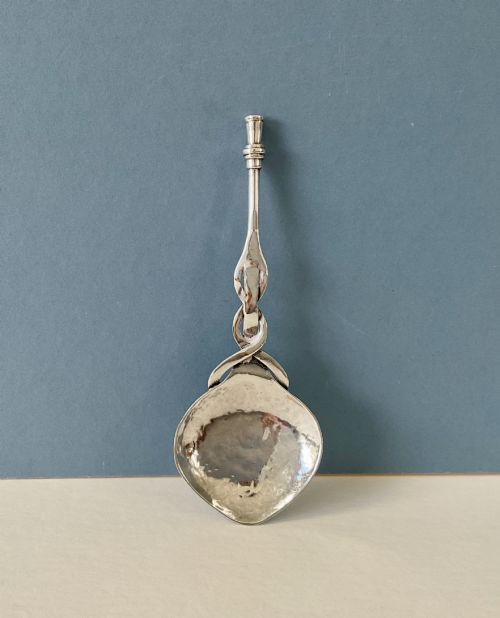
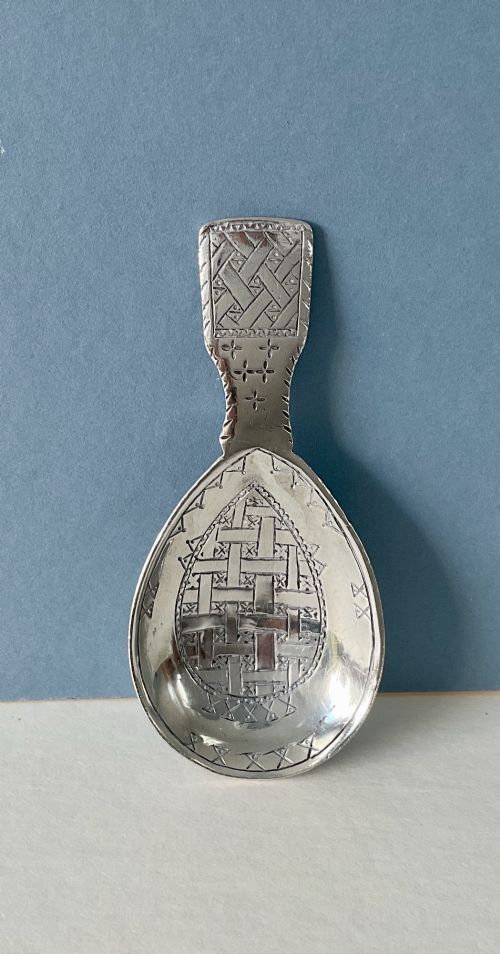
When you search for arts and crafts silver spoon items, you encounter functional tableware rooted in early twentieth-century design. The selection spans standard tea spoons, dedicated caddy spoons, sifter spoons, and mustard pots alongside boxed sets.
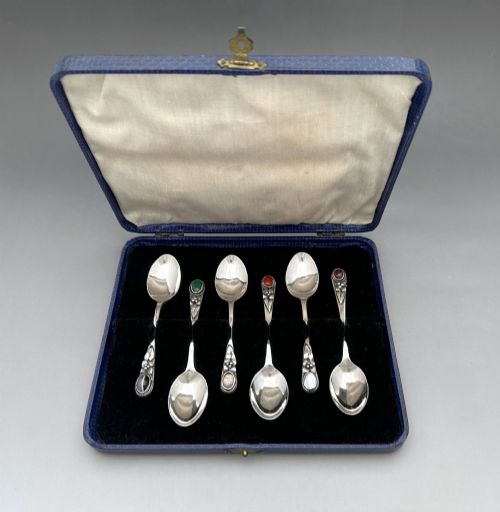
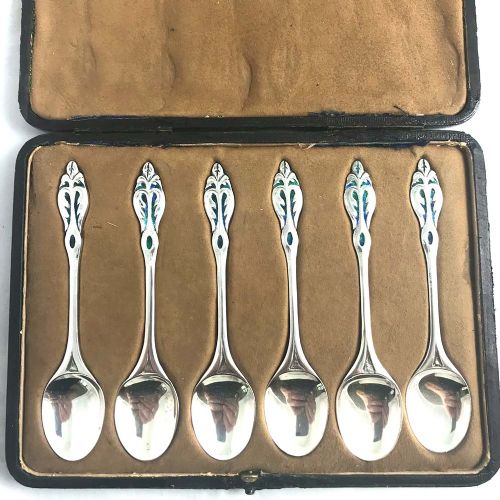
Caddy spoons and individual tea accessories appear frequently alongside boxed sets of coffee and demi-tasse spoons. Pieces range from British workshops to Danish production and Australian hand-made items.
The objects date primarily from the Edwardian era through the mid-twentieth century, capturing a period of strong individual maker identity. Buyers find both simple utilitarian forms and decorative pieces set with stones or enamel.
Materials and technique
Makers utilised sterling silver and solid silver, frequently applying hammer marks known as planishing to show the hand of the maker. Surface treatments include silver gilt finishes to add warmth and contrast.
Many examples incorporate decorative embellishments such as enamel, cobalt glass inserts, agate, and other semi-precious stones. These materials are set directly into the metalwork to accentuate the form of the spoon.
Listings feature sterling silver alongside materials such as agate, velvet, silk, silver gilt, cobalt glass, and enamel.
Judging quality in metalwork
Weight, balance, and the integration of decorative elements dictate the standing of an individual spoon. Stronger examples display deliberate proportion and careful finishing rather than generic mass production.
Georg Jensen·Liberty·Oliver Barker·Amy Sandheim·Omar Ramsden·Archibald Knox·Plucknett·Henry George Murphy·Falcon Studio·Linton·Sandheim Bros
The Arts and Crafts Silver Spoon Glossary
- Planishing
- A smithing technique using a flat-faced hammer to smooth metal while leaving subtle, rhythmic facets across the surface. This process hardens the silver and records the physical labour of creation.
- Caddy spoon
- A short-handled spoon specifically designed for measuring loose tea leaves from a caddy into a pot. These often feature decorative bowls and handles suited to display.
- Sifter spoon
- A utensil with a pierced or perforated bowl intended for dusting sugar over food or drink. The piercing patterns form part of the decorative scheme.
- Silver gilt
- Silver that has been coated with a thin layer of gold, providing a rich yellow tone over the white metal. This technique highlights engraved details and inner bowl surfaces.
- Demi-tasse
- A small coffee cup, which dictates the diminutive scale of the accompanying spoons found in fitted boxed sets. These smaller utensils often match in sets of six.
Arts and Crafts Silver Spoon: Frequently Asked Questions
What is an arts and crafts silver spoon?
It is a hand-wrought utensil produced during the design movement that prioritized traditional craftsmanship over industrial manufacturing. These items include tea spoons, caddy spoons, and mustard pots.
They reflect an ethos of honest construction, often featuring visible hammer marks, organic motifs, and hand-set stones.
How do I identify a caddy spoon?
A caddy spoon has a short handle and a wide bowl designed to scoop loose tea leaves. They frequently appear with distinctive hammered textures or decorative terminals.
Their compact size made them popular canvases for experimental design within the movement.
Are these spoons made by hand?
Many examples show evidence of manual shaping, such as planished surfaces created by a hammer. Workshops employed skilled artisans rather than relying solely on automated presses.
This approach means individual items display subtle variations in weight and form.
What materials are used besides silver?
Makers incorporated enamel, cobalt glass, agate, and various semi-precious stones into the metalwork. Silver gilt finishes also appear to provide colour contrast.
These elements complement the metal rather than obscuring its structural form.
How should I care for antique silver spoons?
Store them carefully in dry conditions, avoiding harsh chemical dips that strip the character from hand-finished surfaces. Gentle washing in warm soapy water suffices for cleaning.
Natural tarnish develops over time and is generally preferred by collectors over aggressive polishing.