



Arts and Crafts Silver Bowl
An arts and crafts silver bowl brings tactile honesty to a table, combining hand-hammered metalwork with the distinct philosophies of the early twentieth century.
Arts and Crafts Silver Bowl
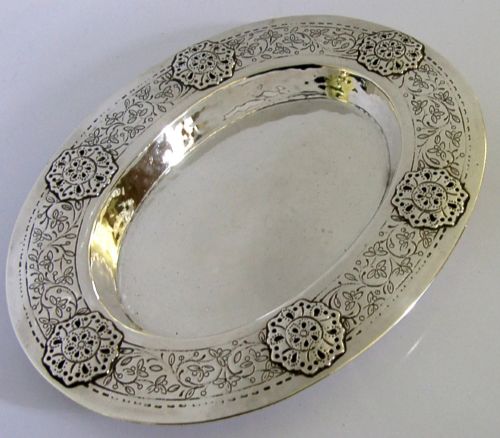
When you search for an arts and crafts silver bowl, you encounter domestic vessels shaped by the design reforms of the late nineteenth and early twentieth centuries. These pieces encompass sterling silver, pewter, and silver plate, often taking the form of tazzas, quaichs, chalices, and simple dishes.
The versions most common on this page stem from the prolific workshops of Liberty and Co alongside independent silversmiths working between the eighteen-eighties and the nineteen-sixties. Form follows function closely here, prioritising straightforward utility and visible signs of manual construction over excessive factory polish.
Many items display traditional domestic uses, serving as sugar bowls, sweetmeat dishes, or centrepiece fruit vessels. Their origins stretch from Birmingham and London to Edinburgh, capturing regional variations in British metalworking.
Materials and construction methods
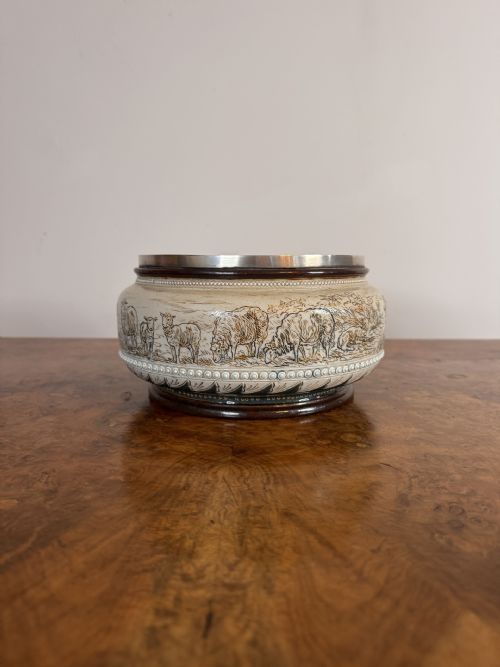
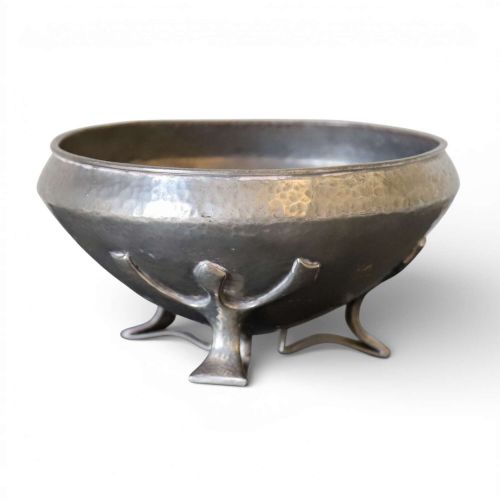
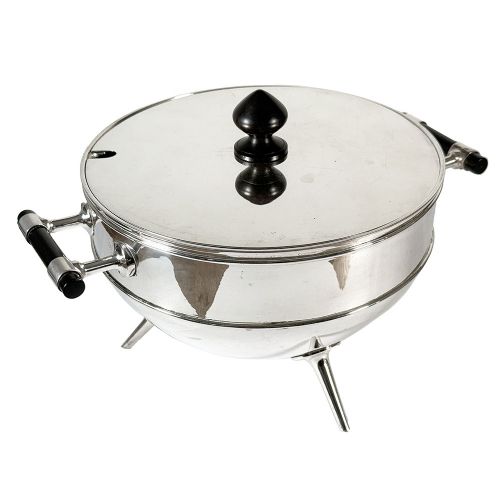
Makers shaped these bowls primarily from sterling silver or pewter, sometimes pairing the metal with contrasting elements like ebonised wood, cane, ceramic, or stoneware. Craftsmen utilised sheet metal, hammering it by hand over stakes to raise the vessel walls.
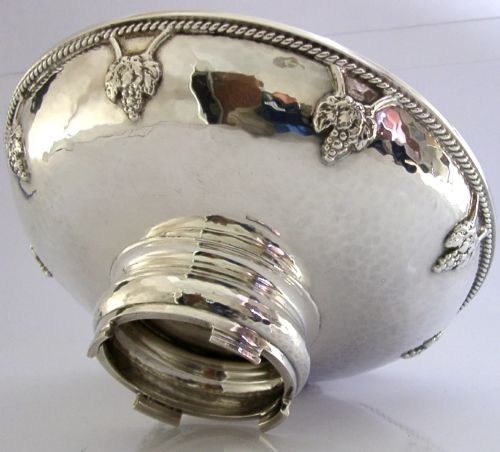
This technique leaves intentional surface marks that record the intervention of the smith's hammer rather than concealing them beneath a uniform machine finish. Rivets, cast handles, and applied wirework frequently accent the rims and bases, rooting the aesthetic in visible craftsmanship.
Arts and Crafts Silver Bowl Retail Price Guide 2026
Typical asking prices for arts and crafts silver bowl among the pieces listed under this phrase on Sellingantiques today, from the lower quarter to the upper quarter. They describe what is for sale here now, not the wider market.
Object forms include traditional quaichs, chalices, tazzas, and salad bowls produced by prominent retail houses and independent silversmiths alike.
Judging the quality of a bowl
Quality rests in the balance of the form and the discipline of the hand-hammering across the surface. A superior bowl shows rhythmic, controlled planishing marks rather than erratic dents, possessing a satisfying weight and rigidity in the metal.
Pieces bearing clear maker marks and town hallmarks from established workshops command greater interest than unmarked equivalents. The integrity of the design, particularly in handles, feet, and applied floral motifs, distinguishes ambitious studio pieces from standard commercial output.
R E Stone·A E Jones·Goldsmiths and Silversmiths Company·Liberty and Co·Nathan and Hayes·Hukin and Heath·Doulton Lambeth·Roberts and Belk·John Barrett·Archibald Knox·Oliver Baker·Frank Butler
The Arts and Crafts Silver Bowl Glossary
- Planishing
- The process of smoothing and shaping sheet metal using a flat-faced hammer. This technique hardens the metal while leaving a distinctive, faceted texture across the bowl.
- Quaich
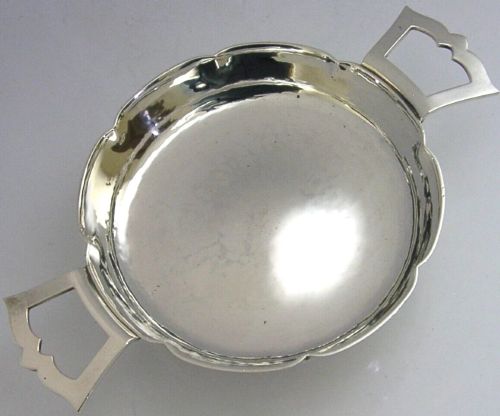
- A traditional Scottish two-handled drinking vessel adapted during the period into shallow bowls and dishes. They retain symmetrical, flat lugs or handles on opposite sides.
- Tazza
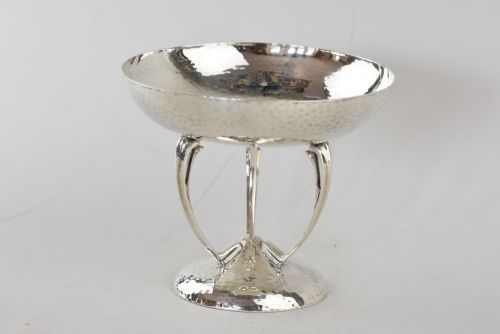
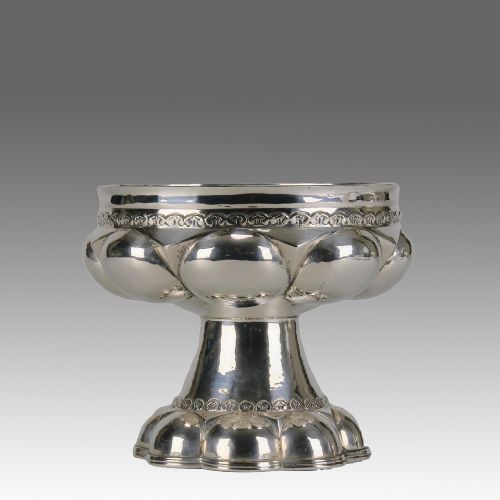
- A shallow ornamental bowl raised upon a high foot or pedestal. Silversmiths used this form to display fruit or sweetmeats on dining tables.
- Tudric
- The trade name used by Liberty and Co for their range of pewterware. These items often incorporated designs by notable figures associated with the firm.
- Pewter
- An alloy consisting primarily of tin mixed with copper and antimony. It provided an accessible material for expressive domestic metalwork during the movement.
Arts and Crafts Silver Bowl: Frequently Asked Questions
What is an arts and crafts silver bowl used for?
These vessels served various domestic functions ranging from holding sugar cubes and sweetmeats to presenting fruit or acting as decorative table centerpieces.
Today, owners utilise them in much the same way, placing them on sideboards or coffee tables to hold small everyday items or simply to display the metalwork.
How do I identify a Liberty and Co bowl?
Liberty items typically bear specific stamped marks or model numbers associated with their Tudric pewter or sterling silver lines. Look for the company name alongside registry numbers or individual designer attribution.
The aesthetic often relies on organic motifs like clover flowers, alongside distinctive handles and sturdy proportions characteristic of the firm's output.
What is the difference between silver and pewter bowls?
Sterling silver bowls contain a high legal standard of pure silver combined with copper for durability, whereas pewter is a tin-based alloy. Silver offers a bright, reflective finish and carries official hallmarks indicating the assay office and date.
Pewter bowls possess a softer, deeper grey lustre and were produced as an accessible alternative that still embraced artistic design principles.
How should I clean my antique silver bowl?
Wash the piece gently in warm water with a mild, non-abrasive soap using a soft cloth. Avoid harsh chemical dips that strip away the natural patination built up over decades.
Dry the metal thoroughly with a soft towel to prevent water spots, and polish only lightly when necessary to preserve the original hammer marks.