

Arts and Crafts Oak Writing Desk
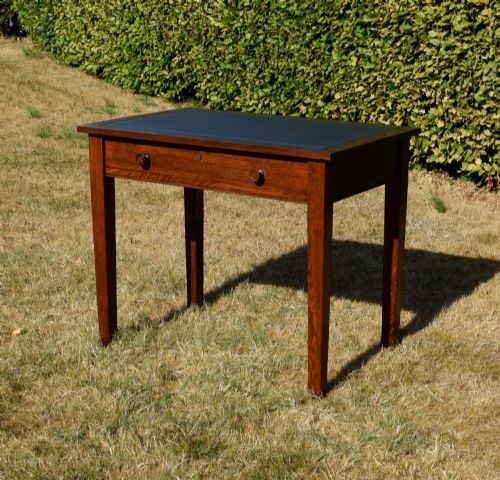
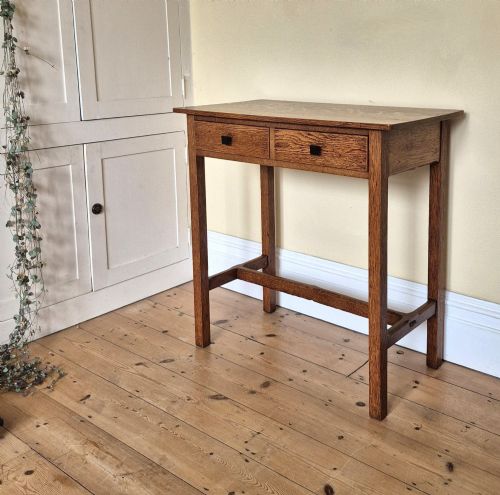
These arts and crafts oak writing desk pieces bring honest timber and functional design straight to your workspace.
Arts and Crafts Oak Writing Desk
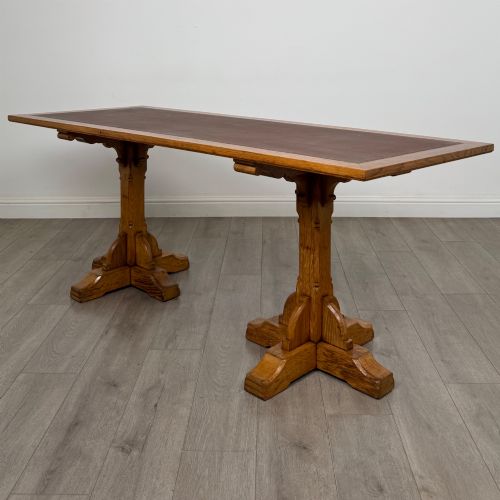
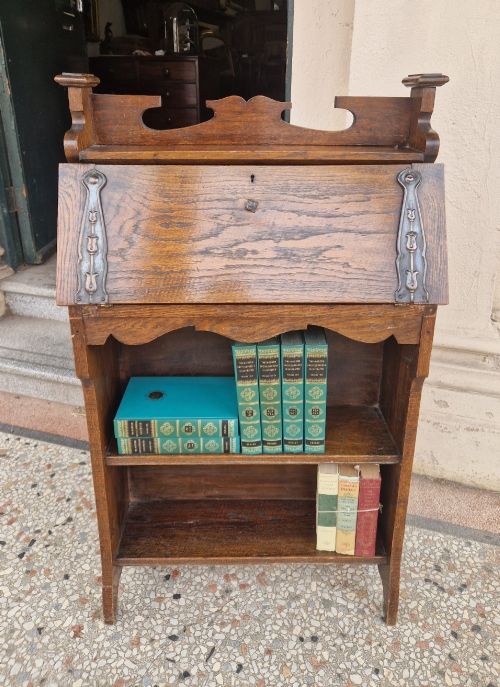
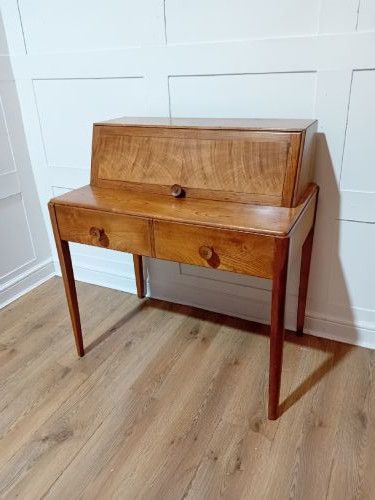
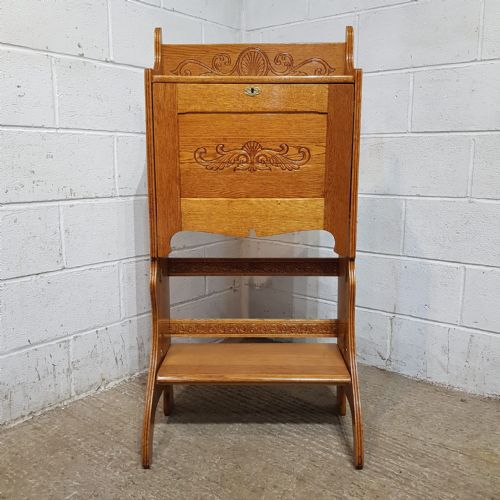
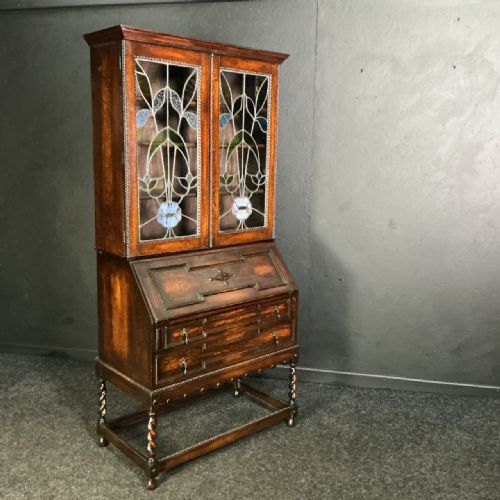
An arts and crafts oak writing desk unites utilitarian form with honest construction, emerging predominantly across the late Victorian, Edwardian, and early twentieth-century periods. These pieces span straightforward writing tables and substantial library desks to fitted bureaux, bureau bookcases, and side cupboards.
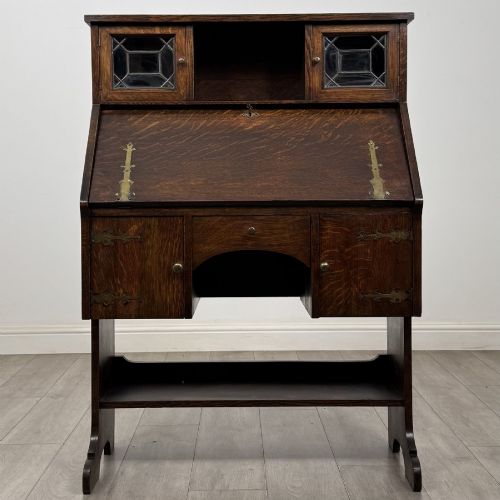
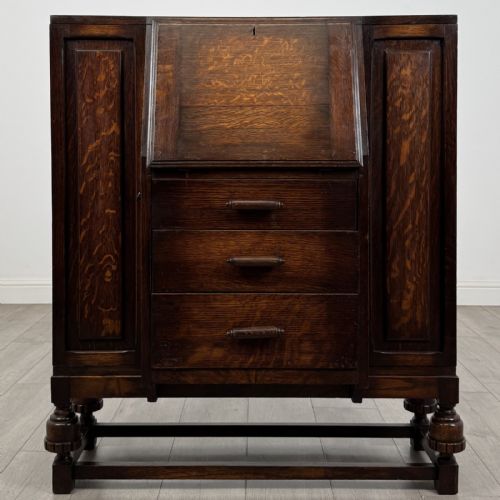
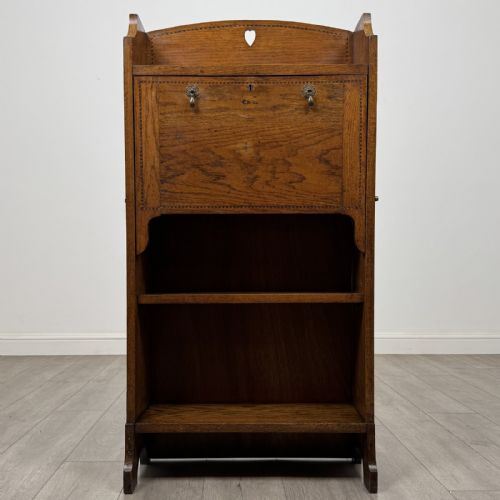
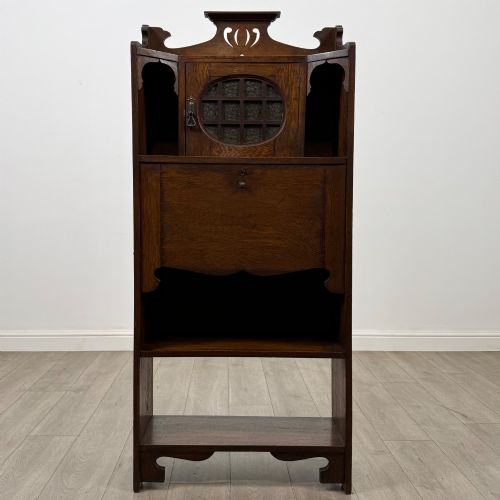
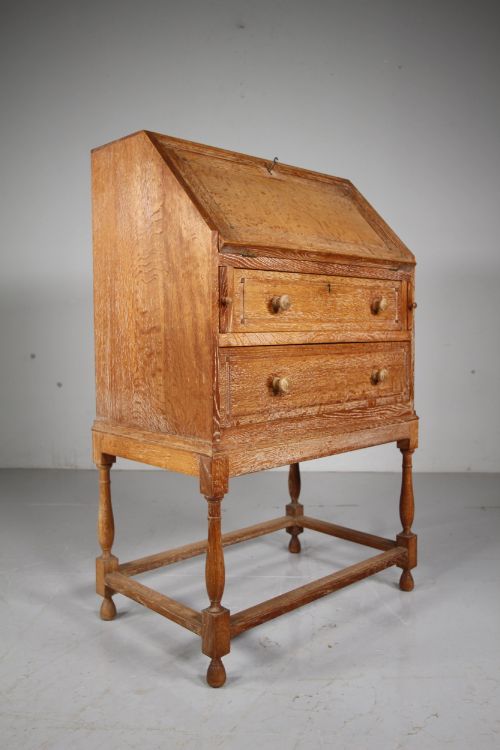
The version most commonly met on this page is the Edwardian or nineteen-hundreds bureau, often featuring drop fronts, internal pigeonholes, and occasional glazed cabinets or raised galleries. Makers and workshops of the movement favoured sturdy timber forms designed for daily utility alongside decorative craftsmanship.
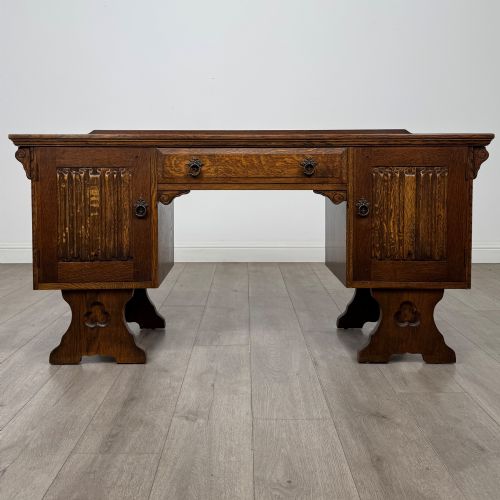
Originating from British workshops and prominent retailers, these desks adapt well to modern studies while retaining the distinctive styles of the era, including Tudor, Gothic, and Jacobean revivals.
How they were made
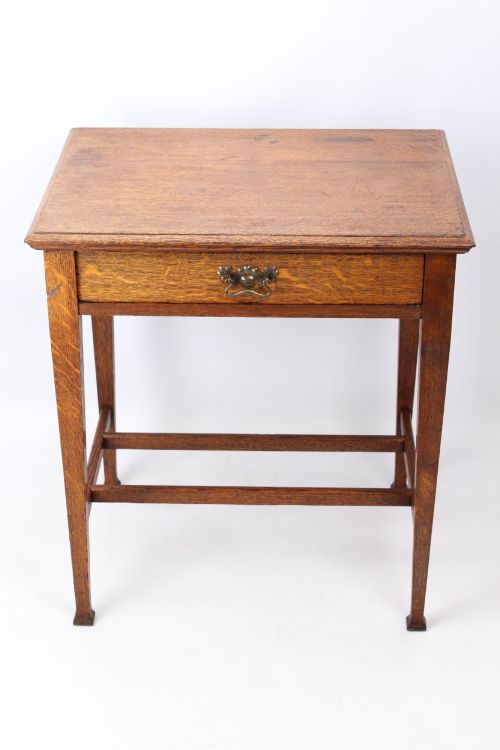
Makers constructed these desks primarily from solid oak and golden quartered oak, utilising the natural grain of the timber as the main decorative element. Joinery relied on traditional methods, ensuring structural rigidity without relying on excessive applied ornamentation.
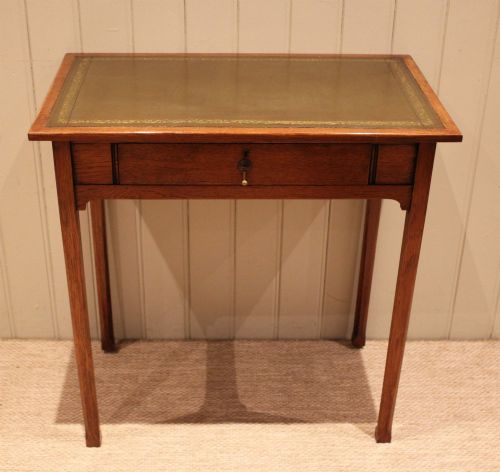
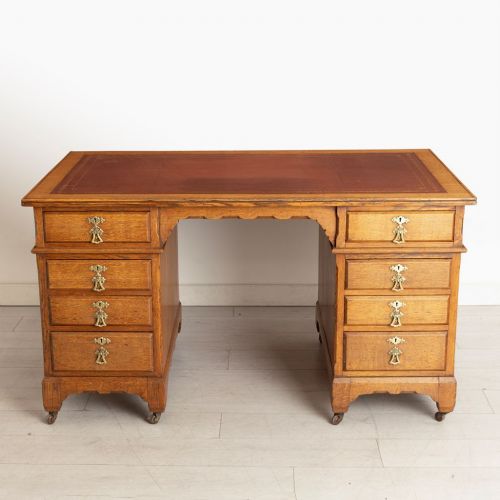
Working alongside the timber, craftsmen integrated brass hardware, copper details, iron fastenings, leaded glass, and leather writing surfaces. This combination of materials provided both functional durability and the characteristic aesthetic of the movement.
Arts and Crafts Oak Writing Desk Retail Price Guide 2026
Typical asking prices for arts and crafts oak writing desk among the pieces listed under this phrase on Sellingantiques today, from the lower quarter to the upper quarter. They describe what is for sale here now, not the wider market.
Listings feature oak combined with brass, copper, iron, glass, and leather across Arts and Crafts, Edwardian, and revival styles.
What varies in quality
Quality in these pieces rests upon the integrity of the timber selection and the precision of the construction. Pieces utilising quartered oak with thoughtful grain matching sit at the upper end of the range, showing careful attention from workshop makers.
Hardware choice and internal execution separate standard production from finer output. Well-fitted bureau interiors, substantial brass or copper handles, and integrated leather inserts distinguish the more accomplished works from simpler utilitarian items.
Heals·Arthur Basil Reynolds·Stanley Webb Davies·Bryn Mawr·Hubert Simpson·Heal And Sons·James Shoolbred·Simpsons of Kendall·Morris And Co·George W Jack·Robert Mouseman Thompson·Ercol·Harris Lebus·Liberty of London
The Arts and Crafts Oak Writing Desk Glossary
- Bureau
- A writing desk featuring a sloping hinged flap that drops down to form a writing surface over a series of drawers. Inside, small compartments and pigeonholes organise correspondence.
- Bureau Bookcase
- A taller composite furniture form combining a writing bureau base with enclosed shelving or glazed cabinets above. It stores books alongside writing materials.
- Linenfold
- A carved wood panel motif resembling folded vertical sheets of parchment or linen, frequently seen on Edwardian and revival furniture doors.
- Quartered Oak
- Timber sawn radially from the log, producing distinctive growth rays and flecks across the surface. This cut provides enhanced stability and a prized decorative appearance.
- Raised Gallery
- A low decorative superstructure fitted along the rear edge of a desk top, often incorporating small shelves or pigeonholes.
Arts and Crafts Oak Writing Desk: Frequently Asked Questions
What is an arts and crafts oak writing desk?
These pieces are solid timber workspaces created during the late Victorian and early twentieth-century periods, focusing on honest construction and utility.
They range from simple writing tables to complex fitted bureaux with bookcases and leaded glass cabinets.
How do I date an oak writing desk?
Dating relies on examining the construction methods, hardware materials, and stylistic cues such as linenfold carving or Arts and Crafts movement traits.
Most examples on this page span the period from the eighteen-eighties through to the nineteen-forties.
How were these desks used originally?
They served as practical writing and administrative spaces in homes, schools, and town halls for correspondence and record keeping.
Fitted interiors with pigeonholes and drop fronts kept stationery organised and secure when not in use.
How do I care for an oak desk?
Maintain the timber by keeping it away from direct heat sources and sudden humidity changes to prevent movement in the solid oak.
Apply suitable beeswax periodically to nourish the grain and protect leather writing inserts from drying out.