

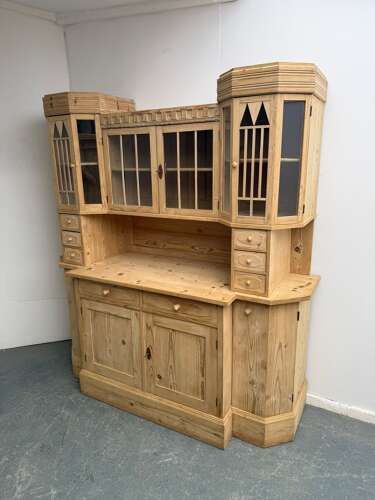


Arts and Crafts Hutch
These arts and crafts hutch examples bring honest timber construction and useful storage into everyday rooms.
Arts and Crafts Hutch
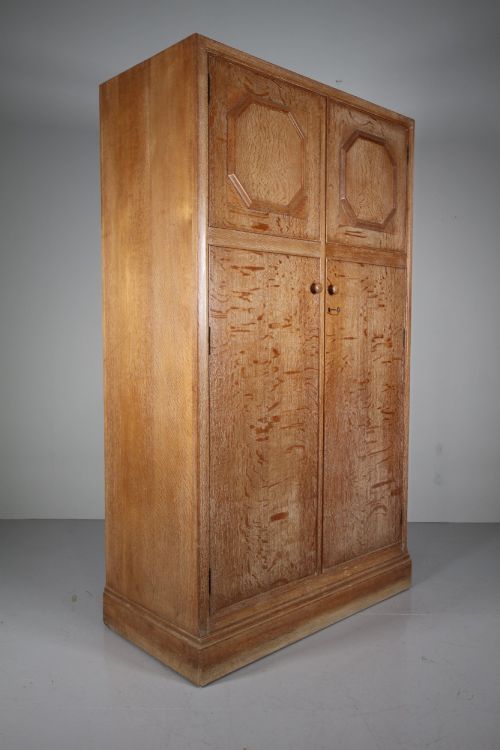
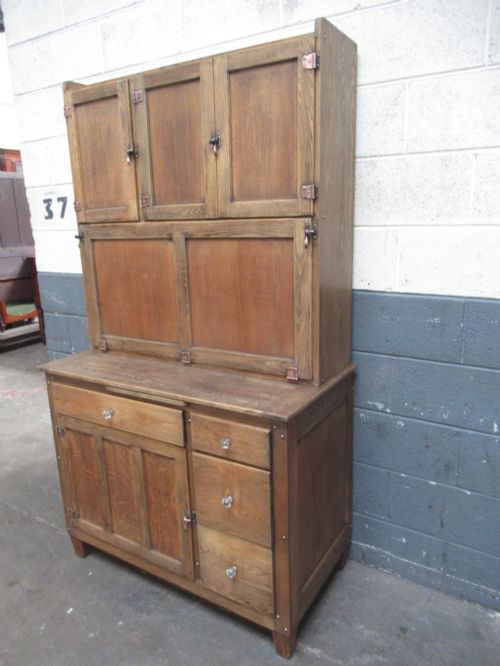
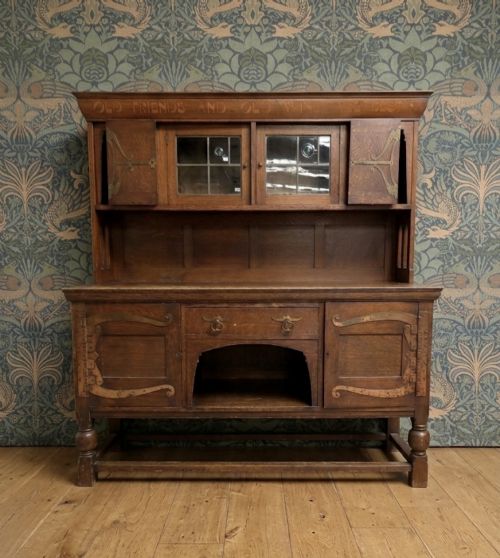
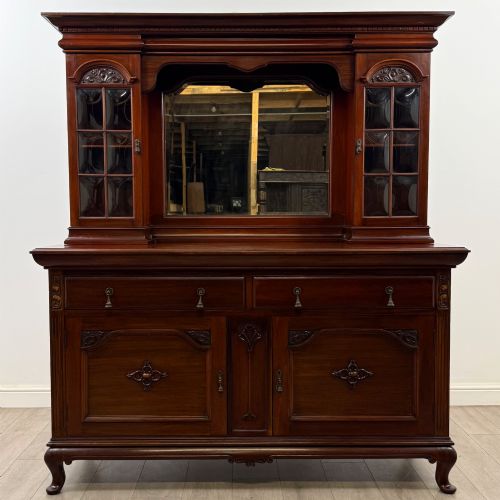
An arts and crafts hutch combines functional storage with the solid craftsmanship characteristic of the movement. These pieces primarily manifest as sideboards, kitchen dressers, and bureaus across this page.
Makers often built these items from sturdy timbers like oak and pine, frequently incorporating glazed or leaded glass doors. The designs span from the late nineteenth century into the Edwardian era and the nineteen-twenties.
Buyers will encounter variations including sideboards with mirrored glass, two-piece kitchen dressers, and labelled writing bureaus. Oak remains the predominant material seen across these forms.
Materials and construction methods
Makers relied heavily on solid oak and pine for the primary structures of these cabinets and dressers. Timber surfaces were often left to a natural wax finish or adapted for paint.
Hardware and functional details utilised brass and iron, adding strength and utilitarian charm. Glass elements took the form of plain glazed panels or decorative leaded glass doors.
Arts and Crafts Hutch Retail Price Guide 2026
Typical asking prices for arts and crafts hutch among the pieces listed under this phrase on Sellingantiques today, from the lower quarter to the upper quarter. They describe what is for sale here now, not the wider market.
Listings feature items constructed from oak, pine, mahogany, brass, iron, and glass across the nineteenth and early twentieth centuries.
Assessing quality in construction and design
Quality rests in the selection of timber and the integrity of the joinery rather than surface embellishment. Pieces bearing maker labels or specific workshop attributions command greater attention from buyers.
The refinement of the hardware, the clarity of the glass, and the balance of proportions distinguish standard utility furniture from finer workshop pieces.
Heals·Ambrose Heal for Heal and Son·Shapland and Petter
The Arts and Crafts Hutch Glossary
- Hutch
- A cabinet or upright storage piece featuring shelves or enclosed cupboards. These items often combine a lower sideboard base with upper display space.
- Leaded glass
- Small panes of glass held together by strips of lead to form geometric or floral patterns. This technique is typical of cabinets from the period.
- Sideboard
- A dining room piece designed for serving food and storing tableware. Examples often include drawers positioned above panelled cupboards.
- Bureau
- A desk fitted with a sloping writing flap that folds down for use. Interior compartments usually provide pigeonholes and small drawers for letters.
Arts and Crafts Hutch: Frequently Asked Questions
What defines an arts and crafts hutch?
These pieces are practical storage items built from solid timbers with an emphasis on honest construction rather than excessive ornamentation. They typically appear as sideboards, dressers, or bureaus.
Craftsmen prioritized utility and straightforward forms, often utilising oak or pine alongside simple metal hardware and glass doors.
How do I care for wooden surfaces?
Maintain the timber by applying natural wax periodically to nourish the grain and protect against dryness. Avoid placing furniture in direct sunlight or near heat sources.
Dust regularly with a soft dry cloth and clean glass panels using standard non-abrasive window solutions.
Where were these pieces used?
Kitchens and dining rooms served as the primary locations for dressers and sideboards to store dishware and provisions. Bureaus found their place in studies or living spaces for correspondence.
Their robust nature suited active domestic environments where dependable daily storage mattered most.
How do I date a piece?
Examine the materials, construction marks, and structural styles to determine the period of origin. Pieces range from the nineteenth century through the Edwardian era and into the nineteen-twenties.
Makers' stamps, original paper labels, and specific hardware styles provide reliable clues for establishing a timeline.