



Arts and Crafts Fire Dogs
These arts and crafts fire dogs bring solid metalwork and honest construction to the hearth, offering functional beauty for period fireplaces.
Arts and Crafts Fire Dogs
When you search for arts and crafts fire dogs, you encounter functional hearth furniture designed to support logs within an open fireplace. These heavy iron and brass supports serve both a practical role in keeping fuel elevated for better airflow and a decorative purpose in the room.
The pieces on this page span the late nineteenth century through to the mid twentieth century, drawing on the Arts and Crafts, Aesthetic Movement, and Art Nouveau styles. You will find matched pairs of andirons, fire grates, and companion sets fashioned from durable metals.
Wrought iron and cast brass dominate the selections, often reflecting the hand-forged ethos of the movement. Makers take inspiration from designers like Christopher Dresser and Thomas Jeckyll, prioritising visible craftsmanship over ornate concealment.
How they were made
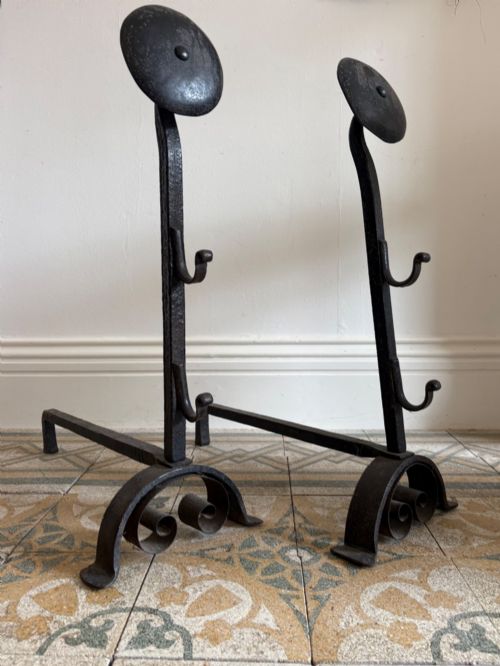
Blacksmiths and founders utilised wrought iron, cast iron, steel, and brass to build these hearth accessories. Hand-forging techniques allowed artisans to shape hot metal into sturdy shafts and decorative finials with distinct hammer marks left visible on the surface.
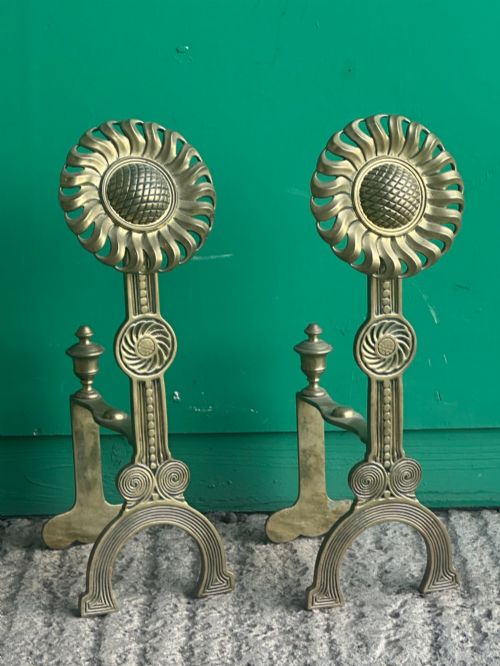
Cast brass components, such as sunflower motifs, required detailed moulds and careful finishing work. Iron and steel parts were joined through traditional methods like riveting and welding to ensure they could withstand intense hearth heat.
Arts and Crafts Fire Dogs Retail Price Guide 2026
Typical asking prices for arts and crafts fire dogs among the pieces listed under this phrase on Sellingantiques today, from the lower quarter to the upper quarter. They describe what is for sale here now, not the wider market.
Bright brass sunflowers bloom in cast metal, bringing perennial summer warmth straight to the winter hearth.
What varies in quality
The distinction between standard production items and finer work lies in the hand-finishing and the weight of the metal. Heavier gauge wrought iron and crisper casting details on brass elements indicate a higher standard of workshop output.
Proportion and structural balance also separate the pieces, with better examples showing careful attention to the stability of the upright shaft and the decorative restraint characteristic of the period.
Thomas Jeckyll·William Tonks·Christopher Dresser
The Arts and Crafts Fire Dogs Glossary
- Andirons
- Supports used in a fireplace to hold burning logs above the hearth floor. They typically feature a horizontal base and a decorative vertical front.
- Wrought iron
- Iron that has been heated and shaped with hand tools by a blacksmith. This material shows tactile texture from the forging process.
- Cast brass
- Brass poured into a mould to create decorative shapes and forms. This technique allows for repeating botanical or geometric patterns.
- Aesthetic Movement
- A late nineteenth-century design current that emphasised visual beauty over narrative meaning. It heavily influenced Arts and Crafts metalwork.
- Fire grate
- A metal basket or framework that holds fuel inside a fireplace. Some designs incorporate integrated fire dogs at the front.
Arts and Crafts Fire Dogs: Frequently Asked Questions
What are arts and crafts fire dogs?
These are heavy metal supports placed inside an open fireplace to hold logs above the ash. They combine utilitarian strength with the artistic metalwork typical of the late nineteenth and early twentieth centuries.
Craftsmen produced them in pairs using materials like wrought iron, brass, and steel to anchor the visual style of the hearth.
How were fire dogs used?
Homeowners placed the heavy iron or brass uprights on either side of the fireplace hearth. Logs rested across the horizontal bars, which kept the wood elevated to improve air circulation and combustion.
Beyond holding fuel, they protected the back wall of the fireplace and served as a prominent decorative feature in the room.
How do I date these metal pieces?
Dating relies on identifying stylistic markers from periods like the Victorian era, Edwardian period, and the Arts and Crafts movement. Construction methods, such as hand-forging versus machine casting, also offer clues to the age of the metal.
Examining surface finishes and material choices like wrought iron or cast brass helps narrow down the decade of manufacture.
How do I live with antique fire dogs?
You can use them in a working fireplace provided the metal is cleaned gently without stripping its historic character. They anchor the room's design even when the hearth is unlit during warmer months.
Pairing them with related hearth accessories like tool rests or companion sets creates a cohesive display.