




Arts and Crafts Decorative Bowl
These arts and crafts decorative bowl examples bring tactile materiality and honest design into contemporary interiors.
Arts and Crafts Decorative Bowl
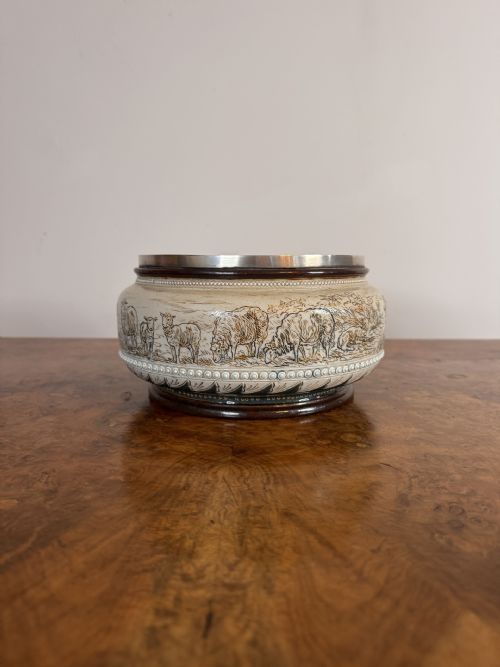
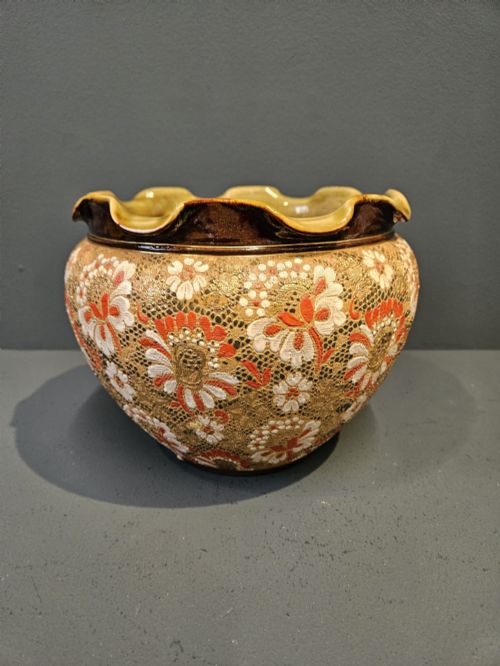
An arts and crafts decorative bowl represents the hand-worked ideals of the movement, spanning utilitarian vessels and ornamental table pieces. Buyers encountering this selection will discover forms ranging from deep fruit bowls and salad vessels to pedestal chargers and jardinieres.
The objects originate primarily from the late nineteenth and early twentieth centuries, capturing a period of distinct craftsmanship. Pieces emerge in diverse materials such as hammered metal, glazed stoneware, and carved oak.
Alongside standard domestic bowls, related forms appear on the page including compotes and ceiling lights. Each piece reflects the functional yet decorative ethos characteristic of the style.
How they were made
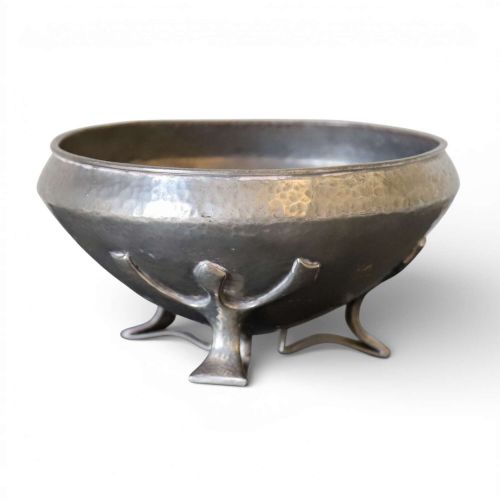
Makers shaped copper and pewter through hand-hammering techniques, often mounting enamelled cabochons to add colour and texture to the metallic surfaces. Stoneware and ceramic examples received incised or glazed decoration by hand, showing direct interaction with the material.
Woodworking traditions appear through carved decoration, notably on oak fruit bowls featuring naturalistic motifs like fruiting vines. Glass and crystal elements were worked into chandeliers and bowls, while silver plating finished specific metallic forms.
Arts and Crafts Decorative Bowl Retail Price Guide 2026
Typical asking prices for arts and crafts decorative bowl among the pieces listed under this phrase on Sellingantiques today, from the lower quarter to the upper quarter. They describe what is for sale here now, not the wider market.
Some copper bowls wear their hand-hammered dents with pride, recording the exact rhythm of the maker's mallet from a century ago.
What varies in quality
The distinction between standard production and finer work lies in the depth of hand-execution and the reputation of the maker or pottery. Pieces bearing specific studio attributions or designer signatures demonstrate superior artistic vision.
Material selection and decorative complexity also define the grade of an object, such as the inclusion of multiple enamelled cabochons or intricate hand-carved vine details rather than plain surfaces.
Liberty & Co Tudric·Oliver Baker·Doulton Lambeth·Frank Butler·Moorcroft
The Arts and Crafts Decorative Bowl Glossary
- Jardiniere
- A decorative ceramic or metal pot designed to hold plants or flowers. These large vessels often feature substantial glazed or incised decoration.
- Compote
- A raised bowl used for serving fruit or sweets, standing upon a central stem and foot. This form elevates the presentation of contents on the dining table.
- Cabochon
- A gemstone or piece of enamel polished rather than faceted, typically rounded on top and flat underneath. They frequently stud the rims of copper and pewter bowls for colour contrast.
- Tudric
- The trade name used by Liberty & Co. for their range of pewterware produced during the early twentieth century. These pieces often incorporated organic motifs characteristic of the period.
- Charger
- A large ornamental decorative plate or shallow bowl designed for display rather than practical dining use. They provide a broad surface for hammering and metalwork detail.
Arts and Crafts Decorative Bowl: Frequently Asked Questions
What materials are used?
The pieces utilise a range of traditional mediums, including hammered copper, pewter, glazed stoneware, and solid oak. Enamel and crystal also appear across various designs.
These materials reflect the movement's emphasis on honest construction and tactile surfaces.
How do I date a piece?
Dating relies on maker marks, stylistic indicators, and material characteristics associated with the late nineteenth and early twentieth centuries. Stoneware and metalwork often carry impressed studio ciphers.
Comparing the decorative motifs against known production periods helps narrow down the decade of manufacture.
Were these bowls used daily?
Many examples served practical functions as fruit bowls, salad vessels, or planters within domestic spaces. Other items like large chargers and pedestals were intended purely for ornamental display.
Their robust construction in metal and ceramic suited everyday household requirements.
How should I clean pewter?
Pewter requires gentle cleaning with warm soapy water and a soft cloth to preserve its natural finish. Avoid abrasive metal polishes that can strip away the historical patina.
Thorough drying prevents water spotting on the metallic surface.